UA-135459055-1

未分類

密教の仏たち 3 宝生如来

宝生如来(ほうしょうにょらい、रत्नसम्भव [ratnasambhava]、ラトナサンバヴァ


三昧耶形三弁宝珠種子(種子字)はत्राः(タラーク、trāḥ)。

密教における金剛界五仏の一で、金剛界曼荼羅では大日如来の南方(画面では大日如来の向かって左方)に位置する。唯識思想における仏の悟りの境地のひとつ「平等性智」(びょうどうしょうち)を具現化したものである。これは、全ての存在には絶対の価値があるということを示す。 印相は、左手は腹前で衣を掴み、右手は手の平を前に向けて下げる「与願印」(よがんいん)を結ぶ。


オン・アラタンノウ サンバンバ・タラク (oṃ ratnasambhava trāḥ


宝生如来(ほうしょうにょらい)とは?

語源は「宝よりうまれたもの」を意味し、財宝を生み出し人々に福徳を授けるといわれています。一切の垣根を取り払い、あらゆる全ての現象・事物を平等に観るという意味で「平等性智(びょうどうしょうち)」と呼ばれる智慧を具現化した仏です。


密教における大日如来の5つの智慧を表す五智如来の一尊です。

ご利益

病気治癒、無病息災、滅罪の功徳があるとされています。

宝生如来(ほうしょうにょらい)の像容

左手は衣服の端を握り、右手は手の掌を前に向けて下げる与願印(よがんいん)を結んでいます。願いを聞き入れ、望むものを与えようとする身振りを表しています。宝生如来の単独の造像はほとんどありません


日本の密教  2  Japanese Esoteric Buddhism 2

日本の密教

密教の伝来

日本で密教が公の場において初めて紹介されたのは、から帰国した伝教大師最澄によるものであった。当時の皇族や貴族は、最澄が本格的に修学した天台教学よりも、現世利益を重視する密教、来世での極楽浄土への生まれ変わりを約束する浄土教念仏)に関心を寄せたが、天台教学が主であった最澄は密教を本格的に修学していたわけではなかった。

本格的に日本へ伝来されることになるのは、唐における密教の拠点であった青龍寺において密教を本格的に修学した空海(弘法大師)が806年に日本に帰国してからであった。日本に伝わったのは中期密教で、唐代には儒教の影響も強かったので後期密教はタントラ教が性道徳に反するとして唐では受け入れられなかったという説もある[注 5]

天台宗の豪潮律師[注 6]長崎出島で中国僧から直接、中国密教と「出家戒」や、大系的な戒律である小乘戒・大乘戒・三昧耶戒を授かり、時の光格天皇の師として尊敬を集めるとともに、南海の龍と呼ばれた尾張・大納言齊朝候の庇護を受け、尾張と江戸で「準提法」(准胝観音法)を広めて多くの弟子を養成した。豪潮の残した資料の一つ『準提懺摩法 全』は明代の中国の資料と内容が一致する。この時期、戒律復興運動で有名な人物としては、「如法真言律」を提唱し、生涯において三十数万人の僧俗に灌頂と授戒を行なった霊雲寺浄厳覚彦と、「正法律」を唱えた慈雲が挙げられる。

密教の宗派[編集]

日本の密教は霊山を神聖視する在来の山岳信仰とも結びつき、修験道など後の「神仏習合」の主体ともなる。熊野で修行中の山伏

日本密教の伝統的な宗派としては、空海が唐の青龍寺恵果に受法して請来し、真言密教として体系付けた真言宗即身成仏鎮護国家を二大テーゼとしている)と、最澄によって創始され、円仁、円珍、安然らによって完成された日本天台宗の継承する密教に分類される。真言宗が密教専修であるのに対し、天台宗は天台・密教・戒律・禅の四宗相承である。真言宗は東密とも呼ばれ、日本天台宗の密教は台密とも呼ばれる。東密とは「東寺(教王護国寺)の密教」、台密は「天台宗の密教」の意味である。この体系的に請来されて完成された東密、台密を純密(じゅんみつ)というのに対し、純密以前に断片的に請来され信仰された奈良時代に見る密教を雑密(ぞうみつ)という。

日本の密教は、空海、最澄以前から存在した霊山を神聖視する在来の山岳信仰とも結びつき、修験道などの「神仏習合」の主体ともなった。各地の寺院権現に伝わる山岳曼荼羅にはそれらや浄土信仰の影響が認められる。


空海(くうかい、774年宝亀5年〉- 835年4月22日承和2年3月21日〉)は、平安時代初期の弘法大師(こうぼうだいし)の諡号で知られる真言宗の開祖である。俗名佐伯 眞魚(さえき の まお[1][2]

日本天台宗の開祖最澄と共に、日本仏教の大勢が、今日称される奈良仏教から平安仏教へと、転換していく流れの劈頭(へきとう)に位置し、中国より真言密教をもたらした。能書家としても知られ、嵯峨天皇橘逸勢と共に三筆のひとりに数えられている。

仏教において、北伝仏教の大潮流である大乗仏教の中で、ヒンドゥー教ゾロアスター教の影響も取り込む形で誕生・発展した密教シルクロードを経て中国に伝わった後、中国で伝授を受けた奥義や経典・曼荼羅などを、体系立てた形で日本に伝来させた人物でもある。

虚空蔵菩薩

丑(うし)・寅(とら)

こくぞうぼさつ)虚空蔵菩薩

虚空蔵菩薩は計り知れない智慧と福徳を具え、衆生の諸願を成就させてくれる菩薩で、頭に寶冠、手に福徳の如意宝珠、智慧の宝剣を持つ。胎蔵界曼陀羅虚空蔵院の主尊

 こくうぞうぼさつ
虚空蔵菩薩
 梵名は、アーカーシャガルバ(ン回詮回ふご)。アーカーシヤは「虚空」、ガルバは「胎蔵」という意味です。

 菩薩の福徳と仏智が大空(虚空)のように広大無辺であるところから、この名がつけられました。
その限りない福と智の徳を、必要とする人に必要なだけ与える、といわれています。「慈悲」の地蔵菩薩に対して「智慧」の仏として信仰されています。

 この虚空蔵菩薩を本尊として修する「虚空蔵菩薩求聞持法」は、頭脳を明晰にし、記憶力を高める修法としてよく知られています。
 

同じく「虚空蔵菩薩念誦法」は、業障を除き、福徳円満にして物心両面の財宝を得ることがでるとされています。

 丑年および寅年生まれの人の守り本尊とされています。
タラーハ・trah ・ 慣用音 たらあく

御真言

オン、バ、ザラ、アラ、タンノー、オン、タラーク、ソワカ

Ox and tiger

Kokuzo Bosatsu) Kokuzo Bodhisattva

The Kokuzo Bodhisattva is a bodhisattva with immeasurable wisdom and good fortune, and fulfills the wishes of sentient beings. It has a crown on its head, a jewel of good fortune in its hand, and a treasure sword of wisdom. The main honor of the Mandala of the Two Worlds

Kokuzo Bosatsu
Kokuzo Bosatsu
His name is Akasha Garba. Akasiya means “empty” and Galva means “womb”.

This name was given because the bodhisattva’s fortune and Buddhist wisdom are vast and open like the sky.
It is said that the endless virtues of good fortune and wisdom are given to those who need them as much as necessary. It is worshiped as a Buddha of “wisdom” against the Jizo Bodhisattva of “mercy”.

The “Kokuzo Bosatsu Gumonji method”, which rehearses this Kokuzo Bosatsu as the principal image, is well known as a method of clarifying his brain and enhancing his memory.

Similarly, the “Kokuzo Bosatsu Memorial Law” is said to be able to obtain treasures both physically and mentally, with the exception of business obstacles.

It is considered to be the guardian deity of people born in the year of Ox and the year of the Tiger.
Taraha, trah, idiomatic sound

Mantra

On, Ba, Zara, Ara, Tanno, On, Tarark, Sowaka

十二支と、生まれ月による御守本尊の一覧

※ 十二支と、生まれ月による御守本尊の一覧です。御真言を唱える事で、諸願成就され御利益があるとされています。
キリーク=子・戌・亥年 タラーク=丑・寅年 マン=卯年 アン=辰・巳年 サク=午年 バン=未・申年 カーン=酉年
(高嶋暦による十二支のお守り本尊はこちら)


(ね) 丑(うし)・寅(とら)
(せんじゅかんぜおんぼさつ)
千手観音菩薩
(こくぞうぼさつ)
虚空蔵菩薩
子年と12月生まれの人 丑・寅と1・2月生まれの人
 千手千眼観自在菩薩。一切衆生を救うため、千の手と千の目を具足し、目と手はその慈悲と救済のはたらきの無量無辺なことを表す。一つの手で二十五有を救うとされる。  虚空蔵菩薩は計り知れない智慧と福徳を具え、衆生の諸願を成就させてくれる菩薩で、頭に寶冠、手に福徳の如意宝珠、智慧の宝剣を持つ。胎蔵界曼陀羅虚空蔵院の主尊。
御真言

オン、バ、ザラ、ダ、ラマ、
キリーク、ソワカ

キリーク 御真言

オン、バ、ザラ、アラ、
タンノー、オン、タラーク、
ソワカ

タラーク
卯(う) 辰(たつ)・巳(み)
(もんじゅぼさつ)
文殊菩薩
(ふげんぼさつ)
普賢菩薩
卯年と3月生まれの人 辰・巳年と4月生まれの人
 「文殊の知恵」と言われるように、諸仏の智慧を司る菩薩。釈迦如来の左側に侍し、右手に知剣、左手に青蓮花を持つ。普遍の悟りと智慧をもたらす。  釈迦如来の右の脇侍。白像に乗り、理知、功徳、教化、衆生を生死の苦海から救い、悟りの境地(彼岸)に導くとされる。尚、この菩薩の立てた十大願は一切の菩薩の行願の旗幟とされる。
御真言

オン、ア、ラ、ハ、
シャノー

マン 御真言

オン、サンマ、カ、サト、
バン

アン
午(うま) 申(さる)・未(ひつじ)
(せいしぼさつ)
勢至菩薩
(だいにちにょらい)
大日如来
午年と6月生まれの人 未・申年と7・8月生まれの人
 阿弥陀如来の脇侍。智力を象徴し、智慧の光をもって万物を照らし衆生の迷いを除き、無上力を得させ、苦を取り除く偉大な力を持つ菩薩。大勢至菩薩。  摩訶毘盧遮那(まかびるしゃな)仏。真言密教の教主で、宇宙の万物の智慧と慈悲の表徴。内は真如法界を照らし、外は一切衆生を照らす。一切の徳の総摂とされる。金剛を智法身、胎蔵を理法身とした二身を畢竟(ひっきょう)不離一体とする。
御真言

オン、サンザン、ザンサク、
ソワカ

サク 御真言

オン、バ、ザラ、ダ、ト、
バン

バン
酉(とり) 亥(い)・戌(いぬ)
(ふどうみょうおう)
不動明王
(あみだにょらい)
阿弥陀如来
酉年と9月生まれの人 亥・戌年と10月生まれの人
 五大明王、八大明王の一で、その主尊。種々の煩悩、障害を焼き払い、悪魔を降伏して行者を擁護し、菩提を成就させ長寿を得させるとされる。大火炎を背負い、右手に剣、左手に索を持つ。  一切の衆生を救うため四十八の誓いを立てた仏。浄土宗、真宗の本尊で、無限の慈悲と永遠の存在と徳を与えられる。この仏を信じ、その名を唱えれば死後ただちに極楽浄土に生まれると言われる。
御真言

ナウ、マク、サ、マンダ、
バ、ザラ、ダン、カン

カーン 御真言

オン、ア、ミリ、タ、テイ、
ゼイ、カ、ラ、ウン

キリーク

密教   Esoteric Buddhism

密教

密教(みっきょう)は、秘密の教えを意味しする]大乗仏教の中の秘密教[2]で、秘密仏教の略称[3]金剛乗金剛一乗教金剛乗教ともいう]

意味と位置づけ

日本では真言宗東密天台宗での台密を指すが、インドチベットにおける同種の仏教思想も含めて総称することもある[5]仏教学は密教を「後期大乗」に含めるが、中には後期大乗と密教とを区別しようとする考え方もある[6]真言宗においては顕教と対比されるところの教えであるとされる[7]。インド仏教の顕教と密教を継承したチベット仏教においても、大乗を顕教と真言密教とに分ける形で顕密の教えが説かれている。密教の他の用語としては金剛乗(vajrayāna、ヴァジュラヤーナ)、真言乗(mantrayāna、マントラヤーナ)などとも称される。

金剛乗という用語

金剛という言葉はすでに部派仏教時代の経論からみられ[8]、部派仏典の論蔵アビダルマ)の時代から、菩提樹下に於ける釈迦の(降魔)成道は、金剛(宝)座でなされたとする記述がみられるが[9][10]、金剛乗の語が出現するのは密教経典からである[11]。金剛乗の語は、金剛頂経系統のインド密教を、声聞乗・大乗と対比して、第三の最高の教えと見る立場からの名称であるが、大日経系統も含めた密教の総称として用いられることもあり[12]、欧米でも文献中に仏教用語として登場する。

英語における訳語

英語では、欧米の学者によって密教(秘密仏教)にしばしばEsoterismの訳語があてられる。Esoterismとされる理由としては、大別して二通りの解釈が与えられている。第一に密教は、入門儀礼(潅頂)を通過した有資格者以外に示されない教えであること、第二には、言語では表現できない仏の悟りを説いたものだからということが挙げられている[13]

概説

密教は「阿字観」に代表される視覚的な瞑想を重んじ、曼荼羅や法具類、灌頂の儀式を伴う「印信」や「三昧耶形」等の象徴的な教えを旨とし、それを授かった者以外には示してはならない秘密の教えとされる[注 1]空海(弘法大師)は、密教が顕教と異なる点を『弁顕密二教論』の中で「密教の三原則」として以下のように挙げている。

  1. 法身説法(法身は、自ら説法している。)
  2. 果分可説(仏道の結果である覚りは、説くことができる。)
  3. 即身成仏(この身このままで、仏となることができる。)

密教は老若男女を問わず今世(この世)における成仏である「即身成仏」を説き、「伝法灌頂」の儀式をもって「瀉瓶(しゃびょう)の如し」[注 2]と師が弟子に対して教義を完全に相承したことを証し、受者に阿闍梨(教師)の称号と資格を与える。インド密教を継承したチベット密教がかつて「ラマ教」と称されたのは、チベット密教では師資相承における個別の伝承である血脈を重んじ、自身の「根本ラマ」(師僧)に対して献身的に帰依するという特徴を捉えたゆえである。

インド密教

部派仏教

パーリ仏典の長部・『梵網経』には、迷信的な呪術や様々な世間的な知識を「無益徒労の明」に挙げて否定する箇所があり、原始経典では比丘が呪術を行うことは禁じられていたが、律蔵においては(世俗や外道で唱えられていた)「治歯呪」や「治毒呪」[14][15][16] といった護身のための呪文(護呪)は許容されていた[17]。そうした特例のひとつに、比丘が遊行の折に毒蛇を避けるための防蛇呪がある(これが大乗仏教において発展してできたのが初期密教の『孔雀王呪経』とされる[18])。密教研究者の宮坂宥勝の考察によれば、本来は現世利益的な民間信仰の呪文とは目的を異にするもので、蛇に咬まれないためには蛇に対する慈悲の心をもたねばならないという趣旨の偈頌のごときものであったとも考えられるが、社会における民衆への仏教の普及に伴って次第に呪術的な呪文へと転じていったのでないかという[19]

また意味の不明瞭な呪文ではなく、たとえば森で修行をするにあたって(木霊の妨害など)様々な障害を防ぐために慈経を唱える[20]、アングリマーラ経を唱えることで安産を願う[21]など、ブッダによって説かれた経典を唱えることで真実語(sacca-vacana)によって祝福するという習慣が存在する。 こうした祝福や護身のために、あたかも呪文のように経典を読誦する行為は、パーリ仏教系統では「パリッタ(paritta 護経、護呪)」と称され、現代のスリランカや東南アジアの上座部仏教でも数々のパリッタが読誦されている[22]

インドの錬金術が密教となり、密教は錬金術そのものであったとの仮説[23]があるが、一般的な見解ではないし、また仏教学の研究でも検証されていない。

初期密教編集

呪術的な要素が仏教に取り入れられた段階で形成されていった初期密教(雑密)は、特に体系化されたものではなく、祭祀宗教であるバラモン教マントラに影響を受けて各仏尊の真言陀羅尼を唱えることで現世利益を心願成就するものであった。当初は「密教経典」なるものがあったわけではなく、大乗経典に咒や陀羅尼が説かれていたのに始まる。大乗仏教の代表的な宗派である禅宗では「大悲心陀羅尼」・「消災妙吉祥陀羅尼」等々、日本でも数多くの陀羅尼を唱えることで知られているが、中でも最も長い陀羅尼として有名な「楞厳呪」(りょうごんしゅ)は大乗仏典の『大仏頂首楞厳経』に説かれる陀羅尼であり、中国禅では出家僧の「女人避けのお守り」ともされている。

中期密教編集

新興のヒンドゥー教に対抗できるように、本格的な仏教として密教の理論体系化が試みられて中期密教が確立した。中期密教では、世尊 (Bhagavān) としての釈尊が説法する形式をとる大乗経典とは異なり、別名を大日如来という大毘盧遮那仏 (Mahāvairocana) が説法する形をとる密教経典が編纂されていった。『大日経』、『初会金剛頂経』 (Sarvatathāgatatattvasaṃgraha) やその註釈書が成立すると、多様な仏尊を擁する密教の世界観を示す曼荼羅が誕生し、一切如来[注 3]からあらゆる諸尊が生み出されるという形で、密教における仏尊の階層化・体系化が進んでいった。

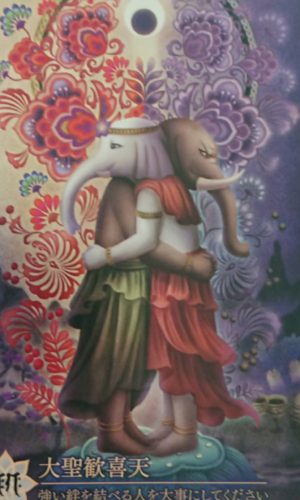
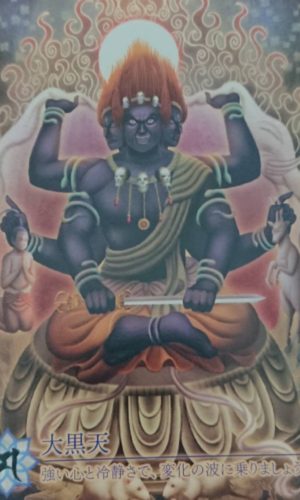
中期密教は僧侶向けに複雑化した仏教体系となった一方で、却ってインドの大衆層への普及・浸透ができず、日常祭祀や民間信仰に重点を置いた大衆重視のヒンドゥー教の隆盛・拡大という潮流を結果的には変えられなかった[注 4][24]。そのため、インドでのヒンドゥー教の隆盛に対抗するため、シヴァを倒す降三世明王ガネーシャを踏むマハーカーラ(大黒天)をはじめとして、仏道修行の保護と怨敵降伏を祈願する憤怒尊や護法尊が登場した。

後期密教編集

インドにおいてヒンドゥー教シャークタ派タントラシャクティ(性力)信仰から影響を受けたとされる、男性原理(精神・理性・方便)と女性原理(肉体・感情・般若)との合一を目指す無上瑜伽の行も無上瑜伽タントラと呼ばれる後期密教の特徴である。男性名詞であるため男尊として表される方便と、女性名詞であるため女尊として表される智慧が交わることによって生じる、密教における不二智象徴的に表す「歓喜仏」も多数登場した。無上瑜伽タントラの理解が分かれていた初期の段階では、修行者である瑜伽行者がしばしばタントラに書かれていることを文字通りに解釈し、あるいは象徴的な意味を持つ諸尊の交合の姿から発想して、女尊との性的瑜伽を実際の性行為として実行することがあったとされる。そうした性的実践が後期密教にどの時期にいかなる経緯で導入されていったかについてはいくつかの説があるが、仏教学者の津田真一は後期密教の性的要素の淵源として、性的儀礼を伴う「尸林の宗教」という中世インドの土着宗教の存在を仮定した[25]。後にチベットでジョルと呼ばれて非難されることになる性的実践[26]は主に在家の密教行者によって行われていたとも考えられているが、出家教団においてはタントラの中の過激な文言や性的要素をそのまま受け容れることができないため、譬喩として穏当なものに解釈する必要が生じた[27]。しかし、時には男性僧侶が在家女性信者に我が身を捧げる無上の供養としてそれを強要する破戒行為にまで及ぶこともあった。

さらには、当時の政治社会情勢から、イスラム勢力の侵攻によるインド仏教の崩壊が予見されていたため、最後の密教経典である時輪タントラ(カーラチャクラ)の中でイスラムの隆盛とインド仏教の崩壊、インド仏教復興までの期間(末法時代)は密教によってのみ往来が可能とされる秘密の仏教国土・理想郷シャンバラの概念、シャンバラの第32代の王となるルドラ・チャクリン(転輪聖王)、ルドラ・チャクリンによる侵略者(イスラム教徒)への反撃、ルドラ・チャクリンが最終戦争での王とその支持者を破壊する予言、そして未来におけるインド仏教の復興、地上における秩序の回復、世界の調和と平和の到来、等が説かれた。

インド北部におけるイスラム勢力の侵攻・破壊活動によってインドでは密教を含む仏教は途絶したが、後期密教のさらに発展した体系は今日もチベット密教の中に見ることができる。

Esoteric Buddhism
Esoteric Buddhism (Mikkyo) means secret teaching] Secret Buddhism in Mahayana Buddhism [2], abbreviation for Secret Buddhism [3]. Also known as Kongo Ryo, Kongo Ichijo Kyo, Kongo Ryokyo].

Meaning and positioning
In Japan, it refers to the Shingon sect of Tokon and the Tendai sect, but it may also be collectively referred to as the same type of Buddhist thought in India and Tibet. [5] Buddhist studies includes esoteric Buddhism in “late Mahayana”, but some also try to distinguish between late Mahayana and esoteric Buddhism [6]. In the Shingon sect, it is said to be a teaching that contrasts with the teaching [7]. Even in Tibetan Buddhism, which inherited Indian Buddhism’s esoteric Buddhism and esoteric Buddhism, Mahayana is divided into esoteric Buddhism and Shingon esoteric Buddhism. Other terms of esoteric Buddhism are also referred to as vajrayāna (vajrayāna) and mantrayāna (mantrayāna).
The term Kongo

The word Kongo has already been seen in the Buddhist era of the Buddhist School [8], and from the time of the Buddhist School of Buddhism (Abhidharma), the Buddha’s (Demon) Narudo under the Bodhi tree was made in the Kongo (treasure) seat. Although there is a description that it is [9] [10], the word Kongo power appears from the esoteric Buddhist scriptures [11]. The word Kongojo is a name from the standpoint of seeing the Indian esoteric Buddhism of the Vajrasekhara Sutra system as the third best teaching in comparison with the voice-hearing and Mahayana system, but as a general term for esoteric Buddhism including the Dainichikei system. Sometimes used [12], it appears as a Buddhist term in the literature in Europe and the United States.

Translated in English

In English, esotericism (secret Buddhism) is often translated into Esoterism by Western scholars. There are two main interpretations of the reason for Esoterism. First, esoteric Buddhism is a teaching that can only be shown to qualified persons who have passed the introductory ritual (abhisheka), and second, it preaches Buddha’s enlightenment that cannot be expressed in language. [13].


Overview
Esoteric Buddhism emphasizes visual meditation represented by “Ajikan”, and is given symbolic teachings such as “Inshin” and “Sanmai Yagata” accompanied by mandalas, legal tools, and rituals of abhisheka. It is a secret teaching that should not be shown to anyone other than the person [Note 1]. Kukai (Kobo Daishi) cites the differences between esoteric Buddhism and esoteric Buddhism as the “three principles of esoteric Buddhism” in “Benken Esoteric Buddhism” as follows.
Dharmakaya preaching (Dharmakaya preaches himself.)
The theory of fruit (the awakening that is the result of Buddhism can be preached.)
Immediately grown Buddha (You can become a Buddha as it is.)

Esoteric Buddhism preaches the “immediate Buddhahood”, which is the Buddhahood in this world (this world), regardless of age or sex. On the other hand, it proves that the doctrine has been completely accepted, and gives the recipient the title and qualification of Acharya (teacher). Tibetan esoteric Buddhism, which inherited Indian esoteric Buddhism, was once called “Rama religion”. This is because it captures the characteristic of being devoted to.


Indian Esoteric Buddhism
Buddhist School

In the head of the Pali Canon, “Brahmajāla”, there is a place to deny mythical spells and various worldly knowledge as “Ming of useless labor”, and in the primitive scripture, Bhikkhu performs spells. Was forbidden, but in Ritsuzo, spells for self-protection (protective spells) such as “tooth curse” and “poison curse” [14] [15] [16] Was allowed [17]. One such special case is the snake-proof curse to avoid poisonous snakes when Bhikkhu travels (this was developed in Mahayana Buddhism as the early esoteric Buddhist “Peacock King Sutra” [18]). .. According to the consideration of Buddhist researcher Masakatsu Miyasaka, the purpose is different from the spell of folk religion that is profitable in this world, and in order not to be bitten by a snake, you must have mercy for the snake. It is thought that it was a reminder to the effect, but it seems that it gradually turned into a magical spell with the spread of Buddhism to the people in society. [19]

Also, it is not a spell whose meaning is unclear, for example, when practicing in the forest (such as obstruction of the tree spirit), chanting the charity to prevent various obstacles [20], chanting the Angrimara sutra, etc. , There is a custom of blessing with the true word (sacca-vacana) by chanting the scriptures preached by Buddha. The act of reading the scriptures as if they were spells for such blessings and self-protection is called “paritta” in the Pali Buddhist system, and is also numerous in modern Sri Lanka and Theravada Buddhism in Southeast Asia. Paritta has been read. [22]

There is a hypothesis that Indian alchemy became esoteric Buddhism, and esoteric Buddhism was alchemy itself [23], but this is not a general view and has not been verified in Buddhist studies.

See “Tatsuki” for details
Early esoteric editing

Early esoteric Buddhism (miscellaneous), which was formed when magical elements were incorporated into Buddhism, was not particularly systematized, and was influenced by the ritual religion Brahmanism mantra. By chanting the true word of “Dharani”, the interests of this world were fulfilled. At first, there was no “esoteric Buddhist scripture”, but it started even though the Mahayana scriptures preached 咒 and Dharani. Zen Buddhism, which is a representative sect of Mahayana Buddhism, is known for chanting many Dharani in Japan, such as “Great Sadness Dharani” and “Disaster Mysterious Dharani”, but among them, “Dharani” is famous as the longest Dharani. “Ryogonshu” is a Dharani described in the Mahayana Buddhist scripture “Dharani Sutra”, and in Chinese Zen, it is also called “a guardian of women’s avoidance”.

Mid-term esoteric editing

Medium-term esoteric Buddhism was established by attempting to systematize the theory of esoteric Buddhism as a full-fledged Buddhism so as to compete with the emerging Hinduism. In the mid-term esoteric Buddhism, unlike the Mahayana scripture, which was preached by Buddha as Buddha, a esoteric Buddhist scripture was compiled, which was preached by Mahāvairocana, also known as Dainichi Nyorai. When “Dainichikei”, “Hatsukai Kongochokyo” (Sarvatathāgata tattvasaṃgraha) and their annotations were established, a mandala showing the world view of esoteric Buddhism with various Buddhist priests was born. The stratification and systematization of Buddhist priests in esoteric Buddhism progressed in the form of being created.

While mid-term esoteric Buddhism became a complicated Buddhist system for monks, it could not spread and spread to the masses of India, and the rise and expansion of mass-oriented Hinduism with an emphasis on daily rituals and folk beliefs. As a result, the trend was not changed [Note 4] [24]. Therefore, in order to counter the rise of Hinduism in India, the wrath and Dharmapala who prayed for the protection of Buddhist training and the surrender of enemies appeared, including the King of Shiva and Mahakala (Daikokuten) who stepped on Ganesha. ..

Late Esoteric Buddhism Editing

Aiming to unite the male principle (spirit, reason, expedient) and the female principle (physical, emotional, prajna), which are said to have been influenced by the Hindu Shaktist tantra and Shaktist (sexual power) beliefs in India. The line of Anuttarayoga is also a feature of the late esoteric Buddhism called Mujou Anuttarayoga Tantra. Many “joyful Buddhas” that symbolize Fuji in esoteric Buddhism, which are caused by the intersection of the masculine noun, which is represented as a male honor, and the wisdom, which is a female noun and therefore represented as a female honor, have also appeared. .. In the early stages when the understanding of Anuttarayoga Tantra was divided, the practitioner, the practitioner, often interpreted what was written in Tantra literally, or from the appearance of the union of the gods with symbolic meaning. It is said that he sometimes performed sexually explicit yoga with a woman as an actual sexual act. There are several theories as to when and how such sexual practices were introduced into late esoteric Buddhism, but Buddhist scholar Shinichi Tsuda accompanies sexual rituals as the source of the sexual elements of late esoteric Buddhism. It assumed the existence of a medieval Indian indigenous religion called “Charnel Ground Religion”. [25] It is believed that the sexual practice [26], which was later criticized in Tibet as Jor, was mainly carried out by esoteric esoterics at home, but in the priesthood cult, the radical wording in Tantra. And because the sexual element could not be accepted as it was, it became necessary to interpret it as a metaphor. [27] However, at times, male monks even extorted it as a supreme memorial service dedicated to female believers at home.

Furthermore, because the political and social situation at that time predicted the collapse of Indian Buddhism due to the invasion of Islamic forces, the rise of Islam and the collapse of Indian Buddhism in the last esoteric Buddhist scripture, Kalachakra. The secret Buddhist land, the ideal town of Shambhala, which can only be visited by esoteric Buddhism during the period until the reconstruction of Indian Buddhism (the end of the law), Rudra Chakravarti, the 32nd king of Shambhala, Rudra・ Chakravarti’s counterattack against invaders (Muslims), the prediction that Rudra Chakravarti will destroy the evil king and his supporters in the final war, and the reconstruction of Indian Buddhism in the future, the restoration of order on earth, the harmony of the world The arrival of peace, etc. was explained.

Buddhism, including esoteric Buddhism, was disrupted in India due to the invasion and sabotage of Islamic forces in northern India, but a more developed system of late esoteric Buddhism can still be seen in Tibetan esoteric Buddhism.

四種の呼吸法  Four types of breathing


四種の呼吸法


 瞑想の呼吸法は、四種の呼吸法から成り立つ。

 一、長出入息呼吸法

 二、長山息呼吸法

 三、反式呼吸法

 四、強短息呼吸法(火の呼吸法)

 である。

 簡単に説明すると、

長出大息呼吸法は、出る息、入る息、どちらも、で きるだけ細く長く深く呼吸する。一呼吸に二十秒から三十秒、一分くらい、時 間をかける。


の長出息呼吸法は、出る息のみをできるかぎり細く長く吐いて、吸う息は  つうに吸うつうに吸う。

3の反式呼吸法は、ふつうの呼吸とちかって、息を吸うとき、腹部をひっこ め、息を吐くとき、腹部をふくらませる。ちょうど逆になるわけである。

4強短息呼吸法は、「火の呼吸法」とよび、片方の鼻孔を指で押さえて閉 じ、片方の鼻孔で強く短く呼吸する。

Four types of breathing


The meditation breathing method consists of four types of breathing methods.
1. Long breathing breathing method
2. Nagayama breathing method
Third, anti-breathing method
4. Strong and short breathing method (fire breathing method)

It is.

To briefly explain,

1
The long-breathing breathing method is to breathe as thin, long and deep as possible for both out and in. Take 20 to 30 seconds, 1 minute, or so for each breath.


In the long-breathing breathing method of 2, exhale only the exhaled breath as thin and long as possible, and inhale as much as possible.
The counter-breathing method of 3 is different from normal breathing, in which the abdomen is retracted when inhaling and the abdomen is inflated when exhaling. It’s just the opposite.
The 4 strong short breath breathing method is called “fire breathing method”, and one nostril is pressed with a finger to close it, and one nostril is used for strong and short breathing.


 それでは、四種の呼吸法の訓練を説明しよう。


長出入息呼吸法の訓練

 鉄坐、あるいは椅子坐、いずれにしても、頭部、頚部をごく自然に、まっすぐ、きちんとした姿勢をとる。ただし、あまり緊張しすぎて力んだり、硬直したりしてはいけない。ゆったりと、リラックスすることが大切である。

 そのためには、頭部、頚部の緊張を解くために、前頭部を心もち前に出し、の顎を少し中へ引くようにして、頭部をやや下げるようにするとよい。同時に、前胸部も少しひっこめるようにし、腹部は少し前に出し、両肩は力を入れず、自然な姿勢をとる。背中は心もち前に曲げ、腹部の容積を大きくするようにする。

Now let’s explain the training of four types of breathing.


Long breath breathing training

Whether it is an iron seat or a chair seat, the head and neck should be in a very natural, straight and neat posture. However, don’t be too nervous and stiff or stiff. It is important to relax and relax.

For that purpose, in order to relieve tension in the head and neck, it is advisable to bring the frontal region forward and pull the chin slightly inward to lower the head slightly. At the same time, the precordium should be slightly retracted, the abdomen should be slightly forward, and both shoulders should be relaxed and take a natural posture. Bend your back forward to increase the volume of your abdomen.

チャクラと最高の呼吸法

Buddha properly prepared the training method that will serve as a bridge to this Buddhist Buddhist law, Nanashina 37 Dojo. One of the training methods is the breathing method and meditation method called “Anna Panna Nenho”. I think that this meditation method can be considered as one of the meditation methods in the Seventy-Seven Departments, 37 items. Buddha is called “the best method of breathing and meditation.” This method is also closely related to Gumonji Someiho, an esoteric Buddhist method that is said to be a secret method that makes a person a genius, as taught by Kobo Kukai Daishi. The acquisition of this law will be a stepping stone to the Seishin Buddhist Law, Shichika 37 Buddhist products. Anna nana memorial method is the method of breathing and meditation from the elementary steps to the supreme mystery, which is written in “Ana sutra sutra anna memorial day”. Ten types of breathing and meditation methods are taught.


お釈迦様は、この成仏法 七科三十七道品へ至るまでの、その橋渡しとなる修行法も、きちんと用意してくださっていたのです。その修行法の一つが、「安那般那念法」(あんなぱんなねんほう)と呼ばれる呼吸法、瞑想法です。この瞑想法は、七科三十七道品の中の瞑想法の一つと考えてよいと思います。

お釈迦様が、「最高の呼吸法・瞑想法」と呼ばれるものです。

この法は、空海弘法大師様が、伝えて下さった、人を天才にする秘法といわれる、密教の「求聞持聡明法」(ぐもんじそうめいほう)とも密接に関係しています。

この法の習得が、成仏法 七科三十七道品への足がかりとなります。安那般那念法とは、「雑阿含経 安那般那念経」に書かれている、初歩から最高奥儀に至るまでの呼吸法・瞑想法のことです。10数種類の呼吸法・瞑想法が説かれています。

さらに、「雑阿含経 止息経」には、「勝止息、奇特止息、上止息、無上止息」の4つの呼吸法が説かれており、「この4つの呼吸法は、すべての呼吸法において、これ以上のものはない最上の呼吸法である。」とお説きになられています。この4つの呼吸法は、安那般那念法の最上のものということです。お釈迦様が、「最上の呼吸法・瞑想法」であるとおっしゃられているのですから、当然のことながら、この呼吸法・瞑想法をマスターしなければ成仏はできないということです。

この呼吸をチャクラを啓発するのが仏陀の七科三十七道品です。

今日の運勢  5月21日   Today’s fortune May 21st

皇帝
正位置・・・権力。支配力。一家の家長や一族の長。職場、またはグループのリーダー。長男。活動力。情熱。闘争本能。愛情や女性を行動や力で獲得するたくましい男性。性衝動。
逆位置・・・未熟。無力。外見と違って内面は弱い性格をもつ男性。統率力を失う。指導性の欠如。長男だが家や家業を継がない立場。
ウェイト解説
正位置・・・頑固さ。力。防御。実現。偉大な人物。同盟。理性。信念。権威と意志。
逆位置・・・慈悲。共感。信用。敵に対する困惑。障害。未熟さ。

九紫火星の日
金銭問題、女性にかかわる苦労あり。人に背反されることあり。派手な苦労をする日。

仕事運以外は不調な日。
過去の因果が巡ってくるので、物事がうまくいかないからといって人を非難したり、責任を押し付けたりせず、自らに課せられている課題だと言い聞かせて努力することが大切です。

Emperor
Positive position … power. Dominance. The head of the family or the head of the clan. Workplace or group leader. The eldest son. Activity. passion. Struggle instinct. A strong man who acquires love and women through action and power. Libido.
Reverse position … immature. Helpless. A man with a weak personality on the inside, unlike the appearance. Lose control. Lack of leadership. The eldest son, but in a position not to succeed the family or family business.
Weight commentary
Positive position … stubbornness. Power. defense. Realized. Great person. alliance. reason. belief. Authority and will.
Reverse position … mercy. Empathy. credit. Puzzled against the enemy. Obstacle. Immature.

Nine purple Mars day
There are financial problems and difficulties related to women. It may be contrary to people. A day of flashy hardships.

A bad day except for work luck.
Since the causes and effects of the past come around, it is important not to blame others for things that go wrong, or to impose responsibility, but to say that it is an issue that you are facing.