
https://www.sofmap.com/contents/?id=nw_ga_select&sid=keyboard
Mac
四神足の修練によってニルヴァーナへ Achieve Nirvana through the training of the Four Divine Feet
四神足の修練によってニルヴァーナへ
さらに、輪廻転生瞑想法の原典である釈尊の成仏法、その真髄たる四神足法 修練していくとどうなるのか?
釈尊の体験を見てみよう。
パーリ文 「スッタニパータ」を、中村元先生の訳によって載せてみる。
このように四神足を修練し、豊かならしめたならば、多様なる神変を身 に受ける。 一身にして多身となり、多身にして一身となり、あるいは現わ れ、あるいは隠れ、牆壁や山岳をよぎって、礙げなく、行くこと空中にお けるがごとく、地中に出没すること水中におけるがごとく、水中を行きて られざること地上におけるがごとく、虚空においても結跏趺坐してそぞ 歩きすることは飛鳥のごとく、このように大神通・大威徳あるこの日月 を手でとらえて揉んでしまい、梵天の世界にいたるまでも身をもって支配 する。
このように四神足を修練し豊かならしめたならば、清浄にして超人的な 天の耳の本性をもって、遠近にある天的なまた人間的な声をともに聞く。 このように四神足を修練し豊かならしめたならば、他の生存者、他の
人々の心をば心によって了解して知る。 貪りある心を貪りある心であると 知り、貪りを離れた心を貪りを離れた心であると知り、また怒りある心を 怒りある心であると知り、怒りを離れた心を怒りを離れた心であると知 迷妄ある心を迷妄ある心であると知り、迷妄を離れた心を迷妄を離れ 心であると知り、収縮した心を収縮した心であると知り、散乱した心を 散乱した心であると知り、偉大な心を偉大な心であると知り、偉大ならざ 心を偉大ならざる心であると知り、ある心を上ある心であると知り、 無上の心を無上の心であると知り、定にあらざる心を定にあらざる心であ ると知り、定のうちにある心を定のうちにある心であると知り、解説して いない心を解説していない心であると知り、解脱している心を解説してい 心であると知る。
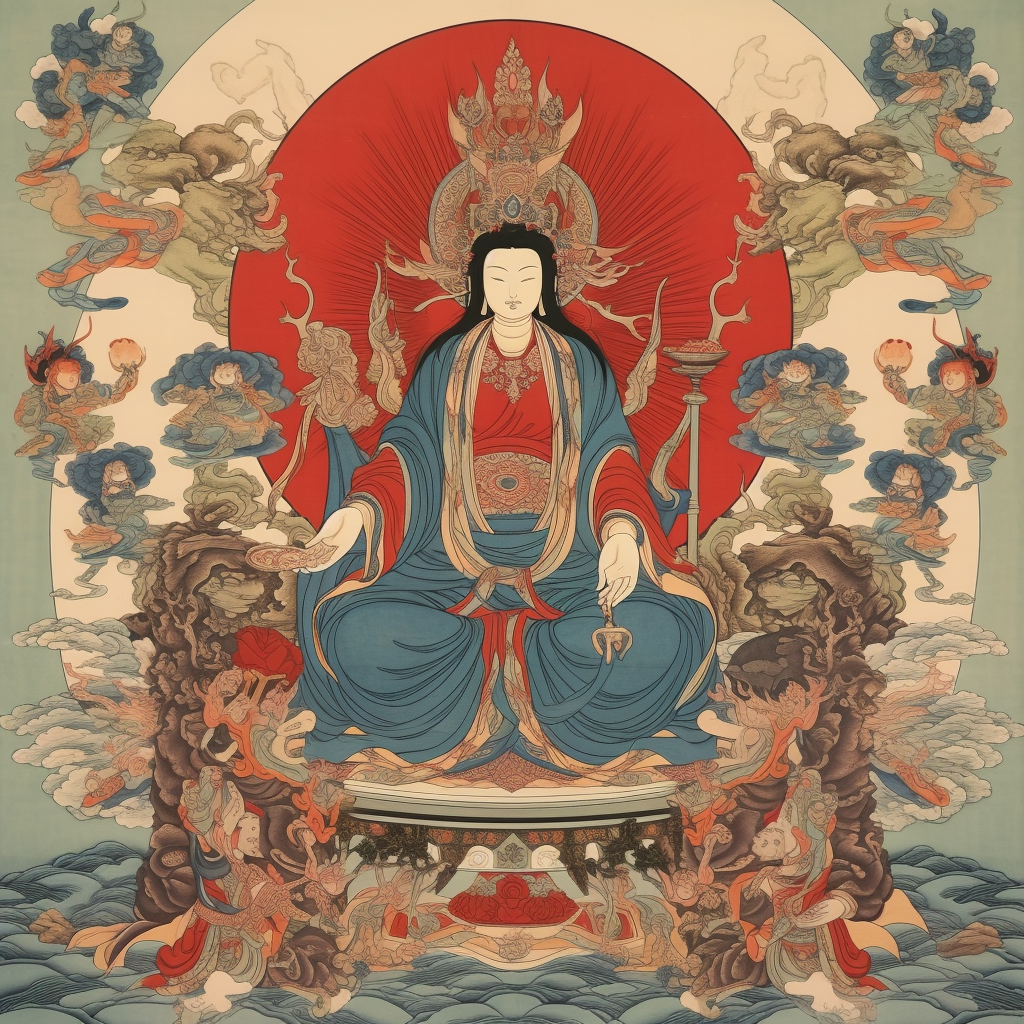
このように四神足が修練され豊かにされたときに、種々なる過去の生涯 を想いおこした、すなわち一つの生涯、二つの生涯、三つの生涯 四 つの生涯、五つの生涯、十の生涯、 二十の生涯、三十の生涯、四十の生.五十の生涯、百の生涯、千の生涯 百千の生涯を、またいくたの宇宙 成立期、いくたの宇宙破壊期、いくたの宇宙成立破壊期を。 「われはそこに おいて、これこれの名であり、これこれの姓 (gotta) であり、 これこれの カースト (vanna) であり、これこれの食をとり、これこれの苦楽を感受 これこれの死にかたをした。そこで死んでから、かしこに生まれた」 と。このようにかたちや名称とともに種々なる過去の生涯を想いおこした のである。
このように四神足が修練され豊かにされたときに、清浄で超人的な天眼 をもって、もろもろの生存者が死にまた生まれるのを見た。すなわち卑賤 なるものと高貴なるもの、美しいものと醜いもの、幸福なものと不幸なも そしてもろもろの生存者がそれぞれの業にしたがっているのを明らか 知った
「じつにこれらの生存者は身に悪行をなし、ことばに悪行をなし、 こころ に悪行をなし、もろもろの聖者をそしり、邪った見解をいだき、邪った見解にもとづく行為をなす。かれらは身体が破壊して死んだあとで、悪しき ところ、堕ちたところ、地獄に生まれた。また他のこれらの生存者は、身 善行をなし、ことばに善行をなし、こころに善行をなし、もろもろの聖 者をそしらず、正しい見解をいだき、正しい見解にもとづく行為をなす。 かれらは身体が破壊して死んだあと、善いところ、天の世界に生まれた」
このように清浄で超人的な天眼をもって、もろもろの生存者が死にまた 生まれるのを見た。すなわち卑賤なるものと高貴なるもの、美しいものと 醜いもの、幸福なものと不幸なもの、そしてもろもろの生存者がそれぞれ の葉にしたがっているのを〔明らかに知った。
そうして最後につぎのように結んでいる。
このように四神足が修練され豊かにされたときに、もろもろの煩悩の汚れがほろぼされることによって、汚れなき心の解脱・知慧の解脱をこの世 において、みずから証知し、現証し、具現して住する。
けっきょく、四神足の修行によって、釈尊は解脱を得たというのである。つ まり、四神足の修練によって、ニルヴァーナに到達したというのだ。
ニルヴァーナにまで到達するのは、至難の業である。わたくしといえども、 そこまで修行者を導く自信はない。しかし、準・ニルヴァーナにまで到達させ
る自信はあるのだ。すべては、修行者の努力と熱意しだいだが―。
Achieve Nirvana through the training of the Four Divine Feet
Furthermore, what happens when you practice Shakyamuni Buddha’s Buddhism method, which is the original source of the reincarnation meditation method, and its essence, the Four God Foot Methods?
Let’s look at Buddha’s experience.
I will post the Pali text “Suttanipatha” as translated by Hajime Nakamura.
If you cultivate the four divine feet in this way and become rich, you will receive a variety of divine transformations. To be one body and many bodies, to be many bodies and one body, to appear or to hide, to cross walls and mountains, and to go without hesitation; To appear in the earth, as in the air; To appear in the ground, as in the air. Just as it is impossible to walk in the water as if on earth, in the void it is possible to sit on one’s knees and walk like a flying bird.In this way, grasping this sun and moon of great divine wisdom and great virtue in one’s hands. He massages them and even dominates them even in the world of Brahma.
Once you have cultivated and enriched your four divine feet in this way, you will listen to both heavenly and human voices both near and far, with the pure and superhuman nature of your heavenly ears. Once you have cultivated the four divine feet in this way and become rich, you will be able to help other survivors and others.
Understand and know people’s hearts. Know that a greedy heart is a greedy heart, know that a greedy heart is a greedy heart, know that an angry heart is an angry heart, know that a greedy heart is a greedy heart, know that a greedy heart is a greedy heart, know that an angry heart is an angry heart, and know that a greedy heart is a greedy heart, a greedy heart that is free from greed, and an angry heart that is angry, Knowing that a delusional mind is a delusional mind, knowing that a delusional mind is a delusional mind, knowing that a shrunken heart is a shrunken mind, knowing that a shrunken heart is a shrunken mind, and a scattered heart. Knowing that a great heart is a great heart, knowing that a heart is not great, knowing that a certain heart is a superior mind, Know that the mind that is not fixed is the mind that is not fixed, know that the mind that is in the fixed is the mind that is in the fixed, and explain the mind that is not explained. We know that it is the mind that is not liberated, and we understand that it is the mind that is liberated.
When the four divine feet were cultivated and enriched in this way, various past lives were recalled, namely, one lifetime, two lifetimes, three lifetimes, four lifetimes, five lifetimes, ten lifetimes, and two. Ten lives, thirty lives, forty lives, fifty lives, a hundred lives, a thousand lives, a thousand lifetimes, a period of the creation of the universe, a period of destruction of the universe, a period of the destruction of the universe. A period of destruction during the creation of the universe. “We set him there, with such and such a name, with such and such a surname (gotta), with such and such a caste (vanna), who ate such and such food, experienced such and such pleasures, and suffered such and such death. He died there and was born somewhere else.” In this way, he recalled various past lives with shapes and names.
When the Four Divine Feet were cultivated and enriched in this way, with the pure and superhuman Celestial Eye, I saw the various survivors die and be reborn. The lowly and the noble, the beautiful and the ugly, the happy and the unhappy.
“Indeed, these survivors do evil in their bodies, evil in their words, evil in their hearts, slander the saints, hold evil opinions, and act on evil opinions. After their bodies were destroyed and they died, they were born into an evil place, a fallen place, and hell.The rest of these survivors did good deeds, did good deeds in their words, did good deeds in their hearts, and did all sorts of things. They do not disparage the saints of God, but they hold right opinions and act in accordance with right opinions. After their bodies were destroyed and they died, they were born into a good place, the heavenly world.”
With such a pure and superhuman heavenly eye, I saw various survivors die and be reborn. That is, the lowly and the noble, the beautiful and the ugly, the happy and the unhappy, and the various survivors following their own leaves.
Finally, it concludes as follows.
When the four divine feet are cultivated and enriched in this way, the stains of various earthly desires are destroyed, and one can personally testify, demonstrate, and embody the liberation of an immaculate heart and the liberation of wisdom in this world. I live there.
After all, it is said that Shakyamuni attained liberation through the training of the Four Gods. It is said that he was able to reach Nirvana by practicing the four divine feet.
Reaching Nirvana is an extremely difficult task. Even I don’t have the confidence to lead the practitioners to that extent. However, reaching quasi-nirvana
I have confidence that I will. Everything depends on the effort and enthusiasm of the practitioner.
http://cyber-price.com/buddha/
Buddha Japan journal
日本の仏教を発信しますSend Japanese Buddhis
人類は“ホモデウス”に進化できるか Can humans evolve into “homodeus”?
かつて地球上にはさまざまな人類種が存在したが、なぜホモ・サピエンスだけが生き残ったのか。ハラリはその理由を、7万年前にホモ・サピエンスの脳に起きた「認知革命」に求めた。これによってホモ・サピエンスは、「虚構」を操る力を手に入れたのだ。
この能力によって人類は、言語を獲得し、「神」や「国家」などの概念を生み出した。目に見えないものを崇めたり、自らの身体スケールを遥かに超える大きさの共同体をイメージして、互いに協力したりするようになったのだ。
今よりも豊かな生活や、まだ見ぬフロンティアなどを想像する力を手に入れた人類は、文明を生み出し、イノベーションによって進化のエンジンを加速させ、この星の歴史上、もっとも繁栄する生物となった。「虚構」というコンセプトひとつで人類史をクリアに見通してみせた「サピエンス全史」は、またたくまに評判となり全世界で800万部を超えるベストセラーとなった。
「ホモ・デウス」は、「サピエンス全史」に続く待望の新刊だ。人類の来し方について描いた前作に対して、本作は私たち人類がどこに向かおうとしているかを壮大なスケールで描き出す。ビル・ゲイツやダニエル・カーネマン、カズオ・イシグロらが本書に熱のこもった賛辞を贈っているが、それも当然、「ホモ・デウス」は前作を上回る知的興奮が約束できる傑作なのだ。
ホモ・デウスとは何を指すのか
人類の歴史を振り返ると、飢饉や疫病、戦争によって人々の生存は脅かされてきた。ところがいまやこれらは克服されつつある。もちろんこれらの問題が根絶されたわけではないが、実際には飢饉で死ぬよりも肥満で死ぬ人の方が多く、疫病よりも老化で、戦争よりも自殺で死ぬ人のほうが多いのが現実だ。
ハラリは、この3つの問題を克服しつつある人類は、次のステージに向かうのではないかと見ている。次なるステージで人類が目指すのは、不死と幸福と神性の獲得だ。サピエンスは自らを神(デウス)にアップグレードさせ、ホモ・デウスになるのではないかというのが、本書の予見する未来である。
とはいえ、ピンとこない人のほうが多いだろう。たとえば人類が不死の存在になるなんて、そんなことが本当に可能なのだろうか、と。当然の疑問だろう。
ところがこの動きはもう現実のものとなっているのだ。現代科学の最重要事業は死を打ち負かし、永遠の若さを人間にもたらすことだと考える科学者が増えている。
グーグルは「死を解決すること」をミッションに掲げる子会社を設立しているし、投資ファンドのグーグル・ベンチャーズは生命科学や寿命延長などに取り組むスタートアップに巨額の投資を行なっているという。
サピエンスは認知革命によって知のネットワークを拡大させ、やがてそれは科学革命へと発展していった。科学革命は人間を自然から切り離し、世界の中心にすえる人間至上主義を生み出した。人間の命や心、意識などを特別視する世界観が支配的となったのだ。だが現代の生命科学者たちは、すべての生命はアルゴリズムであるとする。
私たちの意識は、ニューロンが発する信号によって脳がデータ処理を行うプロセスの副産物に過ぎない。現代の脳科学では、私たちの自由意志ですら虚構だとされる。
魂や自由意志にかわってクローズアップされるのは、遺伝子や免疫機能である。「ホモ・デウス」が描き出すのは、私たちが想像もしなかった未来だ。
アンジェリーナ・ジョリーは歴史に残る?
テクノロジーと人間至上主義が結びつく時、あらたに主役として躍り出てくるのは、遺伝子工学やナノテクノロジーなどである。その先にあるのは、人間の意志や経験よりも、データを信頼するデータ至上主義だ。
母親を乳がんで亡くしている女優のアンジェリーナ・ジョリーは、遺伝子検査によって自身もBRCA1遺伝子に危険な変異を抱えていることがわかり、両乳房切除手術に踏み切った。彼女は当時がんに冒されてはいなかったが、この変異を抱える女性が乳がんになる確率は87%であるとするアルゴリズムに従ったのだ。後世の歴史家は、彼女のこの決断を、歴史的な決断と位置付けるかもしれない
外部のアルゴリズムが、人間自身よりも人間のことを詳しく知っているという社会が現実のものとなろうとしている。たとえば人間ドックでがんが見つかった場合、あなたはその結果を人間の医師と機械と、どちらから告げられたいだろうか。おそらく多くの人が人間の医師を希望するに違いない。なぜなら人間にあって機械にないものは、思いやりの心だからだ。
たしかに人間の医師は表情や声の調子からあなたの心の状態を読み取ろうとするだろう。ところが、IBMの開発したAIワトソンは、そうした外面的な手がかりだけでなく、人間の目や耳では捉えられない、血圧や脳の活動といった無数のバイオメトリックデータや社会的な統計データをもとに、あなたが感じている不安を正確に把握したうえで、あなたが知るべきことを、それにふさわしい声の調子で伝えることができるという。
あながた尊大な患者であろうが、おどおどした内向的な患者であろうが、目の前のワトソンは動じることなく淡々と任務をこなすのである。
ただし、外部のアルゴリズムが力を持つ社会は、人間がいらない社会でもある。
選挙で誰に投票すべきか、どの職業を選択すればいいか、すべてビッグデータとコンピュータアルゴリズムが決めてくれる社会。そこでは個々の人間は、巨大なシステムにデータを提供するだけの、たんなる道具のような存在に成り下がるかもしれない。
このように書くと、ハラリの予測する未来はディストピアだと考える人もいるかもしれない。だがそれは早計だ。この本は絶望的な未来を描き出したものではない。歴史学者であるハラリは、本書の中で未来は変えられると繰り返し呼びかけている。

歴史を学ぶことで、私たちは過去から解放される。そして昔の人が想像もできなかった可能性や選択肢に気づくことができる。過去だけではない。なによりも私たちの思考や行動そのものが、今日のイデオロギーや社会制度の制約を受けている。歴史を学ぶことは、それらの成り立ちを知り、制約から自由になることにもつながるのだ。
ともあれ、「ホモ・デウス」でかつてないスケールで描かれる人類の未来を、ぜひ多くの人に読んでほしい。本書を読み終えた時、あなたはこれまで見たこともない未踏峰の頂上からの景色を目撃することになるだろう。
遠い過去から遥かなる未来へと続くその光景を、ぜひあなたと共有したい。私たちの未来についての議論を始めるのは、そこからだ。
 |
| ホモ・デウス 上下合本版 テクノロジーとサピエンスの未来 |

 |
| ホモ・デウス 下: テクノロジーとサピエンスの未来
新品価格 |

There were once many different human species on Earth, but why was Homo sapiens the only one to survive? Harari sought the reason for this in the “cognitive revolution” that occurred in the brains of Homo sapiens 70,000 years ago. This gave Homo sapiens the power to manipulate “fiction.”
Through this ability, humans acquired language and created concepts such as “God” and “nation.” They began to worship the invisible, to imagine a community far larger than their own physical scale, and to cooperate with each other.
Humanity, which has acquired the power to imagine a richer life than the present one and the frontiers yet to be seen, has created a civilization, accelerated the engine of evolution through innovation, and become the most prosperous living creature in the history of this planet. Ta. “The Complete History of Sapiens,” which provides a clear perspective on human history through the concept of “fiction,” quickly became a hit and became a bestseller, selling over 8 million copies worldwide.
“Homo Deus” is the long-awaited new publication following “The Complete History of Sapiens.” Unlike the previous work, which depicts the origins of humanity, this work depicts on a grand scale where we as a species are headed. Bill Gates, Daniel Kahneman, Kazuo Ishiguro, and others have given this book enthusiastic praise, and it’s no surprise that “Homo Deus” is a masterpiece that promises even more intellectual excitement than its predecessor.
What does homo deus mean?
Looking back at human history, the survival of people has been threatened by famine, epidemics, and war. However, these are now being overcome. Of course, these problems have not been eradicated, but the reality is that more people die from obesity than from famine, more from aging than from epidemics, and more from suicide than from war.
Harari believes that humanity, which has overcome these three problems, will move on to the next stage. What humanity aims for in the next stage is the acquisition of immortality, happiness, and divinity. This book foresees a future in which Sapiens will upgrade themselves to gods (Deus) and become Homo Deus.
However, there are probably many people who don’t get it. For example, is it really possible for humans to become immortal? It’s a natural question.
However, this movement has already become a reality. A growing number of scientists believe that the most important task of modern science is to defeat death and bring eternal youth to humans.
Google has established a subsidiary with the mission of “solving death,” and its investment fund Google Ventures is said to be making large investments in startups working on life sciences and life extension.
Sapiens expanded their knowledge network through the Cognitive Revolution, which eventually developed into the Scientific Revolution. The Scientific Revolution created human supremacy, which separated humans from nature and placed them at the center of the world. A worldview that privileges human life, mind, and consciousness has become dominant. However, modern life scientists believe that all life is an algorithm.
Our consciousness is simply a byproduct of the brain’s process of processing data through signals emitted by neurons. Modern brain science suggests that even our free will is a fiction.
Instead of the soul and free will, the focus is on genes and immune function. “Homo Deus” depicts a future we never imagined.
Will Angelina Jolie go down in history?
When technology and human supremacy come together, genetic engineering and nanotechnology will emerge as the main players. What lies ahead is data supremacy, where data is trusted more than human will or experience.
Actress Angelina Jolie, who lost her mother to breast cancer, underwent a double mastectomy after genetic testing revealed she also carried a dangerous mutation in the BRCA1 gene. Although she didn’t have cancer at the time, she followed an algorithm that said women with this mutation had an 87% chance of developing breast cancer. Future historians may consider this decision of hers to be historic.
A society in which external algorithms know more about humans than we ourselves are on the verge of becoming a reality. For example, if cancer is found during a complete medical checkup, would you rather be told the results by a human doctor or by a machine? I’m sure many people would like to see a human doctor. Because what humans have that machines don’t is compassion.
Certainly, a human doctor will try to read your state of mind from your facial expressions and tone of voice. However, the AI Watson developed by IBM uses not only such external clues, but also countless biometric data and social statistical data such as blood pressure and brain activity that cannot be detected by the human eyes and ears. , he can accurately understand the anxiety you’re feeling and then tell you what you need to know in a tone of voice that’s appropriate for that.
Whether you are an arrogant patient or a timid and introverted patient, the Watson in front of you is calm and unperturbed as he carries out his duties.
However, a society in which external algorithms have power is also a society that does not require humans.
We live in a society where big data and computer algorithms decide who to vote for in elections and which profession to choose. In this world, individuals may become mere tools, providing data to a vast system.
Writing this way, some may think that the future Harari predicts is a dystopia. But that is premature. This book does not depict a hopeless future. In his book, Harari, a historian, repeatedly calls out that the future can be changed.
Learning history frees us from the past. And you can become aware of possibilities and options that people in the past couldn’t even imagine. It’s not just the past. Above all, our thoughts and actions are themselves constrained by today’s ideologies and social systems. Learning about history helps us understand how things came to be and free us from constraints.
In any case, I would like many people to read “Homo Deus”, which depicts the future of humanity on an unprecedented scale. By the time you finish reading this book, you will have witnessed a view from the top of an unexplored peak that you have never seen before.
I would like to share with you this scene that continues from the distant past to the distant future. That’s where we start discussing our future.
Homo Deus Combined Edition: Technology and the Future of Sapiens
Homo Deus Part 2: Technology and the Future of Sapiens
New price
From ¥2,052
(As of 2019/8/30 09:08)
http://cyber-price.com/buddha/
Buddha Japan journal
日本の仏教を発信しますSend Japanese Buddhis
cyber-price
新のゲーム PC カメラ 家電 健康
goo
https://blog.goo.ne.jp/gomabonshop
ゴマボンSHOP/インターネット通販
ゴマボンショップ
cyber-priceデジタル
Anyone can be a genius ヒトはだれでも天才になれる
①―-ヒトはだれでも天才になれる
あなたは信じられるだろうか?
ヒトはだれでも、自分の持つ知能のわずか数パーセントしか使っておらず、あとの九〇なんパ
ーセットかは、まるでそのへんの押し入れにボロきれでもっっこんで忘れてしまったかのごと
く、ほうりっぱなしで、だれひとりこれを使おうともしないというのである。
もちろん、あなたもそのひとりである。
そこで、ギャラップ世論調査研究所のジョージーギャラップはこういうのだ。
「これは脳生理学者の定説であるが、ヒトは、その持つ知能の、ニパーセントから五八Iセント
しか使っていない。あとの九〇なんパーセントはほうりっぱなしで、だれひとりこれをとり出し
て活用しようと考える者がいない。まことに皮肉きわまるはなしではないか。いや、それはむし
ろナンセンスというべきである」
と、この著名な情報研究家はふんがいナる。
「この国の最も熟練した専門家たちが、最新の電子計算機の潜在能力を開発するために、日夜、
研究、努力しているのに、その一方で、どんな巨大な電子計算機よりもけるかに偉大な機械であ
るこの人回の頭脳の潜在能力についてはなにひとつ知らず、研究しようという気さえも起こさな
いれわれがこれらの眠れるニューロンを目ざめさせ、使用するなら、これらの潜在的特質はその姿
をあらわすであろう」
では、いったい、われわれは、どれはどの。眠れるニューロン″を持っているのだろうか?
有名な大脳生理学者ラルフ・W・ジェラード博士はこう述べている。
「……脳神経系の単位はニューロンという個々の極微の細胞である。人間の頭脳のなかには百億
以上のニューロンがあり、それぞれの比較的大きいものは、他のニューロンと平均一万個以上の
シナプスという連結を持っている。それによって作り得るネットワークーパターツや、神経の
インパルスを伝え得る道の数は、宇宙のなかの物質を作る粒子の総数よりもはるかに大きいので
ある1・」
ニューロンの数は、正確にはおよそ一四〇億ある。
ところが、われわれが実際に使っているのは、わずかにそのニパーセットから五八Iセットに
過ぎないのである。もしも、われわれが、この眠れる脳細胞をゆり起こして、それをフルに利用
することができたらI? どんなにすばらしい仕事ができることであろう/
しかし、現実には、われわれはそのI〇〇分の二、三しか使っていないのである。
私は、私自身にたいしてまことに残念でならない。
それは、ちょうど、莫大な埋蔵量を持つ金鉱か、無尽蔵なダイヤモンド鉱を目の前にして、こ
れを掘り出すことのできない口惜しさである。
あなたもそう感じないか?
われわれは、いまや、頭脳に関する迷信を即刻あらためなければならぬ。
頭がいいとか、わるいとかいうのは間違いなのだ。
問題は、人がどれだけのニューロンを使っているか、または使っていないかということなので
ある。
Hが天才であるのは、ひとよりI、ニパーセントよけいにニューロンを動かしているというだ
けのことだ。Tの知能が低いのは、ひとよりI、ニパーセントよけいにニューロンが眠っている
というだけのことだ。
もしも君が天才であるなら傲るのはやめたまえ。たかが人よりわずかI、ニパーセントのニュ
ーロンかよけいにはたらいているというだけに過ぎない。たかがそれだけのことではないか。
もしも君が頭がわるく、知能が低いと歎くなら、悲観ナるのはやめたまえ。人よりわずかに
一、ニパーセント、ニューロンの動きが少ないというだけのことだ。ただそれだけのことに過ぎ
ない。奮発して、五、六八Iセントもよけいにニューロンを動かしたらいいではないか。
なに?・
そんなことは不可能だって?
バカをいいたまえ、ここにちゃんとその方法がある。
知能開発、ニューロン覚醒、大脳皮質改造の技術がここにある。
このシステムで訓練すれば、眠れる君のニューロンはたちまち目ざめ、君の知能は三倍にな
る。
それは、ヒトを全くべっな生物に変えてしまう超技術だ。
その超技術がここにある。
③-ヒトを改造する超技術
もしもII。
ヒトの知能が倍増し、人類の知的水準が現在の二倍ないし三倍になったら、世界はどのように
変わるであろうか? おそらく、人類は、いまかかえているあらゆる問題を、すべて解決してし
まうであろう。
いやI、それよりも、全く新しい構造の社会が出現するのではないか?
人類がいまかかえでいる問題を見てみよう。
I殺し合い、奪い合い、憎み合い、傷つけ合いIそして地球上に急速にひろがりつつある
有害物質-。それらはどこに原因があるのであろうか? わかりきったことである。
それは、ヒトが愚かなためである。
人類学者リンネは、人間を分類して「知恵あるヒト」と学名をつけた。
18
。乙 ~~~~~轟すまい’゛
生洲学者シャルルーリシエは、愚かなヒト、ホモースツルッスと名をつけた。ノーベル賞受賞
者のリシエは、その著、「人間-この愚かなるもの」の序文で、人類のかずかずの愚行をつぎ
っぎとあげ、実にあきれかえったおろかな動物であるとして、超愚人類と呼びたいところだ
が、まあ、最上級の形容詞はがまんして、愚人類ぐらいでかんべんしておこうと書いている。
たしかに、ヒトには、この二つの面かおる。賢い知恵ある面と、愚かで弱い面と、二つの面が
ひとつにまざり合っている矛盾した生物が、まさにヒトであるということなのだが、いま、われ
われの周囲をながめてみると、ホモーサピエンスは全く影をひそめ、ホモースツルチッシムスが
妖怪のごとく横行している。
殺し合い、奪い合い、憎み合い、傷つけ合いI、
それは次第にエスカレートしてゆく。科学と技術はヒトの力を無限に拡大したが、同時に、ヒ
トの殺戮と搾取と憎悪と闘争をも無限に増大させた。このままでは、問もなく、ホモーサピエン
スは絶滅ナる。
いま、人類にもっとも必要なものはなにか?
それは高度の知能である。
この地上に展開する恐るべき大愚行は、なによりもまず人類の知能が低いところに原因する。
いま、人類に必要なものは、科学でもなければ技術でもない。革命でもなければイデオロギー
でもない。人種闘争でもなければ階級闘争でもない。そんなものはなんの役にも立たぬ。
何十回、革命を起こしても、何百回、闘争をくりかえしても、人類の知能がいまの水準にある
かぎり、それはむなしい儀式のくりかえしに過ぎぬ。
歴史をみてみよう。機械と技術、科学と文明と称するものがいくら進歩発達しても、おろかな
人間たちの行動パターンは少しも変わっていない。つねに、憎み合い、殺し合い、奪い合う、こ
のパターンのくりかえしではないか。どこに変化が見られるか。
若ものよ。エネルギーのむだな燃焼をやめたまえ。革命を思うなら、全人類の知能革命に前進
せよ。
ネアンデルタールの昔から、ヒトの知能は一歩も前進していない。なによりもまず人類の知能
を高めねばならぬ。
ホモースツルチッシムスを絶滅せよ。そうせぬかぎりわれわれにもはや未来はない。それはす
でに秒読みの段階に入っている。
このとき、ここに、ヒトを改造し、社会機構を一変させる技術がある。この技術は、ふるき社
会体系をすべて解体し、そこから生まれるあたらしい文明は、次元をひとつ超えるだろう。この
技術によってのみ、世界はよみがえり、この革命だけが全人類を破滅から救う。
若ものよ。
君たちはなぜこれに視線を向けぬのだ。
なぜ、君たちは、この、地上いまだかつて比類なき壮大にしてドラマチックな革命に情熱をた
ぎらせぬのだ。
20
④-未来社会かあるとすれば
教育?・
それは無力である。
それは知能を高めるものではなく、ただ、知識をひろげるだけのものに過ぎない。
教育は、ただ、その人の本来持っているところの知識をひろげるだけで、知能そのものを高め
ぼしない。知能を高める技術とは、ものを教え、ものをおぼえさせることではなく、おぼえる能
力そのものを高めるシステムでなければならない。馬鹿はいくら教育したって馬鹿である。馬鹿
に教育はまったく無力だ。馬鹿を利口にするためには特別の技術がなければならぬ。
宗教?
それは、知能ひくきものたちの愚行をなんとか良心にうったえて思いとどめさせようとするブ
レーキに過ぎず、知能を高めるためのなんの力も技術もない。念仏をとなえ、題目を高唱し、経
典教学をそらんじ、神のみ名を呼んでも、心の安らぎ、なぐさめ、信念というたぐいのものは得
られても、知能そのものが高くなるということはない。
最高度に進化発達した知能を持つ未来社会に、宗教という特別な分野はなくなるだろう。高度の知能は高度に発達した倫理観、道徳意識をともなうから、現在の宗教や、宗教家あたりが説い
ている「教え」など、まったく低俗な、次元の低い幼稚なものとしてかえりみられず、宗教意識
はごくあたりまえの常識になってしまって、ことさらにカミやホトケを念ずることなどなくなる
だろう。ヒトが、カミ、ホトケとびとしくなるのである。
そういう未来社会が、すぐ足もとに来ていることに君は気づくべきだ。
今までとはまったく構造の変わった社会体系があらわれようとしていることを、君は知らねば
ならぬ。
君はそれを疑うのか?
ではいおう。
もしもI。
そういう高度の知能が出現しないかぎり、世界は間もなく終わるだろう。ホモーサピエッスが
今の知能水準であるかぎり、もはや、ヒトに未来はない。ホモーサピエッスの文明はすでに限界
に達した。
だからII。
未来社会があるとすれば、どうしてもそれは、高度なまったく新しい社会でなければならぬの
だ。
22
⑤-超・ヒトF-脳発速度係数三・九
もう間もなくやってくる未来社会で、人類は二つの種属にわかれるだろう。
それは、二つの民族でもないし、二つの階級でもない。二つの種属である。
そうして、その二つの種属は、しばらくのあいだ共存するけれども、間もなくその一方はおと
ろえ、急速にこの世界からナがたを消してゆくだろう。
そういうと、人類が二つの対立を示すのは、なにも未来社会にかぎったことではなく、いまだ
ってそうではないかと、いくつかの例をあげる人がいるかも知れない。
たしかに、それは、有色人種と白色人種、自由社会と共産圏社会、富める者と貧しき者、支配
する者とされる者、と、いくつか、かぞえることができるだろう。
だが、ちがうのだ。
そういう分類とはまったく異質の区分が、ごく近い将来、われわれの世界にあらわれようとし
ている。そういう動きが、ナでに現在おこりつつある。
それは、二つのヒト属である。
あたらしい人類とふるい人類-。
ひとつは普通の現代人、ホモーサピエンスHomo sapiensである。これがふるい人類だ。
もうひとつは、特殊な能力を身につけた未来人、ホモーエクセレンスHomo eχcellens である。つまりあたらしい人類だ。
ホモ・サピエンスとは、ほかならぬわれわれ自身のことであるが、ホモーエクセレンスとは、
どういうヒトか?
ホモーエクセレンスとは、ホモーサピエンスが持だない特別な能力を身につけた「優秀なるヒ
ト」という意味である。ある人たちは、この未来人に、ホモーインテリダンス(聡明なるヒト)と
いう名をつけている。
では、この優秀なる未来人、ホモーエクセレンスは、どういう特殊な能力を持っているのか?
彼の持ついくつかの特長をあげてみよう。
「未来の種属、超・ヒトは、おそらく、三・九という脳発速度係数を持つだろう」
と、世界的に著名な人類学者、パリ大学のジョルジューオリヴィエ教授は、その著「ヒトと進
化、過去現在そして未来」のなかでこう語りはじめる。
「(こういうきわめてすぐれた生物の能力を、それよりはるかに劣ったわれわれが、あれこれい
うことはできないが)とにかく、この超・ヒトの知的能力は、辛うじて想像することができる。
それは、たとえば、
I 第四次元の理解。
2 複雑な全体をとっさに把握する能力。
3 第六感の獲得。
1 無限に発展した道徳意諏の保有。
5 とくにわれわれの悟性には不可解な精神的な特質。
などである。
わたしは、脳発達度係数三・九をもつ生き物の体のかたちや、すばらしい知能や、われわれに
はとうてい理解できない行動がどんなものであるかは、想像力のゆたかな人達にまかせることに
する。われわれがメクラであるのに対して、われわれの後継者たちは千里眼の持ち主なのだろう
から」(芦沢玖美訳・みすず書房刊)
と述べている。
オリヴィエ教授は、出版社の紹介文によると″パリ大学理学部人類学教授であり、人類学、解
剖学のかず多い論文のほかにいくつかの著書を持ち、そのなかでも「人類学的解剖学」はフラン
ス学士院賞を受けた。自己の専門分野の研究に多くの業績をあげているばかりでなく、若い研究
者の育成にも心をそそぎ、フランス人類学の名実ともにすぐれた指導者である″と記されてい
る。
まさに、当代一流の科学者であるといわねばならない。
その科学者が未来人ホモーエクセレンスの出現を、このように予告しているのである。著者
が、なんの根拠ももたず、ただいたずらに鬼面ひとをおどろかす筆をとっているのではないの
だ。それはかならずやってくる。では、そのホモーエクセレンスは、いったい、どこから、いっやってくるのだろうか?
未来人、ホモーエクセレンスの到来は、歴史の必然であるとオリヴィエ教授はいう。
では人類の歴史をたどってみよう。
まずあらわれたのは、オレオピテクス、ラマピテクスから進化してきたオーストラロピテクス
(猿人)であった。が、しばらくして、ピテカントロプスーエレクトス(原人)がこれにとって
かわった。しかし、まもなく、ネアンデルタール人(旧人)がやってきて、そのあとを継ぎ、彼
らの時代はおよそ1〇万年ちかくっづく。
けれども、今から四、五万年ほど前、かなり進んだ知能を持つクロマニョッ人(新人)が出現
すると、彼らは急速に姿を消して絶滅してしまった。しかしそのクロマニョッ人も、今から一万
年ほどまえに、オーストラロイド(ジャワ)、モンゴロイド(中国)、ネグロイド(アフリカ)、コーカ
ソイド(ヨーロッパ)というあたらしい現世人類の種のなかにあわただしく消滅してしまった ‐
れは、歴史のごく表面にあらわれているだけの事実で、このほかにも、いくつかの知られざるヒ
ト・属、あるいはその分枝が、無数にあらわれ、歴史をつくる間もなく消滅していったと考える
学者はかず多い。
ある著名な科学者は、ひとつの種の寿命は1〇〇万年だと語り、ホモーサピエッスは出現以
来、間もなくこの年令に達するはずだという。そうして、オリヴィエ教授もまた「いま、われ
われが、われわれの後継者であるっぎの人類のことを考えるのは、まったく筋みちの立ったこと
であるLといっているのだ。
―だが、
いったいその新しいヒトは、いっあらわれるのか?
一万年さきか? 二万年?
だいたい、ホモーサピエンスのつぎの人類なんて、それはちょうどあの太陽がいつか燃えつき
てしまうぞ、というのと同じことで、空想ではないにしても、おそらくそれは天文学的数字のは
るか未来の出来事にちがいなく、そんな心配をしているほどわれわれはヒマ人ではない、とあな
たはいうかも知れない。
とんでもない・・‐・
そんなことをいっていたら、それこそあなたは、″間抜け″になってしまうぞ。
オリヴィエ教授は、生物学の進化の法則の上に立ってこう予言するのだ。
「……未来のヒトは間もなく不意に来ることになる」
え? そんなに早く? とあなたはびっくりするだろう。だが、あなたはここでさらにもっと
びっくりしなければならないのだ。
というのはI、
この新しいヒト、ホモーエクセレンスは、。間もなく不意に来る″のではなく、それはもうすでにこの地上に来ているのである。この地球上に、はるか以前からすでに出現しているのだ。
いつからI?
いつからだとあなたは思うか?
昨日から?
否!・
一昨日から?
否!
では、去年?
否’‐・
それは五〇〇〇年よりもっと以前からなのである!
⑥Iホモーエクセレンスの資格
ここにひとつの技術がある。
その技術によって訓練すると、ヒトはだれでもいくつかのすぐれた力を持つようになる。
その力をあげてみよう。
–
極度に発達した知能‐―いちど目にふれ、いちど耳にしたことは、ぜったいに忘れること
28
のないが協力。どのように複雑な構造でも組織でも、瞬間的に分析し、推理し、理解し
て、本質を把握してしまう演棒と帰納の力。コトバという間接思考を経ない純粋思考から
発する超飛躍的な創造力。
それは、ヒトの平均知能をI・〇とするならば、おそらく、二・五から三・五に達する
であろう。このグループの最高の頭脳は、やすやすと四次元を理解する。
ニ 感覚器官の増幅―彼は、不可視光線(赤外線、紫外線)を見ることができ、超音波を聞く
ことができる。その異常感覚と高度の知能の結合からくる予知力。それらは、自分の肉体
を思うままに統御する能力からくる。
三 環境の制御と創造―-思うままに自分を変え、他人を動かし、集団や環境を、自分の理念
の通りに創造してゆく。
四 物質を超え、物質を自由に統御する力。
五 無限に発達した道徳意識。
だいたい、以上の能力である。
これを、前の項で述べたオリヴィエ教授の未来人、ホモーエクセレンスの持つ能力とくらべて
みよう。
それは、おどろくほど酷似している、というよりも、そっくりそのままといったほうがよいのではないか?
そういうと、あなたはいうかも知れぬ。それは、著者が、オリヴィエ説をそっくりそのままう
つし持ってきたのではないのか、と。
そうではないのだ。それは、むしろ、私のほうがいいたいことだ。私は、最初、オリヴィエ教
授がこの特殊技術の存在を知っていて、その技術の習得を未来人の資格にしたのではないかと思
ったくらいなのである。もちろん、それは、そうではなく、オリヴィエ教授は学術的に、未来人
の能力をそのように予測したのにちがいないが、この暗黙の一致を、あなたはどのように考える
だろうか?
もっとも、オリヴィエ教授は、実際にこの特殊技術の存在を知っていて、その上に立ってホモ
・エクセレンスの能力を、このように書いたのである、ということも考えられないことではな
い。なぜならば、最近、この特殊技術は、この国でよりも、むしろ、アメリカやヨーロッパで知
られ、高く評価されはじめているのだからI。
しかし、それはとにかくとして、実際に、こういう能力をヒトにあたえる特殊な技術が、数千
年も前からこの地上に存在し、それはそのまま現在も一部の人びとの間に伝えられているという
ことは、まぎれもない事実である。いや、現に、その技術の訓練を受け、そういう能力を身につ
けた人びとがなん人かいる。
つまり、にあらわれつつあるということである。それは、まだ、ごくわずかな数ではあるりれども。、ホモーエクセレンスは、これからさき、長い時間をかけて進化の結果あらわれてくる
のでもないし、突然変異体としてフランケンシュタインの怪物のごとく登場するのでもない。そ
れは、ひとつの特殊な人間開発技術により、ホモーサピエンス自身が変身するのだ。それは自然
に生まれてくるのではなく、つくられるのだ。
もっとも、いちばん最初にあらわれたホモーエクセレンスは、あるいは一種のミュータントで
あったかも知れない。あるいは、未来社会への環境適応の結果あらわれた超・ヒトの先行者であ
ったのかも知れぬ。ちょうど、ネアンデルタール人の群れのなかに出現した最初のクロマニョン
人のようにI。
ルーガリックの法則によると、ナでに存在ナる属のなかでの新しい種の形成は、三〇〇年から
六〇万年の時間を要するという。今から五〇〇〇年まえという数字は、ホモーエクセレンスの先
行者があらわれて、ホモーサピエンスのなかに次第に新しい同族の種属を形成してゆくのにちょ
うど手頃な時間である。
最初のホモーエクセレンスは非常に孤独であったろう。彼はその持てるナぐれた能力ゆえに、
おのずと、予言者となり、指導者となり、教育者とならざるを得なかった。また、彼は、その持
つ異常な能力によって、数千年さきの未来を洞察し、ヒトの歴史の上における彼自身の位置をさとったにちがいない。
彼は、まだ低い段階のホモーサピエンスたちを教育するための「教え」を説くと同時に、これ
からやがて次第にあらわれてくる同 族たちを教育するためのカリキュラムもつくった。
彼は、
このカリキュラムで訓練した。あるいは、その弟子たちのなかには、彼と同じホモーエクセレッ
スの先行者たちもいたであろう。こうしてこの技術はあとへ伝承された。だが、あまりにも高度りに離解で、人びとの進歩と熟成のため
彼は、周囲に何人かの崇拝者を持った。そのなかからすぐれた素質を持なその開発技術は、ひろく受け入れられるためにはあまりに難解で、
なその開発技術昧ひろく回の時が必要であった。その長い間、この技術は、しばしば、誤解されたり、誹誘されたり、ある
いは分裂の危機を迎えた。けれども、その技術が滅亡しようとするたびに、すぐれたホモ・エク
セレンスがあらわれて、これを継いだ。この技術は、このようにして、ひろく世にうけいれられ
る時を静かに待った。多くの人びとが、この技術を必要とし、受け入れようと努力しはじめる時
期を静かに待った。
いま、その時がきたようである。
ホモーサピエンスは生物としてその限界に到達した。いま、この世界を覆う混乱と当惑と憎悪
は、なによりも、それをものがたるものである。つぎにくるものは絶望でしかない。いまこのひ
ろい世界に。一瞬たりとも生命の危険を感ぜずして生きている人間がひとりもいない。あなた白
身そうであろう。
今よではりねに機械と技術―科学がその危機を来り越えてきた。しかし、いまは、その機械
と技術が先頭に立って人間に打撃を加えている。
もう「さきは見えて」しまった。
ホモーサピエンスの知能がっくり出した文明は極限に達した。もしもこの世界が生き残ろうと
望むならば、あらたな文明が生まれ出なければならない。ホモーサピエンスの生み出したものは
すべて、科学も技術も宗教も、芸術さえも限界に達した。倫理も道徳も崩壊した。古い人類は必
死に古い文明にしがみついているけれども、これらはすべて過去の世界のものになった。
限界に達した生物がさいごにえらぶ道は「集団自殺」である。いま、その集団自殺が地上に展
開している。環境汚染と公害と戦乱-すべてホモーサピエンス自身がっくり出したものであ
る。結局、ホモーサピエンスは集団闘争による集団自殺によって絶滅ナるであろう。
見よ。宗教ですら闘争の仲間に加わった。最も進歩的だと称するこの国の宗教団体は最も闘争
的である。
すべての生物がたどる最後の道を、ホモーサピエンスはついにたどりはじめたということであろう。
陶汰がはじまっているのである。滅びるべきものは滅び去るがよい。それでヒト・属は絶えは
しない。あたらしい種の胎動がここにある。あたらしい文明と古い文明、ホモーサピエンスとホ
モーエクセレンスはしばらくのあいだ共存するであろう。それは三世代から七世代つづく。ネアンデルタールとクロマニョンの共存は、一〇〇世代から一五〇世代つづいた。ネアッデルタール
が消滅するのにそれだけかかった。われわれの共存は、促進されてごくわずかの時間で完了す
りま威びるだろう。五〇年から一五〇年―、これだけの時間のうちに、滅びるべきものは滅び
らしい芸術をつくり出す。それは、ホモーサピエンスとは比較にならぬ高度の知性と悟性が生み
そのあとに、ホモーエクセレンスはあたらしい科学、あたらしい技術、あたらしい宗教、あた
出したあたらしい次元のものである。
ところでお聞きするのだが、あなたは、ネアンデルタールか、クロマニョンか?
ホモーエクセレンスのカリキュラム
ホモーエクセレンスのカリキュラムとはなにか?
いまからI〇〇万年まえに出現したピテカントロプスーエレクトスの大脳のなかには、こんに
ちのホモーサピエンスの知恵が秘められていた。しかし、それがホモーサピエッスになるまで
に、一〇〇万年の時が必要だった。自然の進化にまかせたからだ。
いま、進化したホモーサピエンスが、ホモーエクセレンスの能力を獲得するのに、それはどな
かい時間は必要でない。
ここに、その能力を開発する特殊な技術かおる。
この技術につて教竹すれば、ヒトはだれでも一変する。ピテカントロプスーエレクトスが、
ホモーサピエンスに変身し、地を這うサナギがコ伐で空飛ぶ蝶になる。
″近い未来に実現する全く変形した新しい世界を叙述するために、科学者たちは、新しいコトバ
を手さぐりで求め″ながら(アルバート・ローゼンフェルトThe second genesis邦訳第二創世紀)、ジ
ュリアンーハクスリ卿は、新しい高い能力を待った未来人を「超人問」と呼んでその出現を待
ち、ケニスーボールディング博士は来るべき新しい文明こそ「脱文明」と呼ばれなければならぬ
ような飛躍をなしとげることになると考え、バーロー・シャプリ博士はそれを精神動物王国と呼
び、科学者であり哲学者であったテイヤールードーシャルダン神父は″オメガ点″を設定して
超・ヒトの到来を信じ、創造理論の権威市川亀久弥教授はごく近い未来に実現する超人類社会
(ciety of super state homo SaPience)を予見し、人類学者のジョルジューオリヴィエ教授は、
高い知能を持つホモーエクセレンスは間もなく来ると説き、彼らすべてかがやく未来を期待しつ
つ、しかし、そのいずれも、それを実現すべき方法を持たない。
だが、ここに、それを実現する技術がある。
超人間を、脱文明を、精神動物王国を、超・ヒトを、超人類社会を、ホモーエクセレンスを、
んとうに生み出し、ほんとうに実現させる技術と体系がここにある。
″クンダリニー密教”と名づける秘密技術がそれである。
これこそ、五〇〇〇年のむかし、超・ヒトによって開発編成されたホモーエクセレッスのカリ
キュラムであった。
さきに、拙著「変身の原理」で、私は密教の持つ「秘密神通の力」について語った。
冴えない彼女の育てかた
科学であり、システムであることを解明した。未来社会が要求するあたらしい精神科学であることを実証した。
それではII、密教があたえる超能力とはいったいいかかる能力であるのか?
密教はたんなる宗教や信仰ではなく、人間に超能力をあたえるサイェッスであり、
そしてまた、密教はいかなる方法と原理によってそれをなそうとするのか?
それにまた、なによりもまず第一に、いったいヒトはなにがゆえに超能力を開発せねばならぬ
のか?
それに答えようとするのが本書である。
私は、ここに、密教五〇〇〇年の秘密の智恵と技術を能うかぎり公開した。それは、ヒトが、
いまはじめて目にし、耳にする智恵と技術である。ヒトは、おそらく、おどろき、おそれ、惑う
であろう。
しかし、私は信ずる。人類の未来はここからはじまる。これなくしてヒトの未来は無い、と
①–Everyone can be a genius
Can you believe it?
All humans use only a few percent of their intelligence, and the remaining 90
-A set is as if you have forgotten because you’ve been messed up in the closet of it.
Nobody wants to use it without being boiled.
Of course, you are one of them.
So, this is what George Gallup at Gallup Institute of Polls looks like:
“This is a classic theory of brain physiologists, but human beings are from two percent to eighty-five cents of intelligence.
I only use it. Ninety percent of the rest are boiled and everyone takes it out
There is no one who thinks to use it. Isn’t it really ironic? No, that’s a bug
It should be nonsense. ”
And this prominent information researcher is Fuganaru.
“To develop the potential of the latest computers, the most skilled experts in this country, day and night,
On the other hand, it is a great machine to squeeze out any huge electronic computer.
I don’t know anything about the human brain’s potential, and I don’t even want to study it.
If we awaken and use these sleeping neurons, these potential attributes are
Will be expressed. ”
So, what are we? Do you have a sleeping neuron?
“The famous cerebral physiologist Dr. Ralph W. Gerrard said:
“… The unit of the cranial nervous system is the individual minute cells called neurons. There are 10 billion in the human brain.
There are more neurons, and each relatively large one has an average of more than 10,000 with other neurons.
It has a synapse connection. Network patterns that can be created
The number of paths that can carry impulses is much larger than the total number of particles that make up the matter in the universe.
There is 1 ”
The exact number of neurons is about 140 billion.
However, what we are actually using is slightly from the nipper set to the Goiha I set.
It is not too much. If we wake this sleeping brain cell and make full use of it
I can do it? How wonderful work can be done /
However, in reality, we use only a few thirds of that.
I am very sorry for myself.
It is just a gold mine with huge reserves or an inexhaustible diamond ore.
It is a mustache that cannot be excavated.
Do you feel that way too?
We now have to renew the superstition about the brain.
It’s wrong to be smart or bad.
The problem is how many neurons a person uses or does not use
is there.
H is a genius because it moves the neurons more than I, two percent.
That’s it. The intelligence of T is low because the neuron is sleeping more than I, two percent.
It’s just that.
If you are a genius, stop speaking. Takashi is only I, a few percent new
-It’s just that it’s working for Ron. Isn’t that just that?
If you are clever and swearing that your intelligence is low, don’t be pessimistic. Slightly more than people
It ’s just two percent, less movement of neurons. It ’s just that.
Absent. Inspire and move your neuron as much as you can.
What?・
Is that impossible?
♪ Say a fool, here’s how to do it.
This is the technology of intelligence development, neuron awakening, and cerebral cortex remodeling.
If you train with this system, your sleeping neurons will wake up quickly and your intelligence will triple.
The
It is a super technology that turns humans into completely different creatures.
That super technology is here.
③-Super technology to remodel humans
Moshi II.
How will the world be when human intelligence doubles and human intellectual level doubles or triples the current level?
Will it change? Perhaps the human race has solved all the problems that are currently being solved.
Will be.
No, I, a society with a completely new structure will emerge?
Let’s take a look at the problems that humankind is making.
I kill each other, scramble, hate each other, hurt each other I are spreading rapidly on the earth
Hazardous substance-. Where are they causing? This is what I understand.
That is because people are stupid.
Anthropologist Rinne classifies humans and gives them the scientific name “wisdom human”.
18
. Otsu ~~~~~ 轟 ‘
Ikusu scholar Charlie Rissier named the foolish human, homothrus. Nobel Prize winner
One of the authors, Rishie, was the first man in the book, “Human-This Stupid”.
I want to call it a super foolish man because it is a messy animal that I really gave up.
However, he wrote that the highest adjectives would be confused and confused as much as fools.
Certainly, humans have these two aspects. The wise wisdom side, the foolish and weak side, and the two sides
The contradicting creatures that come together are exactly humans, but now we are
Looking around me, Homo Sapiens is completely shadowed, and Homo Tsuru Chissimus is
It is rampant like a youkai.
Murder, scramble, hate, hurt each other,
It will gradually escalate. Science and technology have expanded human power infinitely, but at the same time,
The slaughter, exploitation, hatred, and struggle of Toto increased indefinitely. As it is, there is no problem, homo sapien
Su is extinct.
What is most necessary for humanity now?
It is a high level of intelligence.
¡The tremendous folly that develops on this ground is caused by the low level of human intelligence.
Now, what humanity needs is neither science nor technology. Ideology if not a revolution
not. It is neither a racial struggle nor a class struggle. Such a thing is useless.
No matter how many times you have revolutionized or hundreds of times you have struggled, human intelligence is at the current level.
As long as it is a repetition of a wasteful ritual.
Let’s look at the history. No matter how much progress is made on what we call machinery and technology, science and civilization,
Human behavior patterns have not changed at all. Always hate each other, kill each other, scramble, this
Isn’t the pattern repeated? Where can I see changes?
Wakamono. Stop wasting energy. If you think of a revolution, advance to the intellectual revolution of all mankind
Let ’s do it.
Since the days of Neanderthal, human intelligence has never advanced. First of all, human intelligence
I have to raise it.
«Extend the homostruth sims. Unless we do so, we no longer have a future. It is
In the countdown stage.
At this time, there is a technology that transforms humans and transforms social mechanisms. This technology is Furukisha
The new civilization that is born from the dismantling of the society system will be one dimension higher. this
Only through technology will the world be restored, and only this revolution will save all mankind from destruction.
Wakamono.
Why are you guys not looking at this?
Why are you guys passionate about this unprecedented magnificent and dramatic revolution on earth?
Don’t let it go.
20
④-If there is a future society
Education?・
It is powerless.
It is not something that enhances intelligence, it is just something that expands knowledge.
Education is just raising the knowledge of what the person originally has and improving the intelligence itself.
Don’t panic. The technology to improve intelligence is not the ability to teach and remember things, but the ability to remember
It must be a system that enhances the power itself. A fool is a fool no matter how much you educate. fool
Education is completely powerless. In order to make a fool smart, there must be a special technique.
Religion?
It is a buoy that tries to dissuade the fools of the intelligent heroes with some conscience.
It’s just a rake, and there is no power or technology to improve intelligence. You can become a Buddha, sing the subject,
Even if you call on the name of God, you won’t be able to get peace of mind, nourishment, and belief.
Even if it is done, intelligence itself does not increase.
In the future society with the intelligence that has evolved and developed to the highest degree, the special field of religion will disappear. Advanced intelligence is accompanied by highly developed ethical and moral consciousness.
Religious consciousness, such as “teaching”, which is totally vulgar, low-dimensional childish
Will become common sense, and you won’t have to worry about anything more
right. The human becomes addicted to Kami and Hotoke.
You should be aware that such a future society is just around the corner.
You have to know that a social system with a completely different structure is about to appear
Not.
Do you doubt it?
Let’s go.
Moshi I.
As long as such advanced intelligence does not appear, the world will end soon. Jomo Sapies
As long as it is the current level of intelligence, humans no longer have a future. Homo Sapies civilization is already limited
Reached.
So II.
If there is a future society, it must be an advanced and completely new society.
It is.
twenty two
⑤-Super-human F-brain rate coefficient
In the future society that will come soon, humanity will be divided into two species.
It is not two ethnic groups or two classes. There are two species.
So, the two species coexist for a while, but soon one of them
Let’s erase Na from this world rapidly.
That being said, it wasn’t just the future society that humanity showed two conflicts.
That may be the case, some people may give some examples.
Surely, it is colored and white, free and communist, rich and poor, dominated.
You can compare some with those who are supposed to be.
However, it is different.
[This kind of classification is going to appear in our world in the very near future.
ing. Such a movement is currently taking place in Na.
It is two human genera.
New humanity and sieving humanity.
One is an ordinary modern person, Homo sapiens Homo sapiens. This is sieving mankind.
The other is a future person with special abilities, Homo Excellence Homo eχcellens. In other words, it is a new human race.
Homo sapiens is nothing but our own, but homo excellence is
What kind of person is it?
“Homo excellence” refers to “excellent performance” that has acquired special abilities that homo sapiens do not have.
It means ” Some people, to this future person, with homo-intelligence
The name is given.
So, what special ability does this excellent future person, Homo Excellence, have?
Here are some of his features.
“The future species, super-human, will probably have a brain rate coefficient of 3, 9”
, And a world-renowned anthropologist, Professor Georges Olivier of the University of Paris,
It begins to talk in this way.
“(We are much inferior to the abilities of these great creatures.
Anyway, anyway, this super-human
。
楽天

NTT


GOMABON


ロリポップ

クリエイターがたくさん使ってる、ロリポップ!
独自ドメインやデータベース、PHP・CGI・SSIはもちろん
大人気WordPressなどの簡単インストールをはじめ、
カート機能、cron、SSH、共有/独自SSLなど機能満載。
メールアドレスはいくつでも作成可能!
容量最大1TBで月額110円から。

楽天
オバマスふヘルス

ロゴ

ロゴ