
UA-135459055-1

仏教

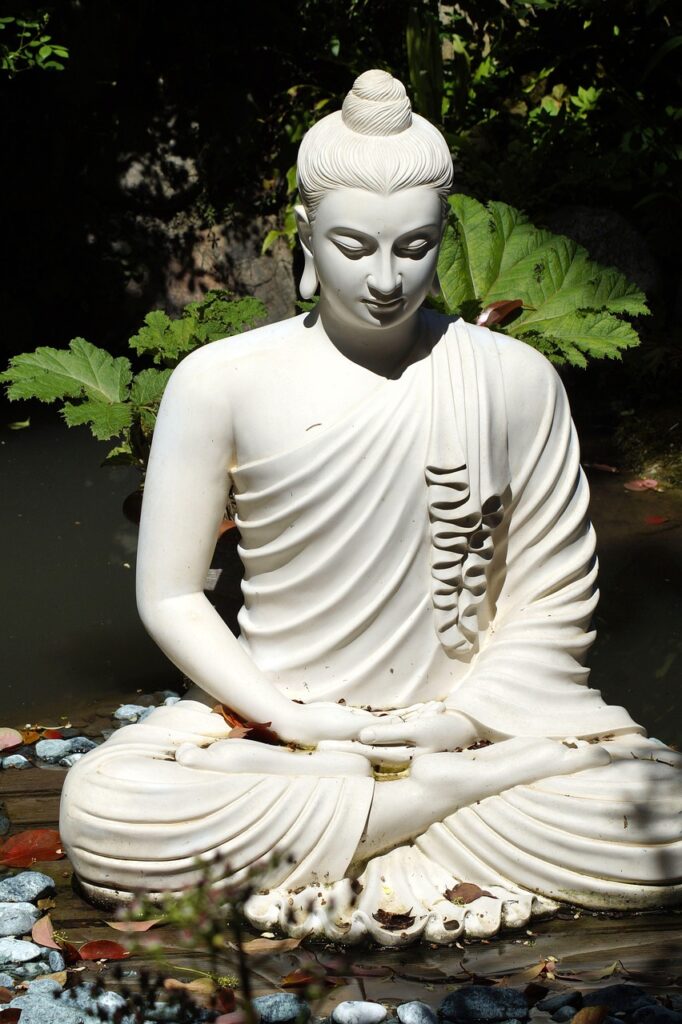
四神足  The Four Gods’ Feet
四神足  The Four Gods’ Feet

第一章 渇望の炎(欲神足)

朝霧がまだ森を包む薄明の中、アーナンダは小さな庵の前に立っていた。
彼の胸には、一つの強い「渇望」が燃えていた。

それは、ただの欲望ではない。
真理を求め、迷いを断ち切り、ニルヴァーナの智慧を得たいという純粋な願い。

その願いこそが、「欲神足」――修行を突き動かす火のような力だった。

彼は静かに呼吸を整え、心の奥底に問いかけた。

「何を望むのか、私は。」

思考の波が静まると、答えが浮かんできた。

(迷いを断ち、真理に到達したい。
この道を歩み続ける意志を、今こそ固めねばならぬ)

そう決意すると、彼の内に燃える渇望は、冷たくはかない欲望ではなく、
強く、そして澄み切ったエネルギーへと変わっていった。

その日、アーナンダは師のもとへ赴いた。
師は静かに微笑み、問いかける。

「アーナンダよ、お前の心の火はどう燃えているか?」

彼は答えた。

「わたしの望みは、揺るぎない覚悟となり、今ここにあります。
たとえどんな困難があろうとも、わたしは道を歩み続けます」

師はうなずき、静かに言った。

「その渇望こそが欲神足だ。
これを失えば、修行は流れ星のごとく消えてしまう。
だが、燃えすぎると炎は己を焼く。
渇望は強く、しかし柔軟に保て」

その後、アーナンダは修行の毎日に入る。
燃える意志を胸に、身体の痛みや心の揺れを乗り越え、坐禅に集中した。

時に心は乱れ、欲望に惑わされる。
だが、そのたびに渇望の炎を思い出し、折れずに立ち上がった。

夜空を見上げると、一つの星が彼の胸の内で輝いているように感じた。
それは、「真理を求める魂の灯火」。

欲神足の炎は、これからも彼の歩みを支え続けるだろう。

第二章 絶え間なき歩み(精進神足)

朝日の光が山の稜線を染め始めるころ、アーナンダはすでに林の中で歩を進めていた。
昨日の疲れなど感じさせぬ足取りは、まるで風のように軽やかだが、どこか確かな力強さを秘めていた。

彼の胸にあるのは、「精進神足」――
絶え間ない努力と持続する意志の力である。

「修行はただの一時の熱情ではない。
毎日、毎瞬、繰り返し歩み続けることが真の力となるのだ」

師の教えを反芻しながら、アーナンダは己の心の弱さと向き合っていた。

数日前、修行の道で幾度となく挫けそうになった夜のことを思い出す。

疲れから坐禅中に意識が薄れ、雑念に心を奪われた。
そのたびに、「もういいや」と諦めかけた自分を、必死に叱咤した。

「ここで止まれば、どこにも辿り着けない――」

そんな葛藤のなかでアーナンダは気づいた。

修行の本質は、完璧であることではない。
転んでも、何度でも立ち上がること。

その繰り返しが、やがて揺るぎない力となるのだ。

今日も彼は、森の奥の小さな清流のほとりで、黙々と呼吸を整え、坐禅に入った。

流れる水音が心の乱れを洗い流し、呼吸は徐々に深く、静かに整っていく。

「努力こそが、道の光。
走り続ける者にのみ、光は道を照らす」

彼の心に、師の言葉が再び響いた。

日が傾き、夕暮れの風が肌を撫でるころ、アーナンダは新たな決意を胸にした。

「どんなに困難でも、必ず進み続けよう。
その一歩一歩が、未来の智慧を紡ぐのだ」

、第三部「四神足」第三章、「意神足(いじんそく)」――意志の力第三章 揺るぎなき心柱(意神足)

霧深い朝、アーナンダは小高い丘の頂上に立っていた。
冷たい風が彼の袈裟を揺らし、遠くの森の緑を揺らす。

ここまでの道は決して平坦ではなかった。
修行の道は、肉体と精神の試練の連続であり、何度も心が折れそうになった。

しかし、彼の内にひとつの確かな柱が立っていた。
それが「意神足」――揺るぎなき意志の力である。

ある夜、疲労と孤独の淵に沈みそうになったとき、
アーナンダは自らに問いかけた。

「なぜ、私はこの道を歩むのか?」

答えはすぐには見つからなかったが、探求の中で一筋の光が差し込む。

(それは、苦しみを超え、真実の智慧を得て、すべての生きとし生けるもののために歩むためだ)

意志は、ただ強いだけでは意味を持たない。
柔軟さを持ちながら、揺るがずに保たねばならない。

そのバランスを学ぶため、アーナンダは禅

思考が風のように過ぎ去り、意志は中心に留まる。

師は言った。

「意神足は、岩のように固く、そして水のように柔らかくあれ。
その心柱が、修行者の道を支える」

アーナンダは静かにうなずき、心の中で誓った。

「揺るぎなく、しかし柔軟に。
この意志を支えに、さらに深く歩み続けよう」

第四章 鋭き眼差し(察神足)

薄曇りの午前、アーナンダは静かに川辺に座っていた。
水面に映る木々の揺らぎ、風に運ばれる葉のささやき。
彼の眼差しは、外界の細やかな動きに深く集中していた。

これは「察神足」――修行者が持つべき、鋭く明晰な観察力の鍛錬である。

彼の内面もまた、観察の対象だった。

心に湧き上がる感情の波、無意識に浮かぶ思考の影。
それらをただ受け入れ、判断も抵抗もせずに見つめ続ける。

以前は、怒りや焦りが生まれると、心はそれに飲み込まれ、迷いの渦に巻き込まれた。
だが今、アーナンダは一歩引き、その感情を第三者のように見つめることができる。

「心の動きは、川の流れのようだ。
それに逆らわず、ただ観察することが智慧の第一歩だ」

師の言葉が胸に響く。

「察神足は、真理の透視眼。
これがなければ、誤った道に迷い込む」

アーナンダは深い息を吸い、目を閉じた。
心の中に生じる微細な変化を、まるで星の瞬きを見るように感じ取る。

この観察の力こそが、彼の修行の根幹を成し、
未来に訪れる試練を乗り越えるための灯火となるだろう。


The Four Gods’ Feet

Chapter 1: Flames of Desire

In the twilight when morning mist still enveloped the forest, Ananda stood in front of a small hermitage.

A strong “desire” was burning in his chest.

It was not just desire.
A pure wish to seek the truth, cut off delusion, and attain the wisdom of Nirvana.

That wish was “desire” – a fiery force that drove his training.

He calmed his breathing and asked himself in the depths of his heart.

“What do I want?”

As the waves of his thoughts calmed, the answer came to him.

(I want to cut off delusion and reach the truth.
Now is the time to strengthen my will to continue walking this path.)

With that decision, the desire burning within him was no longer a cold, fleeting desire, but a strong, clear energy.

That day, Ananda went to see his master.

The master smiled quietly and asked.

“Ananda, how is the fire in your heart burning?”

He answered.

“My desire has become an unwavering resolve, and it is here now.

No matter what difficulties I face, I will continue on the path.”

The master nodded and said quietly.

“That desire is the lustful power.

If you lose it, your training will disappear like a shooting star.

But if it burns too much, the flame will burn you.

Keep your desire strong, but flexible.”

After that, Ananda began to train every day.

With a burning will in his heart, he overcame the pain in his body and the turmoil in his mind, and concentrated on zazen.

At times his mind was disturbed, and he was led astray by desire.

But each time he remembered the flame of his desire, and stood up unbroken.

Looking up at the night sky, he felt as if a star was shining in his heart.
It is the “light of the soul that seeks the truth.”

The flame of Yokushintari will continue to support his steps.

Chapter 2: Uninterrupted Walking (Shojinshintari)

As the light of the morning sun begins to paint the mountain ridges, Ananda is already walking through the forest.

His steps are as light as the wind, showing no sign of the tiredness of the previous day, but there is a certain strength hidden within.

What he has in his heart is “Shojinshintari” —
the power of ceaseless effort and sustained will.

“Practice is not just a momentary passion.
The true strength comes from continuing to walk repeatedly, every moment, every day.”

While ruminating on his teacher’s teachings, Ananda was facing the weakness of his own heart.

He remembers a night a few days ago when he had nearly given up on his path of training.

During his zazen meditation, he lost consciousness due to fatigue, and his mind was taken up by distracting thoughts.
Each time, he would desperately scold himself for giving up and saying, “That’s enough.”

“If I stop here, I’ll never get anywhere.”

In the midst of this struggle, Ananda realized.

The essence of training is not to be perfect.

Even if you fall, you should get up again and again.

Repeating this will eventually become an unshakable strength.

Today, too, he sat in silence by a small, clear stream deep in the forest, regulating his breathing and meditating.

The sound of the flowing water washed away the disturbance in his mind, and his breathing gradually became deeper and quieter.

“Effort is the light of the path.
Only those who keep running can see the light of the path.”

The words of his teacher echoed in his mind again.

As the sun went down and the evening breeze caressed his skin, Ananda felt a new resolve in his heart.

“No matter how difficult it may be, I will keep moving forward.
Every step will weave the wisdom of the future.”

Part 3 “The Four Divine Feet”, Chapter 3, “Ijinsoku” – Willpower Chapter 3: Unwavering Heart Pillar (Ijinsoku)

On a foggy morning, Ananda stood at the top of a small hill.
The cold wind shook his robe and shook the green of the distant forest.

The road to this point was by no means smooth.
The path of training was a series of physical and mental trials, and he was close to breaking down many times.

But one solid pillar stood within him.
That was “Ijinsoku” – unwavering willpower.

One night, when he was about to sink into the depths of fatigue and loneliness,
Ananda asked himself.

“Why am I walking this path?”

He didn’t find the answer right away, but a ray of light shone through in his search.

(It was to transcend suffering, attain true wisdom, and walk for all living beings.)

A strong will is meaningless if it’s just strong.
It must be flexible and unwavering.

To learn that balance, Ananda practiced Zen.

Thoughts pass by like the wind, and the will remains at the center.

The master said.

“The will should be as hard as a rock, yet as soft as water.
This central pillar supports the path of the practitioner.”

Ananda nodded quietly and vowed in his heart.

“Unwavering, yet flexible.
With this will as my support, I will continue to walk deeper.”

Chapter 4: A Sharp Gaze (Sensing Sight)

On a cloudy morning, Ananda sat quietly by the river.

The swaying of the trees reflected on the water’s surface, the rustling of leaves carried by the wind.

His gaze was focused deeply on the minute movements of the outside world.

This was “sensation” – the training of sharp and clear observation that a practitioner should have.

His inner self was also an object of observation.

The waves of emotions welling up in his mind, the shadows of thoughts floating unconsciously.

He simply accepted them, continuing to stare at them without judging or resisting them.

In the past, when anger or impatience arose, his mind was consumed by them, and he was caught up in a whirlpool of confusion.
But now Ananda was able to take a step back and look at those emotions as if he were a third party.

“The movements of the mind are like the flow of a river.
The first step to wisdom is to simply observe without resisting it.”

His teacher’s words resonated in his heart.

“sensation is the clairvoyance of the truth.
Without it, you will stray down the wrong path.”

Ananda took a deep breath and closed his eyes. He senses minute changes occurring within his mind as if he were seeing the twinkling of stars.

This power of observation will form the basis of his training,
and will be the light that will help him overcome the challenges that lie ahead.

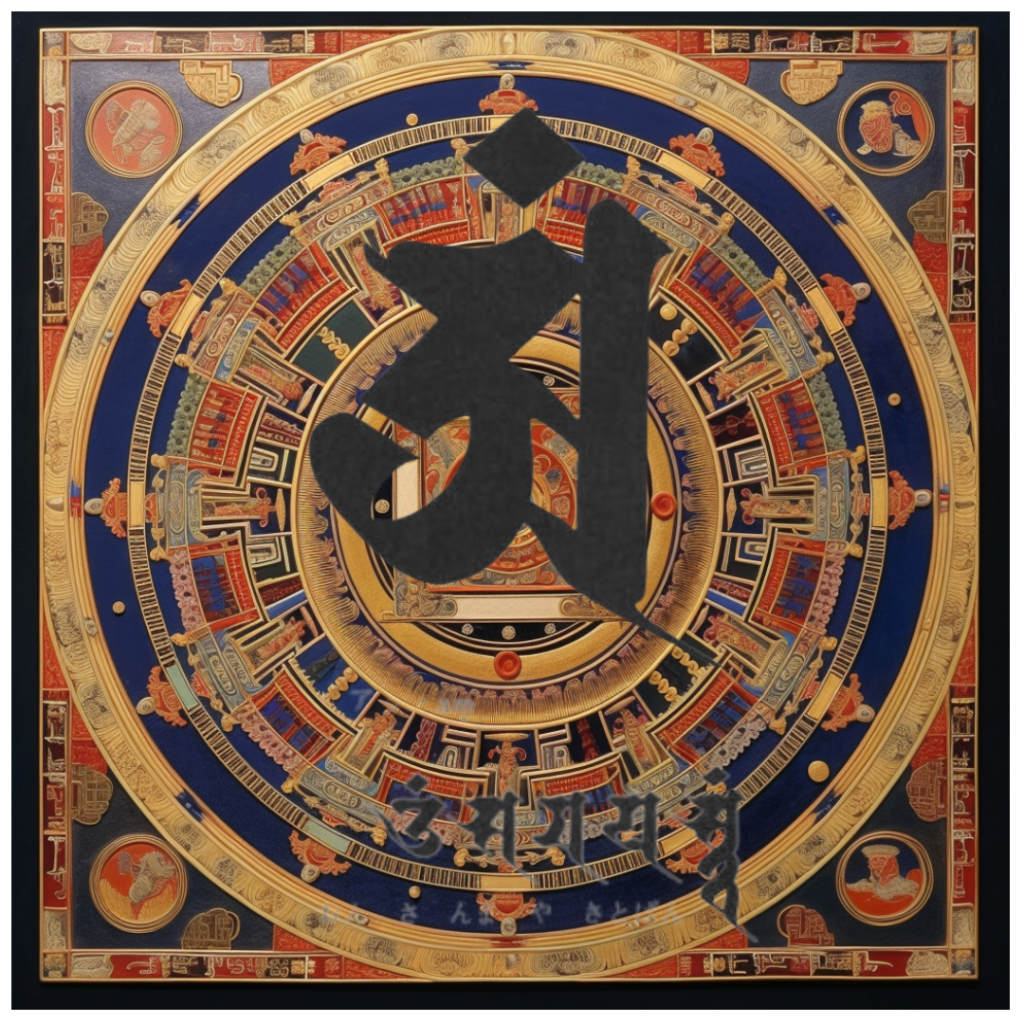


■ 四神足(しじんそく)とは つの心の鍛錬法(四つの集中法

四神足(しじんそく)について詳しく解説いたします。これは仏教における高度な修行段階に位置づけられる「神通力(じんつうりき)」の実現を支えるための、**四つの心の鍛錬法(四つの集中法)**です。

■ 四神足(しじんそく)とは

「四神足」は、サンスクリット語で「catasro ṛddhipādaḥ(チャトゥシュリッディパーダ)」といい、
直訳すると「神通の足(あし)」、つまり神通力への道筋・基礎・手がかりという意味です。

◯ 目的

深い三昧(サマーディ)に入るための修行法

五神通(他心通・天耳通など)など超越的な力の発現

解脱に向かう集中力の完成

■ 四神足の構成要素

四神足には、それぞれ「三昧」(深い集中)と「修習」(継続した実践)を組み合わせた四つの道があります。

名称サンスクリット語内容の概要修行の特徴欲神足(よくじんそく)chanda-ṛddhipāda「修行をしたい」という欲(意欲)を基盤とした集中正しい願望が強い集中力を生む勤神足(ごんじんそく)vīrya-ṛddhipāda勤(努力)を基盤にして三昧に入る継続的な精進によって集中力を高める心神足(しんじんそく)citta-ṛddhipāda心(精神の統一)を基盤にした集中心を静かに一つに保つことで三昧に至る観神足(かんじんそく)mīmāṃsā-ṛddhipāda / vīmaṃsā観察・省察(智慧)を基盤とした集中物事を正しく見て深める洞察力による集中

■ 四神足の修行過程と意味

1. 欲神足(chanda)

仏道修行において「やりたい、知りたい、目覚めたい」という正しい欲求を持つこと。

欲望というと否定されがちですが、仏教では**善き欲求(善欲)**は、向上心として重視されます。

欲が強まることで、その対象に心が集中していく。

🧘‍♀️ 例:覚醒したいという強い願いが、瞑想の集中を促す

2. 勤神足(vīrya)

継続的な努力(精進)によって、集中状態を築く。

三昧は一瞬では得られないため、反復的な修習が不可欠。

四正勤とも通じ、悪を止め善を増やす努力が含まれる。

🧘‍♂️ 例:日々の瞑想を怠らず積み重ねることで、心が整っていく

3. 心神足(citta)

心そのものを柔らかく、静かに、一点に定める訓練。

「心を制する者は、世界を制する」というように、集中の核心を成す。

雑念を払い、心を調える技術が求められる。

🧘 例:呼吸に意識を集中し、心の波を静める

4. 観神足(mīmāṃsā / vīmaṃsā)

知恵と観察力によって、真理を見抜くための集中。

特に「四念処(身・受・心・法の観)」の修習と深く関わる。

現象の無常・苦・無我を見つめ、執着を離れていく。

🧘‍♀️ 例:体験に対して「これは生じ、変わり、消えていくものだ」と観察する

■ 四神足と仏教修行の位置づけ

四神足は、以下のような仏教の修行階梯と密接に関係します。

段階内容四念処(しねんじょ)身・受・心・法を観察する四正勤(ししょうごん)善を育て、悪を止める努力四神足(しじんそく)集中力を高める四つの実践五根・五力信・精進・念・定・慧を育てる七覚支・八正道解脱への完成された道

■ 四神足を現代的に応用するなら?

現代人の瞑想や自己鍛錬にも、四神足は非常に応用可能です。

神足現代的実践例欲神足「自分の成長を強く願う」意図を明確にする勤神足毎日の習慣として瞑想・日記・修行を続ける心神足集中を妨げるスマホなどを遠ざけ、静かな時間をつくる観神足自分の心の動きや感情を冷静に観察し、手放す力を養う

■ まとめ

四神足は、仏道修行者が深い集中力と神通力を得るための土台となる実践です。
しかしそれは単なる超能力を目指すものではなく、心を制御し、智慧を育て、解脱への道を進むための核心的技法です。

観る智慧― 四念住(しねんじゅう) Wisdom of Observation – Four Mindfulness

観る智慧― 四念住(しねんじゅう) Wisdom of Observation – Four Mindfulness


The Wisdom of Observation – The Four Mindfulness Points

第一部「四念住」

第二章 受念住 ― 揺れる心、たゆたう感覚

それは、ある雨の日のことであった。

小屋の屋根を打つ雨音が、単調に続いていた。外界とのすべての関係が断たれ、アーナンダは己の心とだけ向き合う静寂にあった。

彼は坐を組み、そっと目を閉じる。

「次に観ずべきは、受である」と、師バラモンは語っていた。

「受とは、感受である。喜び、苦しみ、快・不快、無関心――それらは心に生じては消える波。だが、愚者はそれを“わがもの”と思い、掴み、流される。賢者はそれを“ただの感受”と見て、手放す」

アーナンダは、その言葉を思い出しながら、心の中を見つめる。しばらく何も感じないように思えた。だが、そこに注意を集中すると、確かにあった。

――物悲しさ。
――孤独。
――そして、小さな焦り。

(ああ、わたしの中には、苦の“受”がある……)

彼は、その苦を否定せず、ただ見つめた。まるでそれが誰か他人の苦しみであるかのように。

やがて、その苦は、静かに姿を変えていった。悲しみの底にあったのは、愛だった。師への思慕、仲間への想い。だがその想いが叶わぬとき、人は苦を生じる。

「なるほど……」

次に、彼の心に過去の記憶がよぎった。師の言葉に褒められたあの日、胸が熱くなったあの瞬間。

(これが、楽の“受”)

楽しさもまた、ただの感覚。永遠には続かず、変わりゆくもの。

そして今――雨音だけが響く静寂の中で、彼の心は不思議な「中立」の感覚に包まれていた。苦しくもなく、楽しくもない。ただ、静かにそこにある。

(これが、捨受。すなわち「無記の受」……)

アーナンダの呼吸は深くなっていく。感覚が、波のように生まれては消えていくのを、ただ見守っている。

そこに、永遠なるものはなかった。

苦も楽も、「わたし」のものである必要はなかった。

それらは、ただ生じて、ただ滅する。

それが真実なのだ。

アーナンダはそっと目を開いた。雨は、いつのまにか止んでいた。雲間から一筋の光が差し込み、土の匂いが、清らかな風に混じって流れてきた。

彼はその光と香りを、ただ受け取った。歓喜もなく、拒絶もなく。

――これが、受念住。

心に生じるあらゆる感覚を、ただの“波”として見る。その深奥に、智慧の芽がひそかに宿りはじめていた。

心念住 ― 心のかたちを映す鏡

月が昇るころ、山の庵には、静寂が降りていた。アーナンダは、薄衣を肩に掛け、今夜もひとり、坐に入った。

「身を観じ、受を観じて、最後に残るもの。それが“心”である」と、師は語った。

「心念住とは、今この瞬間、いかなる心があるかを知ること。貪りがあるか、怒りがあるか、迷いがあるか。あるいは、それが去ったのか。それを知り、見抜き、離れていくこと」

アーナンダは、呼吸とともに心を澄ませていく。すると、突如――

ひとつの記憶が浮かび上がった。

それは、かつて仲間の修行僧と些細な言い合いをした日のこと。相手の言葉が、どうしても許せなかった。彼の中に、怒りがふつふつと沸いた。

そして今、瞑想の中でもなお、その怒りの「残り香」が微かに蘇ってくるのを感じた。

(怒り……)

彼は、その心を見つめた。

怒りとは、火のようなものだ。心を焼き、理を失わせる。だがその火も、ただ心に生じた一つの現象にすぎない。真実の“我”ではない。

アーナンダはさらに心を沈めた。

すると今度は、静かな慈しみが湧き上がってくる。あのとき、自分もまた苦しかった。相手もまた迷いの只中にいた。――それを赦す心。

(これも、また心)

欲する心、怒る心、信じる心、疑う心――どれもが、現れては消える。流れる雲のように。

それを「私」と呼ぶなら、「私」は刻々と形を変え、定まることがない。

(では、“私”とは何なのか?)

アーナンダは、その問いを胸に置いたまま、ただ心を観じ続けた。

今、この瞬間、自分の心は穏やかか、動揺しているか。眠気はあるか、喜びはあるか。ありのままに、それを映し出す“心の鏡”を、自らの内に据える。

すると彼の内なる空間に、透明な静けさが生まれた。

心とは、無限の姿を取りながら、空に浮かぶ雲のように、来ては去り、現れては消える。

それを知ったとき、アーナンダの中に、柔らかな微笑が芽生えた。

もはや、怒りや欲に巻き込まれる必要はなかった。

なぜなら――彼は、それらが「ただの心の状態」であると、知ったからだ。


心念住 ― 心のかたちを映す鏡

月が昇るころ、山の庵には、静寂が降りていた。アーナンダは、薄衣を肩に掛け、今夜もひとり、坐に入った。

「身を観じ、受を観じて、最後に残るもの。それが“心”である」と、師は語った。

「心念住とは、今この瞬間、いかなる心があるかを知ること。貪りがあるか、怒りがあるか、迷いがあるか。あるいは、それが去ったのか。それを知り、見抜き、離れていくこと」

アーナンダは、呼吸とともに心を澄ませていく。すると、突如――

ひとつの記憶が浮かび上がった。

それは、かつて仲間の修行僧と些細な言い合いをした日のこと。相手の言葉が、どうしても許せなかった。彼の中に、怒りがふつふつと沸いた。

そして今、瞑想の中でもなお、その怒りの「残り香」が微かに蘇ってくるのを感じた。

(怒り……)

彼は、その心を見つめた。

怒りとは、火のようなものだ。心を焼き、理を失わせる。だがその火も、ただ心に生じた一つの現象にすぎない。真実の“我”ではない。

アーナンダはさらに心を沈めた。

すると今度は、静かな慈しみが湧き上がってくる。あのとき、自分もまた苦しかった。相手もまた迷いの只中にいた。――それを赦す心。

(これも、また心)

欲する心、怒る心、信じる心、疑う心――どれもが、現れては消える。流れる雲のように。

それを「私」と呼ぶなら、「私」は刻々と形を変え、定まることがない。

(では、“私”とは何なのか?)

アーナンダは、その問いを胸に置いたまま、ただ心を観じ続けた。

今、この瞬間、自分の心は穏やかか、動揺しているか。眠気はあるか、喜びはあるか。ありのままに、それを映し出す“心の鏡”を、自らの内に据える。

すると彼の内なる空間に、透明な静けさが生まれた。

心とは、無限の姿を取りながら、空に浮かぶ雲のように、来ては去り、現れては消える。

それを知ったとき、アーナンダの中に、柔らかな微笑が芽生えた。

もはや、怒りや欲に巻き込まれる必要はなかった。

なぜなら――彼は、それらが「ただの心の状態」であると、知ったからだ。

第四章 法念住 ― 真理に目覚めるまなざし

森の夜は、深く、静かであった。
アーナンダは、灯明も持たずに、木の根元に坐った。目を閉じ、ただ己の呼吸と共にある。

この夜、彼は、ある問いを胸にしていた。

(苦しみの根は、どこにあるのか?)

思い返せば、さまざまな「感情」「思考」「記憶」が、彼を悩ませてきた。だが、それらは単なる現象ではなかったか? なぜ、人は現象に巻き込まれ、迷い、煩悩にとらわれるのか?

その答えを、師はこう語っていた。

> 「アーナンダよ、汝は“法”を観ずして、ただ感情に揺れるばかりではないか。心に生じるもの、すべては“因と縁”によって生じる。
> それを見よ――すなわち“十二因縁”の観察である。
> 無明あれば、行あり。行あれば、識あり。識より名色、六処、触、受、愛、取、有、生、老死……」

アーナンダは、師の言葉を胸に、その因縁の連鎖を観ていった。

――無明。
(知らぬこと、気づかぬこと。真理を見ないまま生きること)
――行。
(無明から出た衝動、業の積み重ね)
――識。
(意識が生まれ、世界と自我が目覚める)

……と連鎖は続き、やがて「老い」「死」へと至る。

(このすべてが、苦の流れ。だが、その根源は、“無明”にあったのか……)

アーナンダの心は、少しずつ沈み込んでいった。

彼はまた、五蘊にも思いを馳せた。
色・受・想・行・識――すなわち、肉体、感覚、認識、意思、意識。

(これが「わたし」だと思ってきたものは、すべて集まりでしかなかった……)

彼は、自らの心身を、「自己」としてではなく、「法」として見始めた。

喜びも、怒りも、肉体の疲労も、思い出も――すべては因縁によって一時的に現れた、無常の現象であった。
それらを掴んで「これは私」と思うことが、苦のはじまりだったのだ。

彼の心は、深い沈黙のなかで、透き通っていった。
――すべてのものは、縁により生じ、縁により滅す。
――それが、「法(ダンマ)」である。

アーナンダは、静かに息を吐いた。
彼の内なる目は、ついに「真理の流れ」を見つめはじめたのだった。

煩悩は、ただ現れては消える泡。
「我」は、それに名前を与えていたに過ぎない。

――これが、法念住。

四念住の最後にして、智慧の扉が開く一歩手前の、最も深い観照。

夜が明け、東の空が白みはじめていた。
アーナンダのまなざしには、もはや揺らぎがなかった。


Part 1: The Four Mindsets

Chapter 2: Mindset of Feeling – A Wavering Mind, Floating Senses

It was a rainy day.

The sound of rain hitting the roof of the hut continued monotonously. All ties with the outside world were severed, and Ananda found himself in silence, facing only his own mind.

He sat cross-legged and gently closed his eyes.

“The next thing to observe is feeling,” his teacher, the Brahmin, had said.

“Feeling is perception. Pleasure, pain, pleasure, discomfort, indifference — these are waves that arise and disappear in the mind. But fools think of them as ‘mine,’ grab hold of them, and are swept away. A wise man sees them as ‘just perceptions,’ and lets them go.”

Ananda remembered those words and looked into his heart. For a while it seemed like he felt nothing. But when he focused his attention there, he could certainly see it.

–Sadness.
–Loneliness. –And then, a small sense of impatience.

(Ah, inside me there is the “receiving” of suffering…)

He didn’t deny the suffering, he just stared at it. As if it was someone else’s suffering.

Soon, the suffering quietly changed its form. At the bottom of the sadness was love. Yearning for his teacher, feelings for his friends. But when these feelings are not fulfilled, people suffer.

“I see…”

Next, a memory from the past flashed through his mind. That day when his teacher praised him, that moment when his heart warmed.

(This is the “receiving” of pleasure)

Pleasure is also just a feeling. It doesn’t last forever, it changes.

And now–in the silence where only the sound of rain echoes, his heart was enveloped in a strange feeling of “neutrality.” It was neither painful nor enjoyable. It was just there, quietly.

(This is renunciation. In other words, “unawareness of feeling”…)

Ananda’s breathing became deeper. He simply watched as the sensations arose and disappeared like waves.

There was nothing eternal there.

Pain and pleasure did not have to belong to “me”.

They simply arise and simply disappear.

That is the truth.

Ananda gently opened his eyes. The rain had stopped at some point. A ray of light shone through the clouds, and the smell of the earth mixed with the pure breeze flowed in.

He simply accepted the light and the scent. Without joy, without rejection.

–This is mindfulness of feeling.

He sees all the sensations that arise in his mind as mere “waves.” Deep within, the seeds of wisdom were secretly beginning to dwell.

Mindfulness – A mirror that reflects the shape of the mind

As the moon rose, silence descended on the mountain hermitage. Ananda draped a thin robe over his shoulders and sat alone again tonight.

“Observe the body, observe the feeling, and what remains in the end is the ‘mind’,” his teacher said.

“Mindfulness is knowing what kind of mind you have at this very moment. Is there greed, anger, confusion? Or have they gone? Knowing, seeing through, and letting go.”

Ananda cleared his mind as he breathed. Then, suddenly-

A memory surfaced.

It was a day when he had a trivial argument with a fellow monk. He could not forgive the words the other person had said. Anger bubbled up inside him.

And now, even in meditation, he felt a faint lingering scent of that anger returning to him.

(Anger…)

He stared at his heart.

Anger is like fire. It burns the heart and makes one lose one’s reason. But this fire is merely a phenomenon that arises in the heart. It is not the true “self.”

Ananda calmed his heart even further.

Then, this time, a quiet compassion welled up inside him. At that time, he too had suffered. The other person was also in the midst of confusion. –A heart that forgives them.

(This is also the heart)

The heart that desires, the heart that is angry, the heart that believes, the heart that doubts — each of these appears and disappears. Like passing clouds.

If this is called “I,” then the “I” changes shape from moment to moment and is never fixed.

(So what is “I”?)

Ananda kept this question in his mind and simply continued to observe his heart.

Right now, at this moment, is his mind calm or agitated? Is he feeling sleepy? Is he feeling joyful? He placed within himself the “mirror of the mind” that reflected things as they really were.

A clear silence was born in his inner space.

The mind is like a cloud floating in the sky, coming and going, appearing and disappearing, while taking on infinite forms.

When Ananda realized this, a soft smile began to form within him.

There was no need to get caught up in anger or desire any longer.

Because he realized that these were “simply states of mind.”

Mindfulness – A mirror that reflects the form of the mind

As the moon rose, silence fell upon the mountain hermitage. Ananda draped a thin robe over his shoulders and sat alone again tonight.

“Observe the body, observe the feeling, and what remains in the end is the ‘mind,'” his teacher said.

“Mindfulness is knowing what kind of mind you have at this very moment. Is there greed, anger, or confusion? Or have they gone away? To know, see through, and let go.”

Ananda cleared his mind as he breathed. Then, suddenly-

a memory surfaced.

It was a day when he had a trivial argument with a fellow monk. He could not forgive what the other person had said. Anger bubbled up inside him.

And now, even in meditation, he felt the faint “lingering scent” of that anger returning.

(Anger…)

He stared at his heart.

Anger is like fire. It burns the heart and makes you lose your reason. But that fire is just a phenomenon that arises in the heart. It is not the true “self.”

Ananda calmed his mind even more.

Then, this time, a quiet compassion welled up inside him. At that time, he was also suffering. The other person was also in the midst of confusion. — the heart that forgives.

(This is also the heart)

The heart that desires, the heart that is angry, the heart that believes, the heart that doubts — each of these appears and disappears. Like a passing cloud.

If we call that “I”, then the “I” changes shape from moment to moment and is never fixed.

(So what is “I”?)

Ananda kept this question in his mind and simply continued to observe his heart.

Right now, at this very moment, is his heart calm or agitated? Is he feeling sleepy? Is he feeling joyful? He placed within himself a “mirror of the heart” that reflected it as it is.

A clear silence was born in his inner space.

The heart is an infinite form, but like a cloud floating in the sky, it comes and goes, appears and disappears.

When he realized this, a soft smile sprouted within Ananda.

There was no longer any need to get caught up in anger or desire.

Because — he knew that they were “just states of mind.”

Chapter 4: Mindfulness of the Dharma – A gaze that awakens to the truth

The night in the forest was deep and quiet.

Ananda sat at the base of a tree without a lamp. He closed his eyes and was simply with his own breathing.

That night, he had a question in his mind.

(Where is the root of suffering?)

Looking back, he had been troubled by various “emotions,” “thoughts,” and “memories.” But weren’t they just phenomena? Why do people get caught up in phenomena, become lost, and become trapped by worldly desires?

His teacher gave the answer:

> “Ananda, you are not observing the ‘dharma’, but are merely swayed by emotions. Everything that arises in the mind is caused by ’cause and condition’.

> Look at this – that is, observe the ‘twelve dependent causes’.

> Where there is ignorance, there is action. Where there is action, there is consciousness. From consciousness comes name and form, the six sense organs, touch, feeling, loving, grasping, being, birth, old age and death…”

Ananda took his teacher’s words to heart and observed the chain of causes.

–Ignorance.

(Not knowing, not realizing. Living without seeing the truth)
–Action.

(Impulse born from ignorance, accumulation of karma)
–Consciousness.

(Consciousness is born, and the world and the ego are awakened)

… and the chain continues, eventually leading to ‘old age’ and ‘death’.

(All of this is a flow of suffering. But perhaps its root lies in “ignorance”…)

Ananda’s mind slowly sank.

He also thought about the five aggregates.

Form, feeling, perception, volition, and consciousness – that is, the body, senses, perception, will, and consciousness.

(Everything I had thought of as “I” was nothing more than a collection…)

He began to see his own body and mind not as “self” but as “dharma.”

Joy, anger, physical fatigue, memories – all were impermanent phenomena that appeared temporarily due to causal conditions.

Grabbing hold of these things and thinking of them as “I” was the beginning of suffering.

His mind became clear in the deep silence.
–All things arise from conditions and perish from conditions.
–That is “dharma.”

Ananda exhaled quietly. His inner eyes had at last begun to gaze upon the “stream of truth.”

Earthly desires are merely bubbles that appear and disappear.
“I” has merely given them a name.

–This is mindfulness of the Dharma.

The last of the four mindfulness practices, the deepest contemplation, one step before the door to wisdom opens.

Dawn broke, and the eastern sky was beginning to lighten.
Ananda’s gaze no longer wavered.

2025年6月45日 今日の運命 Today’s Fate 今日缘分

2025年6月45日 今日の運命 Today’s Fate 今日缘分


乙巳 二黒土星 歳
壬午 七赤金星 節
乙巳 九紫火星 日


九紫火星の日

金銭問題、女性にかかわる苦労あり。人に背反されることあり。派手な苦労をする日

破壊の週 衰の日

どんな状況でも冷静に対応したい日

精神的に不安定で、特に健康面で不安定な日です。病気や怪我に十分な注意が必要です。さらにメンタルの不安定さから、甘言に騙される心配があります。メンタルの不安定さから安易な選択をしてしまいがちなので、商談や交渉事、契約は避けた方が無難です。どんなにうまい話であってもこの日に決断するのは避けましょう。この日は心身を整える日だと理解して、一人でリラックスして過ごす時間を確保することが災難回避のカギです。

June 45, 2025 Today’s Fate Today’s Fate Today’s Fate


Yi Shan 2 Black Earth Star Year

Jin Wu 7 Red Metal Star Node
Yi Shan 9 Purple Fire Star Day


9 Purple Fire Star Day

Financial problems, troubles with women. You may be betrayed by people. A day of flashy troubles

Week of Destruction 1st Day

A day to respond calmly in any situation

It is a day when you are mentally unstable, especially in terms of health. You need to be careful about illness and injury. Furthermore, because of your mental instability, you are worried about being deceived by sweet words. Because of your mental instability, you tend to make easy choices, so it is safer to avoid business meetings, negotiations, and contracts. No matter how good the deal is, avoid making decisions on this day. The key to avoiding disaster is to understand that this day is a day to prepare your mind and body, and to make sure you have time to relax alone.


2025年6月45日 今日运势 今日运势

宜山二 土黍年

金午七 赤金交点
宜山九 紫火星日

九 紫火星日

财务问题,女性问题。你可能会被人背叛。这是一个充满浮夸烦恼的一天。

毁灭周 第一天

冷静应对任何情况的一天

这是你的精神状态不稳定的一天,尤其是在健康方面。你需要小心疾病和受伤。此外,由于你的精神状态不稳定,你担心被甜言蜜语欺骗。由于你的精神状态不稳定,你倾向于做出轻易的决定,所以避免商务会议、谈判和合同会更安全。无论交易多么好,都不要在这一天做决定。避免灾难的关键在于理解这一天是让你身心俱疲的一天,并确保你有时间独自放松。


普賢菩薩

あらゆる場所に現れ、命あるものを救う慈悲を司る菩薩

名サマンタバドラ (Samanta bhadra) の「サマ 「タ」は「く」、「バドラ」は「賢」と漢訳しま す。 「賢」とは具体的には「さとりを求める心か 起こる、成仏しようとする願いと行ない」のこ とです。それが、ときとところを選ばず在して いるということを象徴したのがこの菩薩です。 で すから、菩薩行を実践する者をつねに守護するほ とけでもあります。

白象に乗り、文殊菩薩とともに釈迦如来 の脇侍をつとめます。 文殊菩薩のに対して、 (行)をつかさどります。

なお、密教では、堅固不壊の菩提心を象徴する

金剛薩埵と同体とします。

と巳年生まれの人の守り本尊とされていま


普賢菩薩(ふげんぼさつ)とは?

普賢とは「全てにわたって賢い者」という意味で、あらゆるところに現れ命ある者を救う行動力のある菩薩です。


文殊菩薩とともに釈迦如来の右脇侍として三尊で並ぶことが多いですが、独尊で祀られる場合もあります。文殊菩薩の智慧とともに修行を司る菩薩として、明晰な智慧で掴み取った仏道の教えを実践していく役割を果たすとされています。また、女性の救済を説く法華経の普及とともに女性に多く信仰を集めました。


ちなみに普賢菩薩から派生した仏に延命のご利益のある普賢延命菩薩があります。

ご利益

女性守護、修行者守護、息災延命、幸福を増やす増益のご利益があるとされています。また、辰・巳年の守り本尊です。

普賢菩薩(ふげんぼさつ)の像容

白象に乗っている姿が一般的です。3つや4つの頭の象に乗っている場合は普賢延命菩薩像の可能性が高いです。


DJI vlogカメラ Osmo Pocket 3 クリエイターコンボ 1インチCMOS 4K 120fps 動画対応 3軸スタビライザー ジンバル 


DJI vlogカメラ Osmo Pocket 3 クリエイターコンボ 1インチCMOS 4K 120fps 動画対応 3軸スタビライザー ジンバル 


ニルヴァーナの智慧を求めて In Search of Nirvana’s Wisdom

ニルヴァーナの智慧を求めて
In Search of Nirvana’s Wisdom

静寂の山に 風が舞い
古寺の扉 時を越え
無明を裂いて 歩む影
巻物に宿る ブッダの声

七つの門を くぐるたび
心の奥に 光が差す
三十七の 真理の階(きざはし)
我はただ 智慧の道を往く


Silent winds trace the mountain line
The temple door transcends all time
A shadow walks to pierce the night
Buddha’s voice in scrolls of light

Through seven gates, I make my way
A beam of truth begins to stay
Thirty-seven steps I climb
On wisdom’s path beyond all time