UA-135459055-1

仏教

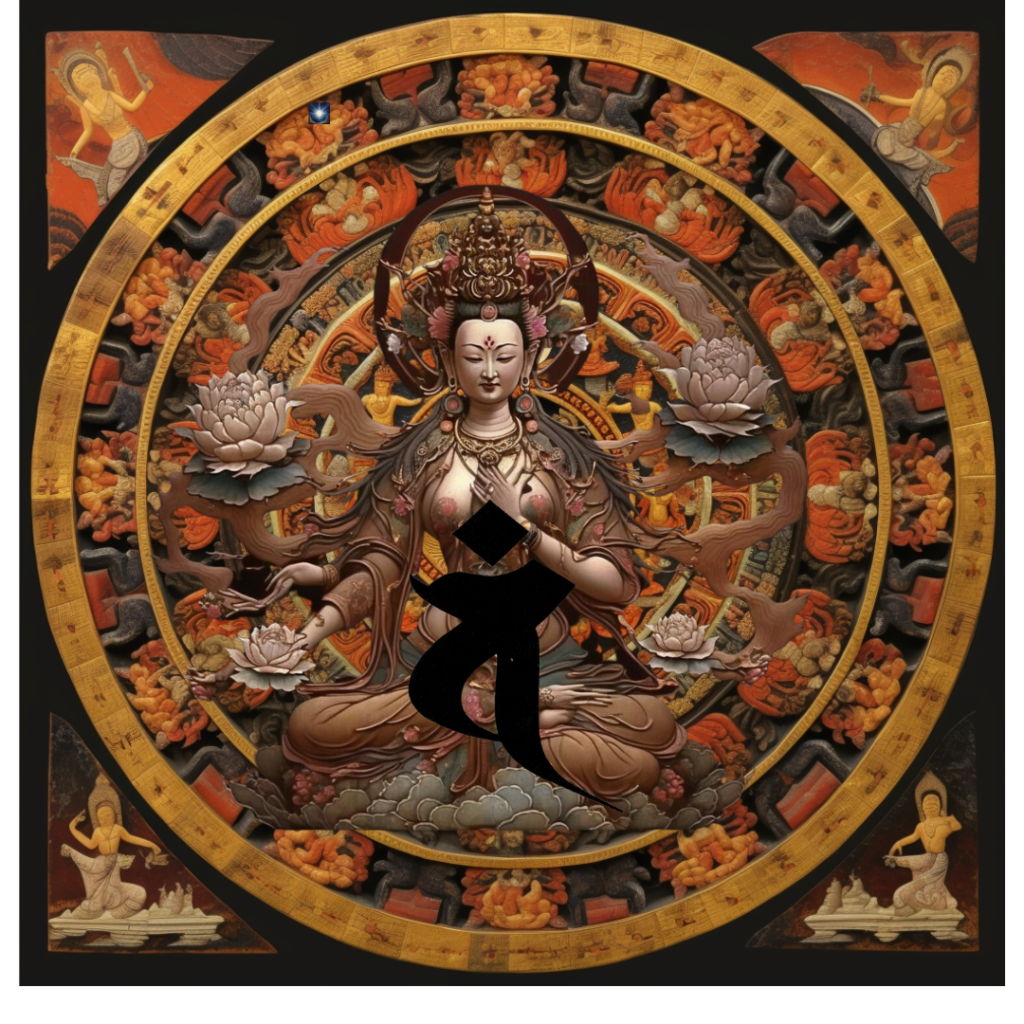
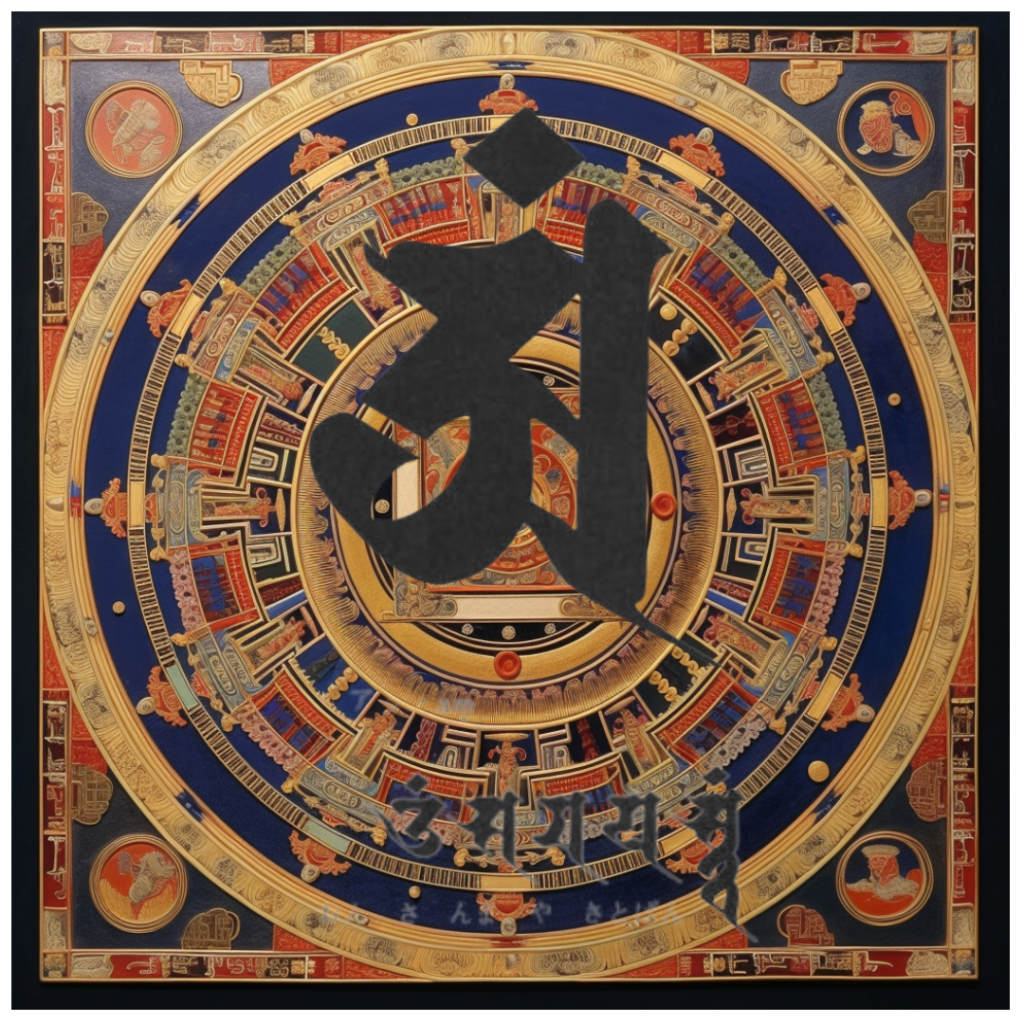
 准肌観音  Sanskrit character quasi-skin Kannon


副膀胱観音マントラナウマクサタナンサンミャクサンボダクチナン

准肌観音

准胱観音真言

真言は短呪の「オン・シャレイ・シュレイ・ジュンテイ・ソワカ」(Oṃ cale cule cunde svāhなどがよく知られている。長咒は「ナモサッタナン・サンミャクサンモダクチナン・タニヤタ・オン・シャレイ・シュレイ・ジュンテイ・ソワカ」。

なう まく さ た なん さん みゃく さん ぼ だ く ち なんた にや た おん しゃ れい しゅ れい じゅん でい そわ か

准服とは、梵名チユンデイ上のの音写 「清浄無垢」という意味があり、さとりの道を歩ませる観音です。
別名、准服仏母、七倶服仏母とも呼ばれます。七倶服とは「無量」を意味しますから、多くの諸仏の母となります。そのため観音菩薩ではないと
の説もあります。経軌にも観音として説かれていないことから、犬台密教では准肛如来として仏部の尊としますが、真言密教では観音の一つとして六観音の中に加えます。

 求児・安産の本尊としてもまつられます。もとは水の神で、その姿は女身といわれています。
なお、胎蔵曼荼羅中台八葉院の観音の種子は、この准服観音のブ(回)字が記されています。

Associate skin Kannon

The mantra is well known as the short curse “On Sharay Shrey Juntei Sowaka” (Oṃ cale cule cunde svāh, etc. Juntei Sowaka “.


Associate Bladder Kannon Mantra
Nau Makusata Nansan Myakusan Bodakuchi Nan
Taniya Onsha Rei Shu Rei Jun Dei SowakaAssociate clothing is a Kannon that walks the path of Satori, meaning “clean and innocent”, which is a copy of the Rogo on the Sanskrit.
Also known as Associate Clothes Buddha, Seven Clothes Buddha Mother. Since seven clothes mean “infinite”, they are the mothers of many Buddhas. Therefore, it is not a Kannon Bodhisattva
There is also the theory of. In Inudai Esoteric Buddhism, it is regarded as a Buddhist priest as a Buddhist priest, but in Shingon Esoteric Buddhism, it is added to Rokukannon as one of the Kannon.It is also enshrined as the principal image of childbirth and childbirth. Originally a god of water, its appearance is said to be a woman.
In addition, the Kannon seeds of the Fetal Mandala Nakadai Hachiyoin are marked with the B (times) character of this quasi-clothing Kannon.

和讃 仏舎利尊 Wasan Buddhist sarison 2


要するに、阿含宗こそ仏教の本道を歩んでいる教団である、とお 釈迦さまが自らお認めくださったということにほかならない。これ をみなさんに、まず最初によく認識していただきたいと思います。

礼拝の正しい心がまえ

たた

和讃というのは、日本語でできた、仏さまを讃える歌という意味 です。讃というのは、文字どおり、誉め讃えるということですね。 ふつう仏教で讃という場合、たいてい漢文のものをさしますので、 日本語でできた讃を和讃と呼ぶわけです。キリスト教でいう讃美歌 と思えばよいでしょう。

きみょうちょうらい

「帰命 頂 礼仏舎利尊」

要するに、阿含宗こそ仏教の本道を歩んでいる教団である、とお 釈迦さまが自らお認めくださったということにほかならない。これ をみなさんに、まず最初によく認識していただきたいと思います。

礼拝の正しい心がまえ

たた

和讃というのは、日本語でできた、仏さまを讃える歌という意味 です。讃というのは、文字どおり、誉め讃えるということですね。 ふつう仏教で讃という場合、たいてい漢文のものをさしますので、 日本語でできた讃を和讃と呼ぶわけです。キリスト教でいう讃美歌 と思えばよいでしょう。


「帰命 頂 礼仏舎利尊」


さて、どのような和讃でも、たいてい帰命頂礼ということばでは じまっております。

まず帰命というのは、「南無」の意訳で、命をかけて帰一する、 仏さまに心からお仕えする、という意味です。阿含宗の聖典に「南 無大慈大悲法身駄都如意宝珠尊」とありますが、あの南無です。こ の南無というのはサンスクリット語の「ナマス」をそのまま漢字に 音写したもので、さきほどお話ししたように、仏さまへの深い帰依 をあらわすことばです。 それから頂礼というのは、 頂 に礼するという意味で、五体投地

さて、どのような和讃でも、たいてい帰命頂礼ということばでは じまっております。

まず帰命というのは、「南無」の意訳で、命をかけて帰一する、 仏さまに心からお仕えする、という意味です。阿含宗の聖典に「南 無大慈大悲法身駄都如意宝珠尊」とありますが、あの南無です。こ の南無というのはサンスクリット語の「ナマス」をそのまま漢字に 音写したもので、さきほどお話ししたように、仏さまへの深い帰依 をあらわすことばです。 それから頂礼というのは、 頂 に礼するという意味で、五体投地

のことです。仏教のいちばん丁 重 な、仏さまの拝み方は五体投地 というものですが、これは右足、左足、右手、左手、額の順に五体 を地面につけて、そして自分の額に仏さまのおみ足をいただいてい ると観想して行なう礼のことで、またの名を仏足頂礼といいます。

みなさんが毎日の勤行のときに、 「オン サラバタタギャタ ハンナマンナノウ キャロミ」

と中腰で礼拝するのは略式であって、本来は、五体を地につけて 礼拝しなければいけない。現在は略式になってしまい、少し腰をか がめる程度で礼拝しておりますが、みなさんは五体投地の礼もとき にはきちんとやらなければいけませんね。

いまでも南伝仏教の人たちは、五体投地で礼拝しております。チ ベットなどでも、ラサの周囲何キロというところを、五体投地の礼

せいがん

をしながら三十回あるいは百回まわると誓願を立て、何か月もかけ て巡る修行者を見かけます。

南無、五体投地、仏足頂礼、そういったものをすべて含めて、「帰 命頂礼仏舎利尊」とあらわしているのです。わたくしたちは、仏舎 利尊を生けるお釈迦さまとして礼拝信仰しておりますから、その生 きたお釈迦さまのおみ足を額に受けて礼拝しているのだ、仏舎利尊 さまに命懸けで帰一するのだ、という気持ちで、「帰命頂礼仏舎利 尊」とお唱えしなければいけません。

「宝生解脱のその力 功徳のほどを伝うべし」


In short, it is nothing less than the fact that the Agon sect is the sect that pursues the true path of Buddhism, and that the Buddha himself acknowledged it. I would like everyone to be well aware of this first.

Correct mindset for worship

very much

Wasan means a song written in Japanese to praise the Buddha. Praise literally means to praise. In Buddhism, san usually refers to Chinese writing, so san written in Japanese is called Wasan. Think of it like a hymn in Christianity.

kimyouchorai

“Kimyo Chorei Butsu Sharison”

In short, it is nothing less than the fact that the Agon sect is the sect that pursues the true path of Buddhism, and that the Buddha himself acknowledged it. I would like everyone to be well aware of this first.

Correct mindset for worship

very much

Wasan means a song written in Japanese to praise the Buddha. Praise literally means to praise. In Buddhism, san usually refers to Chinese writing, so san written in Japanese is called Wasan. Think of it like a hymn in Christianity.


“Kimyo Chorei Butsu Sharison”


Now, in any kind of Wasan, he usually begins with the word kimei chorei.

First of all, Kimyō is a literal translation of “Namu”, which means to devote one’s life to return to oneness, to serve the Buddha from the bottom of one’s heart. In the scriptures of the Agon sect, it says, “Namu Daiji Daihi Hoshindatsu Nyoi Hojuson,” and that is Namu. The name namu is a transliteration of the Sanskrit word namasu, and as I mentioned earlier, it is a word that expresses a deep devotion to the Buddha. Chorei means bowing to the top,

Now, in any kind of Wasan, he usually begins with the word kimei chorei.

First of all, Kimyō is a literal translation of “Namu”, which means to devote one’s life to return to oneness, to serve the Buddha from the bottom of one’s heart. In the scriptures of the Agon sect, it says, “Namu Daiji Daihi Hoshindatsu Nyoi Hojuson,” and that is Namu. The name namu is a transliteration of the Sanskrit word namasu, and as I mentioned earlier, it is a word that expresses a deep devotion to the Buddha. Chorei means bowing to the top,

That’s what I mean. The most respectful way of worshiping the Buddha in Buddhism is the five-body throwing, in which the five bodies are placed on the ground in this order: right foot, left foot, right hand, left hand, and forehead, and then rest the Buddha’s feet on one’s forehead. It is a ritual that is performed while contemplating this, and is also called the Buddha’s feet.

When you go to the shrine every day, “On Sarabatata Gata Hannamannanou Caromi”

It is an informal form of worshiping with a kneeling position, and originally, one should worship with all five bodies on the ground. Currently, it has become informal, and we worship him by bending his hips a little, but you have to do the bow properly when you do the prostration.

Even today, people of Nanden Buddhism worship in a five-body prostration. Even in his bed, he would walk several kilometers around Lhasa in a ritual of prostration.

Seigan

I see a monk who makes a vow to go around thirty or a hundred times while doing this, and spends months following him.

Namu, five-body throwing, and Buddha’s foot chorei are all included in the expression ‘Kimeichorei Butsusharison’. Since we worship and believe in the Buddha as the living Shakyamuni, we are worshiping with the feet of the living Shakyamuni on our foreheads, risking our lives to return to the Buddha. With that in mind, we must chant “Kimei Chorei Butsari Son”.

“The power of Hosho liberation, the degree of merit should be conveyed.”

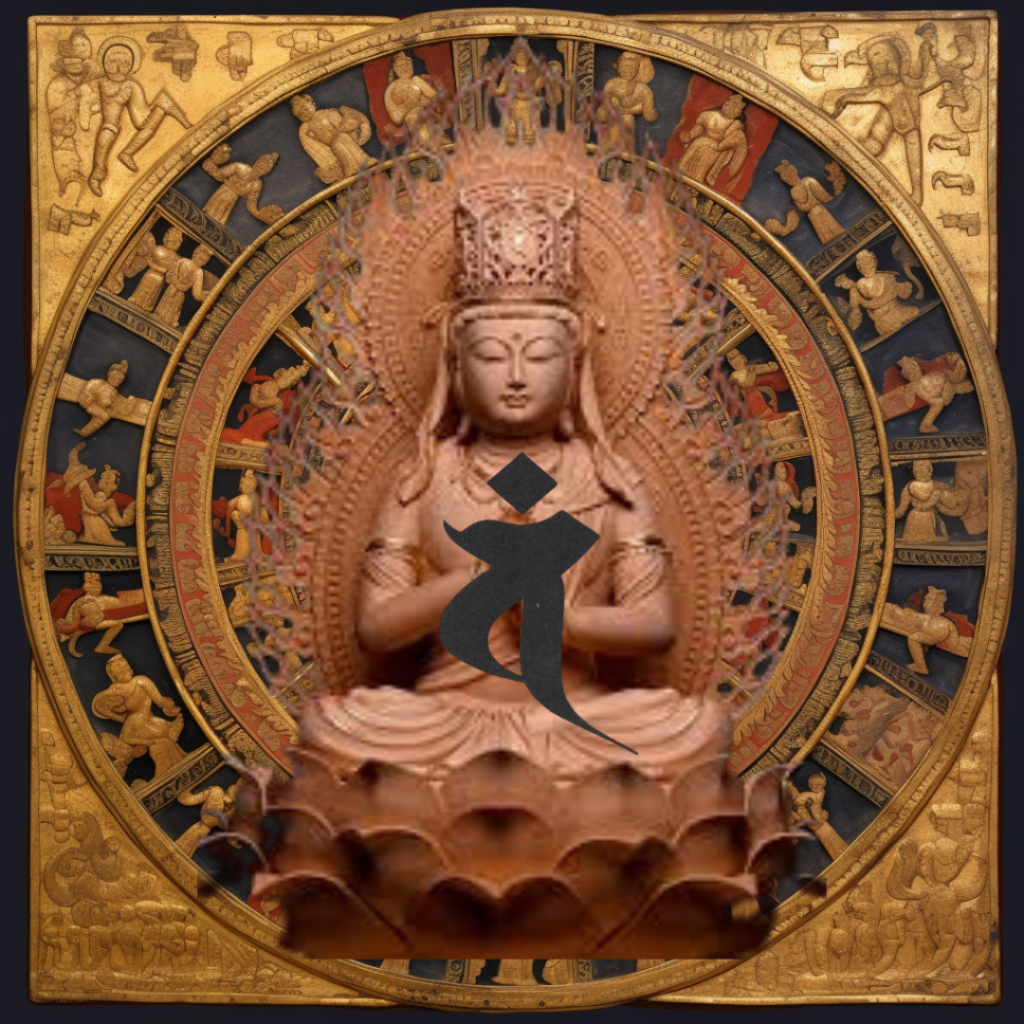
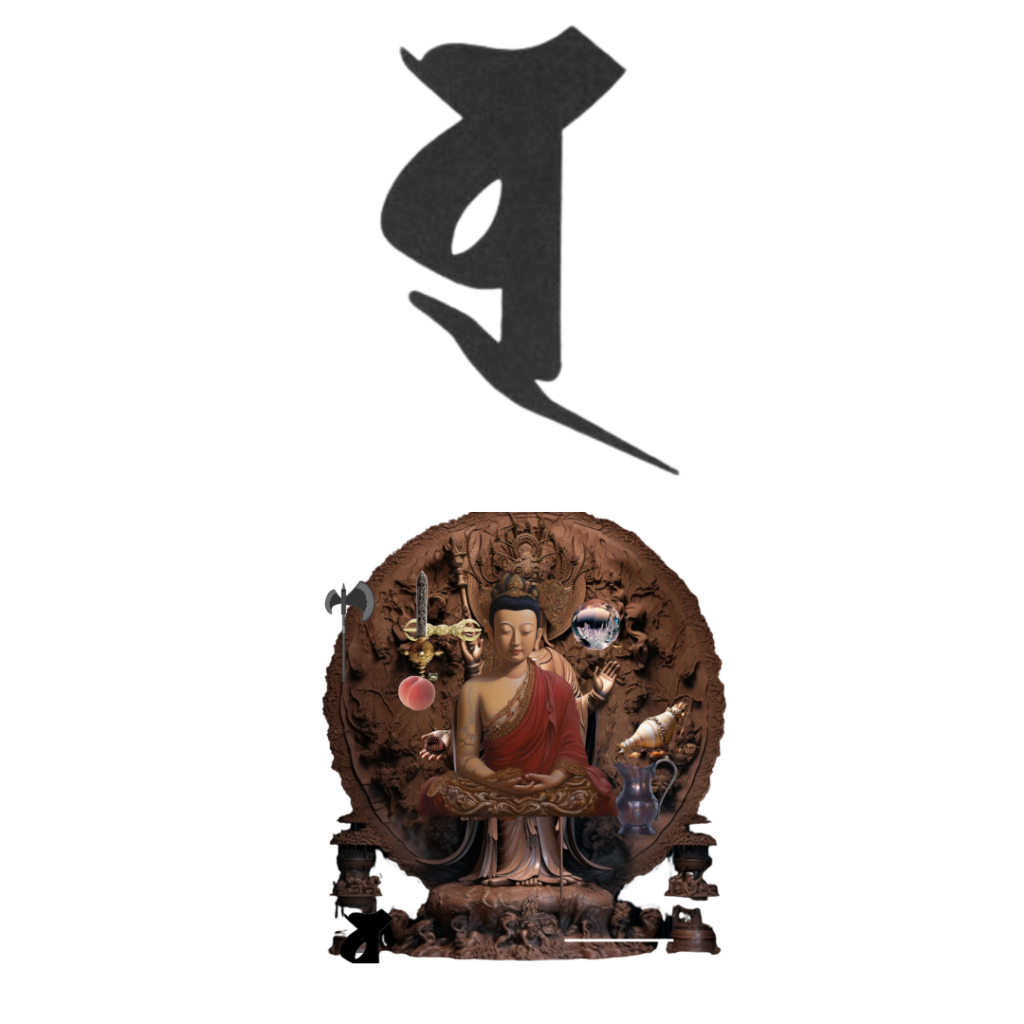
Bonji 梵字  准肌観音 Junhada Kannon

准肌観音

准胱観音真言
なう まく さ た なん さん みゃく さん ぼ だ く ち なん
た にや た おん しゃ れい しゅ れい じゅん でい そわ か

准服とは、梵名チユンデイ上の呂号の音写で「清浄無垢」という意味があり、さとりの道を歩ませる観音です。
別名、准服仏母、七倶服仏母とも呼ばれます。
七倶服とは「無量」を意味しますから、多くの諸仏の母となります。そのため観音菩薩ではないとの説もあります。経軌にも観音として説かれてい
ないことから、犬台密教では准肛如来として仏部の尊としますが、真言密教では観音の一つとして六観音の中に加えます。
求児・安産の本尊としてもまつられます。もとは水の神で、その姿は女身といわれています。
なお、胎蔵曼荼羅中台八葉院の観音の種子は、この准服観音のブ(回)字が記されています。

Kannon Mantra
Nau Maku Sato Nan Myaku San Bodaku Chi Nan
Taniyata Onsharei Junde Sowaka

Junfuku means “purity and innocence” in the transcription of the Sanskrit name Chiyundei Ueno, and is a Kannon who walks the path of enlightenment.
It is also known as Junfuku Butsumo and Shichikufuku Butsumo.
Shichigofuku means “infinite”, so she is the mother of many Buddhas. Therefore, there is also a theory that it is not Kannon Bodhisattva. It is also described as Kannon in the sutra.
Inudai Esoteric Buddhism regards it as Junko Nyorai, but in Shingon Esoteric Buddhism it is added to the Six Kannons as one of the Kannons.
It is also enshrined as the principal object of worship for child-seeking and safe childbirth. Originally a goddess of water, her appearance is said to be that of a woman.
In addition, the seed of Kannon in the Taizo Mandala Nakadai Hachiyoin has the v (kai) character of this Junfuku Kannon.

今日の運命 7 20日

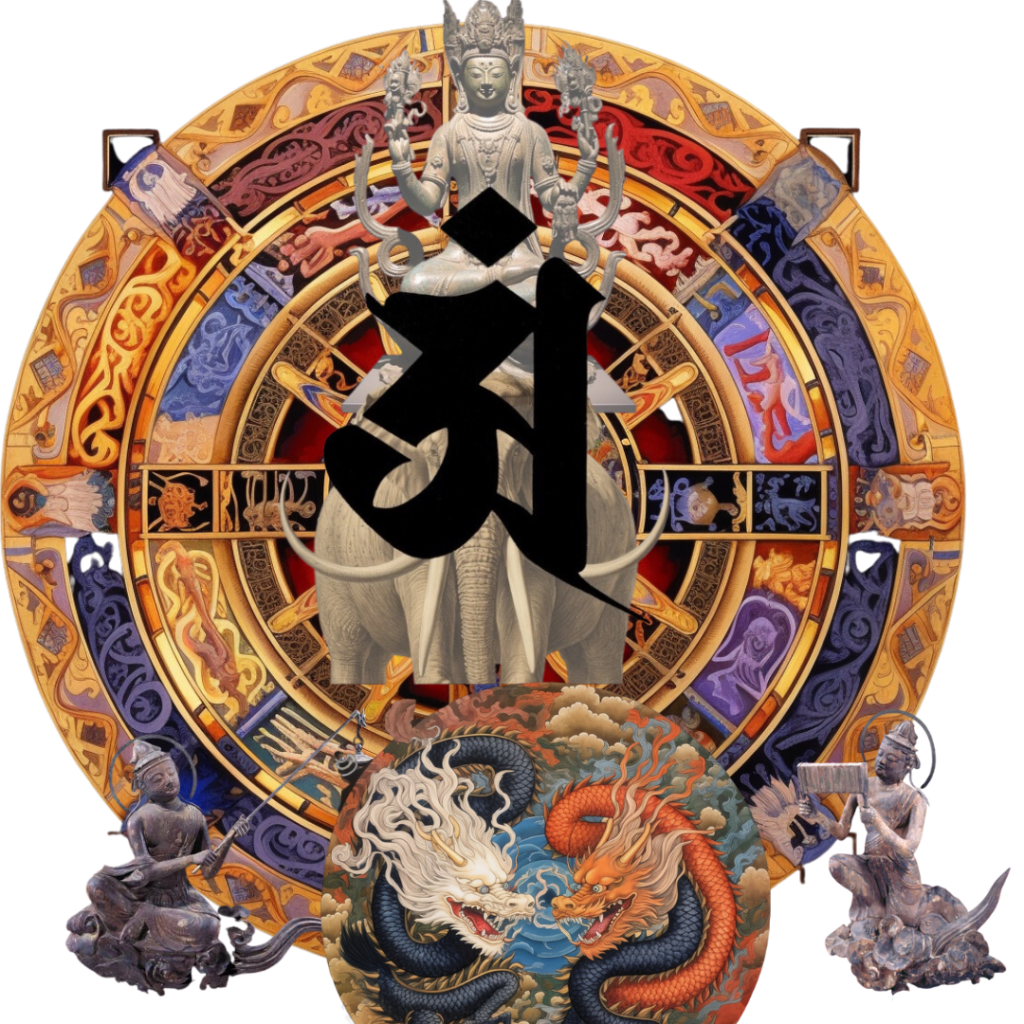
普賢菩薩


普賢菩薩


釈迦如来の右の脇侍。白像に乗り、理知、功徳、教化、衆生を生死の苦海から救い、悟りの境地(彼岸)に導くとされる。尚、この菩薩の立てた十大願は一切の菩薩の行願の旗幟とされる。


四緑木星の日

縁談、商談の来訪者あり。言動をつつしみ話を進めると良い。いつも良い日、皆良い人。こんな心境を養いたい