チベット密教
チベット仏教は、所作タントラ、 行タントラ、瑜伽タントラ、無上瑜伽タントラなど初期密教から後期密教にいたる密教経典と、それに基づく行法を継承している。
漢地ではモンゴル系の元の朝廷内でチベット系の密教が採用され、支配者階級の間でチベット密教が流行した。漢民族王朝の明においてもラマ僧を厚遇する傾向があったが、満州民族王朝の清に至って、王室の帰依と保護によってチベット仏教は栄え、北京の雍和宮など多くのチベット仏教寺院が建立された。ただし、漢地におけるチベット仏教の存在が当時の中国人社会にどの程度の影響力を持ったかについては十分な解明がなされていない[28]。
チベット動乱や、特に文革期に激烈であった中国共産党による宗教弾圧を乗り越えて、チベット自治区やチベット人を中心に現在もチベット密教の信仰が続いている。文革終了後の中国大陸では、漢人の間でもチベット密教(蔵密)が流行。法輪功問題を契機に気功がブーム終息した頃、チベット密教の行法を信仰から切り離して気功法として行う「蔵密気功」が各地で宣伝された[29]。台湾の仏教にはチベット密教も伝わっており、清朝末期に創設された「西蔵学会」もある。モンゴルでは中世のモンゴル帝国でチベット仏教が国教であった流れから、現在までチベット密教の信仰が続いている。カンボジアのアンコール朝にも密教は伝来しており、密教で用いられる祭具や、特にヘーヴァジュラを象った銅像や祭具が出土している。
欧米での展開も起き、チベットにおける1950年から1951年のチベット侵攻 から1959年のチベット動乱という大混乱の後は、ダライ・ラマ14世をはじめとする多くのチベット僧がチベット国外へと出て活動したことにより、ヨーロッパや米国で広範囲に布教がなされるようになり、欧米の思想界にもさまざまな影響を与えた。アメリカ合衆国ニューヨークでは、ダライ・ラマ14世と親交のあるロバート・サーマンにより1987年にチベットハウスが設立・運営され、チベット密教も含めチベットの思想や文化が広報されている。その経緯から、欧米諸国で Esoteric Buddhism と言う場合には、主にチベット密教を指す。
チベット仏教(チベットぶっきょう)は、チベットを中心に発展した仏教の一派。根本説一切有部律の厳格な律に基づく出家制度、仏教の基本である四聖諦の教えから、大乗顕教の諸哲学や、金剛乗の密教までをも広く包含する総合仏教であり、独自のチベット語訳の大蔵経を所依とする教義体系を持つ。中国、日本、チベットなどに伝わる北伝仏教[2]のうち、漢訳経典に依拠する東アジア仏教と並んで、現存する大乗仏教の二大系統のひとつをなす。
教義としては、智慧と方便を重視する。インド後期密教の流れを汲む無上瑜伽タントラが実践されている。ニンマ派、カギュ派、サキャ派、ゲルク派の4宗派が存在するが、いずれも顕教と密教の併修を柱とする。7世紀から14世紀にかけて、インドから仏教が直接チベットに伝来したので、インド仏教の伝統が途絶える寸前の時代に伝来した後期密教が継承されている。
特徴
密教に限らず、中期・後期中観派の著作・思想なども含め、総じて8世紀以降の、イスラーム勢力の台頭によって中国にまで伝達されにくくなった(そしてやがて滅ぼされることになる)インド大乗仏教の系譜を、ヒマラヤ山脈を挟んで目と鼻の先という地の利を活かし、(ネパールのネワール仏教を除けば)事実上世界で唯一継承してきた。
中国や中央アジアの仏教との相互影響は、その地理的な隣接に比して、比較的弱いといえる。一方、特にニンマ派や民間信仰のレベルではチベット独自の要素も見られるが、チベットでは仏教を取り入れるにあたって、サンスクリット語の原典からチベット語へ、原文をできるだけ意訳せず、そのままチベット語に置き換える形の逐語訳で経典を翻訳したため、チベット語の経典は仏教研究において非常に重要な位置を占める。
特に密教については、中国仏教では漢訳経典を通じて主に前期・中期密教が伝えられ、後期密教の漢訳と受容は限定的であったのに対し、チベット仏教は8世紀-12世紀にかけて後期密教(無上瑜伽タントラ等)の教えを中心としたインド密教を広範に受け入れ、独自に消化した点にも大きな特徴がある。
基盤となる顕教の教え
どの宗派においても、一切有情が本来持っている仏性を「基」とし、智慧(空性を正しく理解すること)と方便(信解・菩提心・大慈悲などの実践)の二側面を重視し、有情が大乗の菩薩となり六波羅蜜を「道」として五道十地の階梯を進み、「果」として最終的に仏陀の境地を達成することを説く。哲学的には龍樹の説いた中観派の見解を採用しており、僧院教育の現場においては、存在・認識についての教学・論争による論理的思考能力と正確な概念知の獲得を重視している。その思想の骨格となる重要な論書としては、シャーンティデーヴァの著した『入菩薩行論』 (Bodhisattvacaryāvatāra)、マイトレーヤの著した『究竟一乗宝性論』 (Uttaratantra Śāstra) と『現観荘厳論』 (Abhisamayālamkāra) などがあるほか、アティーシャ(アティシャ)が伝えたとされるロジョン(blo sbyong, 和訳:心の訓練法)の教えが重視され、全宗派で修習されている。
密教的実践
また、仏陀の境地を速やかに達成するための特別な方便として、各宗派においてインド後期密教の流れを汲む無上瑜伽タントラの実践が行われている。一般的に新訳派では無上瑜伽タントラを、本尊の観想を中心とした生起次第を重視する父タントラ、身体修練によって空性大楽の獲得を目指す究竟次第を重視する母タントラ、それらを不可分に実践する不ニタントラの三段階に分類する。密教の最奥義に相当するものにはニンマ派のゾクチェン(大究竟)、サキャ派のラムデ(道果)、カギュ派のマハームドラー(大印契)などがあり、各派に思想的特徴が見られる。
これら顕密併習の修道論として、最大宗派のゲルク派にはツォンカパの著した『菩提道次第』(ラムリム)と『秘密道次第論』(ンガクリム)があるが、各宗派においてもそれらとほぼ同種の修道論が多数著されている。
無上瑜伽タントラの実践においては、タントラ文献の記述や後述のヤブユムのイメージなどから、一部でセックスを修行に取り入れているという道徳的観点からの批判もあるが、これは在家密教修行者集団内でのことである。中世にはカダム派(英語版)を中心とした出家者集団の復興が行われて以降、性的実践を行なわずに密教を修行する傾向が強まった(後述)。その影響が各派に及び、現在の出家僧団においてはあくまで観念上の教義として昇華され、なおかつ一般の修行と教学を修得した者のみに開示される秘法とされた。このような呪術的、性的な要素については、出家僧団内においては実際的な行法としては禁止されたものの、その背景にある深遠な哲学自体は認められたため、教学および象徴的造形としては残されたということに留意すべきである。現在では顕教を重視するゲルク派が最大宗派となっていることからも、全体として密教的な修行法よりも、「教理問答」のような言語的コミュニケーションと、仏教教学の厳密な履修が重要視される傾向が高まっているといえる。
信仰形態
現在、大きく分けて4宗派が存在するが、いずれも顕教と密教の併修を柱とする点では共通し、宗派間の影響を及ぼしあって発展してきたこともあって、各宗派の信仰形態に極端な差異は無くなっている。
恐ろしい形相を表す忿怒尊(ヘールカ)や、男女の抱擁する姿を表すヤブユムが特徴的であり、これらがことさらクローズアップされがちであるが、他にも阿弥陀如来や十一面観音、文殊菩薩といった、大乗仏教圏では一般的な如来、菩薩も盛んに信仰されている。禅を中心に独自の発展を遂げた中国の仏教では廃れてしまった仏が、日本(特に奈良・平安系仏教)とチベットでは共通して信仰され続けているケースも多い。一方、最高位の仏としてチベットでは釈迦如来や大日如来よりも、後期密教の特徴である本初仏を主尊とする点が独特である。ターラー仏母やパルデン・ラモ(忿怒形吉祥天)といった女神が盛んに信仰されることも特徴的である。
文化面では、タンカと呼ばれる仏画の掛軸や砂曼荼羅、楽器を用いた読経などが有名である。民間の信仰形態として特徴的なものは、マニ車、タルチョー(経旗)、鳥葬などが挙げられる。また、観音菩薩の真言である六字真言が盛んに唱えられる。
諸国への伝播
チベット仏教はチベット本国だけでなく、チベットからの布教により仏教を受け入れた諸民族の間で広く信仰される。チベット系民族では国連加盟国のブータンの他、インドのシッキム州、ラダック地方、アルナーチャル・プラデーシュ州のメンパ族、ネパール北部ヒマラヤ地帯のムスタン、ドルポやシェルパ族、タマン族など、またチベット系以外ではモンゴル国と中国領南モンゴル(内モンゴル自治区)のモンゴル人、ロシア連邦内のブリヤート人(モンゴル系)やカルムイク人(同)、トゥバ人(モンゴルの影響が強いテュルク系)といったモンゴル文化圏でも支配的な宗教であった。他に満州族、ナシ族、羌族などが伝統的にチベット仏教を信仰してきた。満州族から出た清朝の影響で、北京や五台山、東北部(満州)など中国北方にもチベット仏教寺院がある。また、中国においては明朝の11代皇帝である正徳帝も即位直後からチベット仏教に傾倒し、「豹房」という邪淫の寺を作ってラマ僧らと秘技に明け暮れていたとの記録がある。
モンゴルは伝統的にチベット仏教第二の中心地であるが、チベット仏教の直輸入的なものであって、地域的な特色はあっても「モンゴル仏教」として区別するほど独立的な要素は強くない。チベットにおける宗派がそのままモンゴルにも存在し、近代化以前はモンゴルからチベットへの留学が盛んに行われていた。他方、ネパールでは北部のチベット系民族にチベット仏教が信仰され、さらに近年では中央部でもチベット仏教の進出が見られるが、元来中央部のネワール族などの間にはチベット仏教とは異なる独自の大乗仏教の系譜が伝えられている。
四大宗派
ニンマ派、カギュ派、サキャ派、ゲルク派を、チベット仏教の四大宗派と呼ぶ。
Tibetan Buddhism
Tibetan Buddhism inherits the esoteric Buddhist scriptures from early esoteric Buddhism to late esoteric Buddhism, such as the tantra, the tantra, the tantra, and the Anuttarayoga tantra, and the practices based on them.
In Hanchi, Tibetan esoteric Buddhism was adopted in the former Mongolian imperial court, and Tibetan esoteric Buddhism became popular among the rulers. Even in the Ming Dynasty of the Han dynasty, there was a tendency to treat lamas priests, but in the Qing dynasty of the Manchu dynasty, Tibetan Buddhism prospered due to the devotion and protection of the royal family, and many Tibetan Buddhist temples such as the Lama Temple in Beijing were built. It was. However, the extent to which the existence of Tibetan Buddhism in Hanchi had an influence on Chinese society at that time has not been fully elucidated [28].
Overcoming the Tibetan turmoil and the religion crackdown by the Chinese Communist Party, which was particularly fierce during the Cultural Revolution, the Tibetan Buddhist religion continues to this day, especially in the Tibetan Autonomous Region and Tibetans. Tibetan esoteric Buddhism (Kuraden) is popular among Han Chinese in mainland China after the Cultural Revolution. Around the end of the Qigong boom triggered by the Falun Gong issue, “Kuramitsu Qigong,” which separates the practice of Tibetan esoteric Buddhism from faith and practices it as Qigong, was advertised in various places. [29] Tibetan esoteric Buddhism is also transmitted to Buddhism in Taiwan, and there is also the “Saizo Society” founded in the late Qing dynasty. In Mongolia, the belief in Tibetan esoteric Buddhism continues from the flow that Tibetan Buddhism was the national religion in the medieval Mongol Empire to the present. Esoteric Buddhism has also been introduced in the Angkor dynasty in Cambodia, and esoteric Buddhist esoteric Buddhist esoteric Buddhist esoteric Buddhist esoteric Buddhist esoteric Buddhist esoteric Buddhist esoteric Buddhist esoteric Buddhism have been excavated.
After the turmoil of the Tibetan invasion of Tibet from 1950 to 1951 to the Tibetan turmoil of 1959, many Tibetan monks, including the 14th Dalai Lama, went out of Tibet. Through his activities, he became widely spread in Europe and the United States, and had various influences on the Western ideological world. In New York, USA, the Tibetan House was established and operated in 1987 by Robert Thurman, who has a close relationship with the 14th Dalai Lama, and the ideas and culture of Tibet, including Tibetan esoteric Buddhism, are publicized. For that reason, when we say Esoteric Buddhism in Western countries, we mainly refer to Tibetan esotericism.
Tibetan Buddhism (Tibetan Buddhism) is a Buddhist sect that developed around Tibet. It is a comprehensive Buddhism that broadly covers the priesthood system based on the strict rules of the Aribe law, the teachings of the Four Noble Truths, which is the basis of Buddhism [1], the philosophies of Mahayana, and the esoteric Buddhism of Kongo. , Has its own esoteric system based on the Tibetan translation of the Okura Sutra. Among the Northern Buddhisms [2] that have been handed down in China, Japan, Tibet, etc., along with East Asian Buddhism that relies on the Chinese translation scripture, it is one of the two major systems of Mahayana Buddhism that still exist.
The doctrine emphasizes wisdom and expedients. Anuttarayoga Tantra, which follows the tradition of late Indian esoteric Buddhism, is practiced. There are four denominations, Nyingma, Kagyu, Sakya, and Gelug, all of which focus on the combined practice of esoteric Buddhism and esoteric Buddhism. Since Buddhism was introduced directly from India to Tibet in the 7th and 14th centuries, it inherits the late esoteric Buddhism that was introduced at a time when the Indian Buddhist tradition was about to cease.
Features
Not only esoteric Buddhism, but also the writings and ideas of the mid- and late Madhyamaka, the rise of the Islamic forces after the 8th century made it difficult (and eventually destroyed) to be transmitted to China. It has inherited the genealogy of the world virtually the only one in the world (except for Newar Buddhism in Nepal), taking advantage of the location just a stone’s throw from the Himalayas.
Mutual influence with Buddhism in China and Central Asia is relatively weak compared to its geographical adjacency. On the other hand, especially at the level of Nyingma and folk beliefs, there are some elements unique to Tibet, but in Tibetan, when incorporating Buddhism, the original Sanskrit text is translated into Tibetan as much as possible, and the original text is replaced with Tibetan as it is. The Tibetan scriptures occupy a very important position in Buddhist studies because they were translated verbatim.
Especially for esoteric Buddhism, in Chinese Buddhism, early and middle esoteric Buddhism was mainly transmitted through the Chinese translation scripture, and the Chinese translation and acceptance of late esoteric Buddhism was limited, while Tibetan Buddhism was late esoteric Buddhism from the 8th to the 12th centuries. Another major feature is that it widely accepted Indian esoteric Buddhism centered on the teachings of (Anuttarayoga Tantra, etc.) and digested it independently.
The teaching of the foundational teaching
Maitreya Temple at Tashilhunpo Monastery (typical Tibetan Buddhist temple)
The endless knot design is one of the symbols
In all denominations, the Buddha-nature inherent in sentient beings is the “base”, and the two aspects of wisdom (correct understanding of emptiness) and expedient (practice of belief, bodhisattva, mahayana, etc.) are emphasized. It is explained that the sentiment becomes a Bodhisattva of Mahayana and advances through the steps of the five roads and ten lands with Rokubaramitsu as the “road” and finally achieves the state of Buddha as the “fruit”. Philosophically, it adopts the view of the Madhyamaka that Tatsuki preached, and in the field of monastery education, it emphasizes the acquisition of logical thinking ability and accurate conceptual knowledge through teaching and controversy about existence and cognition. There is. The important books that form the basis of this idea are “Bodhisattvacaryāvatāra” by Shauntideva, “Ratnagotravibler” (Uttaratantra Śāstra) by Maitreya, and “Abhisamayalan”. 』(Abhisa mayālamkāra), and the teaching of Rojon (blo sbyong, Japanese translation: mental training method), which is said to have been conveyed by Atisha, is emphasized and is practiced in all denominations.
Esoteric practice
In addition, as a special expedient to quickly reach the border of Buddha, each denomination is practicing Anuttarayoga Tantra, which follows the tradition of late Indian esoteric Buddhism. In general, in the new translation school, Anuttarayoga Tantra is divided into the father Tantra, who emphasizes the origin of the idea of the principal image, and the mother Tantra, who emphasizes the research aiming to acquire empty paradise through physical training. It is classified into three stages of non-Nitantra to practice. The mysteries of esoteric Buddhism include the Nyingma Dzogchen, the Sakya Ramde, and the Kagyu Mahamudra. Be done.
The Gelug denominations of the largest denominations include Je Tsongkhapa’s “Bodhisattva Lamrim” (Ramlim) and “Secret Lamrim” (Ngacrim), but they are almost the same in each denomination. Many religious theories have been written.
In the practice of Anuttarayoga Tantra, there are criticisms from the moral point of view that some of them incorporate sex into their training from the description in the Tantric literature and the image of Yab-Yum described later, but this is a group of esoteric Buddhist practitioners. It is within. Since the reconstruction of the priesthood group centered on the Kadam school in the Middle Ages, there has been an increasing tendency to practice esoteric Buddhism without sexual practice (see below). The influence spread to each sect, and in the current priesthood priesthood, it was sublimated as an ideological doctrine, and it was made a secret method that is disclosed only to those who have acquired general training and teaching. Although such magical and sexual elements were prohibited as a practical practice within the Buddhist priesthood, the profound philosophy itself behind them was recognized, so as an academic and symbolic form. It should be noted that it was left behind. Nowadays, the Gelug sect, which emphasizes catechism, is the largest sect, so linguistic communication such as “catechism” and strict study of Buddhist studies are more important than esoteric training as a whole. It can be said that the tendency to be done is increasing.
Form of faith
Tibetan Buddhist monks (Rumtek Monastery, Sikkim)
Currently, there are four major denominations, but all of them have the common feature of co-education of esoteric Buddhism and esoteric Buddhism. The extreme difference is gone.
Heruka, which represents a terrifying appearance, and Yab-Yum, which represents the embrace of men and women, are characteristic, and these tend to be highlighted, but there are also Amida Nyorai, Eleven-faced Kannon, and Manjushri. In the Mahayana Buddhist sphere, the Bodhisattva is also popularly worshiped. In many cases, Buddhism, which has become obsolete in Chinese Buddhism, which has developed independently centered on Zen, continues to be worshiped in common in Japan (especially Nara / Heian Buddhism) and Tibet. On the other hand, as the highest-ranking Buddha, Tibet is unique in that it has the main honor of the Adi-Buddha, which is a characteristic of late esoteric Buddhism, rather than Shaka Nyorai and Dainichi Nyorai. It is also characteristic that goddesses such as Thaler Buddha and Palden Lamo (Kisshoten) are actively worshiped.
In terms of culture, hanging scrolls of Buddhist paintings called tanka, sand mandalas, and sutra chanting using musical instruments are famous. Characteristic forms of folk religion include prayer wheels, prayer flags, and sky burial. In addition, the six-character mantra, which is the mantra of the Kannon Bodhisattva, is actively chanted.
Propagation to countries
Tibetan Buddhism is widely worshiped not only in Tibet’s home country, but also among the peoples who accepted Buddhism through missions from Tibet. Among Tibetan people, in addition to Bhutan, a member of the United Nations, the Monpa people in Sikkim, Radak, Arnachar Pradesh, Mustan in the Himalayan region of northern Nepal, Dolpo, Sherpa, Taman, etc., and Mongolia other than Tibetan people. Dominant in Mongolian cultural spheres such as Mongolians in the country and southern Mongolia (Inner Mongolian Autonomous Region), Buryats (Mongolians) and Karmuiks (same) in the Russian Federation, and Tubans (Turk who are strongly influenced by Mongolia) It was a religion. Others such as Manchu, Nakhi, and Qiang have traditionally worshiped Tibetan Buddhism. Due to the influence of the Qing dynasty from the Manchu people, there are Tibetan Buddhist temples in northern China such as Beijing, Mt. Godai, and northeastern China (Manchuria). In China, the 11th emperor of the Ming dynasty, Zhengde Emperor, was also devoted to Tibetan Buddhism immediately after his coronation, and there is a record that he built an evil temple called “Banbo” and was devoted to secret techniques with lamas.
Mongolia is traditionally the second center of Tibetan Buddhism, but it is a direct import of Tibetan Buddhism, and although it has regional characteristics, it has a strong independent element to distinguish it as “Mongolian Buddhism”. Absent. The sect in Tibet still exists in Mongolia, and before modernization, study abroad from Mongolia to Tibet was popular. On the other hand, in Nepal, Tibetan Buddhism is worshiped by Tibetan people in the north, and in recent years Tibetan Buddhism has also advanced in the central part, but originally among the Newar people in the central part, it is unique and different from Tibetan Buddhism. The genealogy of Mahayana Buddhism is handed down.
Four major denominations
The Nyingma, Kagyu, Sakya, and Gelug denominations are called the four major denominations of Tibetan Buddhism.
Nyingma-meaning “old school” [13]. It is based on the ancient translations of the Tantrics (Nyingma) and the Buried Scriptures (Therma), which are said to have been introduced during the ancient dynasty, with Padmasambava as the ancestor [Note 4].
Kagyu (Kagyu)-Malpa (Chinese version, English version), Milarepa is the ancestor. It is divided into many branches such as Karma, Zerpa Kagyu, Dikun Kagyu, Drukpa, and Phagmodrupa. See the Kagyu section for details.
Sakya-In the Yuan dynasty, the government was established in Tibet, and Sakya Pandita and Kublai Khan’s emperor Pakpa came out.
The Gelug school-Tsongkhapa is the ancestor, and the secret rally Tantra is emphasized. The Dalai Lama and Panchen Lama belong to it. The most mainstream school since the early modern period.
Kadam (English version) (Kadam) -A movement centered on Atisha. The Gelug sect recognizes itself as the successor to this sect. After influencing all four major denominations, the Gelug sect was organized as the New Kadampa Tradition, the Ganden school. Currently this sect does not exist.

![[商品価格に関しましては、リンクが作成された時点と現時点で情報が変更されている場合がございます。]](https://hbb.afl.rakuten.co.jp/hgb/0f530f6e.66f3cb85.0f530f6f.cdec9007/?me_id=1269553&item_id=12751059&pc=https%3A%2F%2Fthumbnail.image.rakuten.co.jp%2F%400_mall%2Fbiccamera%2Fcabinet%2Fproduct%2F4807%2F00000007344104_a01.jpg%3F_ex%3D128x128&s=128x128&t=picttext "[商品価格に関しましては、リンクが作成された時点と現時点で情報が変更されている場合がございます。]")


![[商品価格に関しましては、リンクが作成された時点と現時点で情報が変更されている場合がございます。]](https://hbb.afl.rakuten.co.jp/hgb/2072e6b8.0db4073d.2072e6b9.57a0ae8e/?me_id=1368685&item_id=10000042&pc=https%3A%2F%2Fthumbnail.image.rakuten.co.jp%2F%400_mall%2Fahjikan%2Fcabinet%2F06788383%2F1031-r.jpg%3F_ex%3D128x128&s=128x128&t=picttext "[商品価格に関しましては、リンクが作成された時点と現時点で情報が変更されている場合がございます。]")


![[商品価格に関しましては、リンクが作成された時点と現時点で情報が変更されている場合がございます。]](https://hbb.afl.rakuten.co.jp/hgb/206e69a1.b18b44e7.206e69a2.1f11b6f7/?me_id=1361769&item_id=10001519&pc=https%3A%2F%2Fthumbnail.image.rakuten.co.jp%2F%400_mall%2Fquickfactory%2Fcabinet%2Fsweets%2F07234235%2Fchoco9r_somu.jpg%3F_ex%3D300x300&s=300x300&t=picttext "[商品価格に関しましては、リンクが作成された時点と現時点で情報が変更されている場合がございます。]")


![[商品価格に関しましては、リンクが作成された時点と現時点で情報が変更されている場合がございます。]](https://hbb.afl.rakuten.co.jp/hgb/206618b0.f9c59ce9.206618b1.6ddf34d6/?me_id=1199477&item_id=10006751&pc=https%3A%2F%2Fthumbnail.image.rakuten.co.jp%2F%400_mall%2Fmagimaguu%2Fcabinet%2F4992015480679.jpg%3F_ex%3D128x128&s=128x128&t=picttext "[商品価格に関しましては、リンクが作成された時点と現時点で情報が変更されている場合がございます。]")



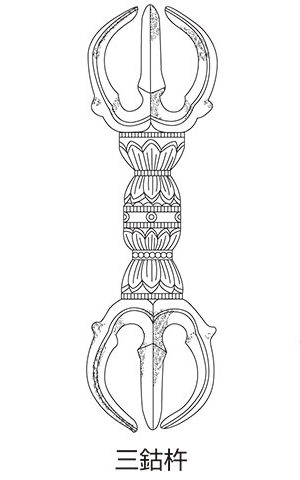
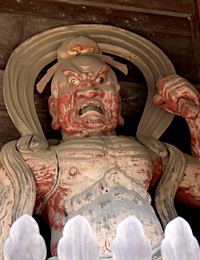 お寺の入り口で見かける「金剛力士像」も、金剛杵と深い関わりがあります。



![[商品価格に関しましては、リンクが作成された時点と現時点で情報が変更されている場合がございます。]](https://hbb.afl.rakuten.co.jp/hgb/206618b0.f9c59ce9.206618b1.6ddf34d6/?me_id=1199477&item_id=10006751&pc=https%3A%2F%2Fthumbnail.image.rakuten.co.jp%2F%400_mall%2Fmagimaguu%2Fcabinet%2F4992015480679.jpg%3F_ex%3D240x240&s=240x240&t=picttext "[商品価格に関しましては、リンクが作成された時点と現時点で情報が変更されている場合がございます。]")


