Dragon God: Dragon Dragon King Disturbance and Disappearance
Ryujin refers to the existence of a deified dragon in Japanese Shinto and Buddhism. Dragons have been treated as mystical creatures since ancient times, and have been worshiped as symbols of water, rain, fertility, longevity, and divine power.
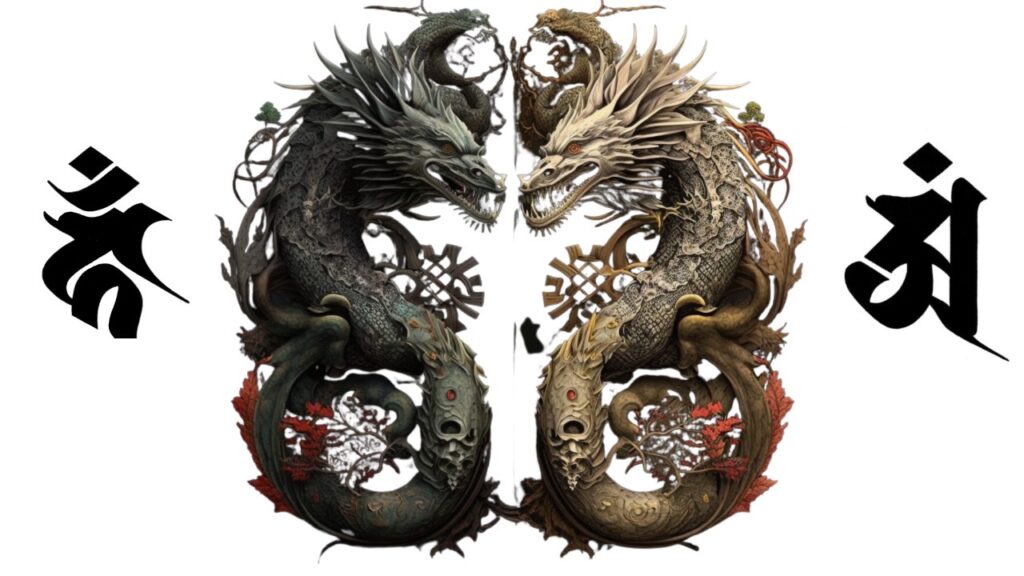
On the other hand, Nanda Ryuo and Batsu Nanda are types of dragon gods that appear in Buddhism. They are said to have been two practitioners of the Dragon King during the time when Shakyamuni Buddha was preaching.
Nanda Ryuo was one of the disciples of Buddha Shakyamuni, who practiced the teachings of Buddhism and performed acts based on the Buddha’s teachings. He is known for adhering to Buddhist teachings and advising practitioners.
On the other hand, in contrast to Nando Ryuo, Hakunuda repeatedly violated the teachings of Buddhism. However, it is said that one day he repented of his mistakes, accepted the teachings of Buddhism, and took refuge in the Buddha.
In this way, Nandaryuo and Hananda express the attitude of reflecting on their own actions and trying to grow through the teachings of Buddhism. Their stories are passed down as a lesson to show people the teachings of Buddhism and encourage them to improve themselves.
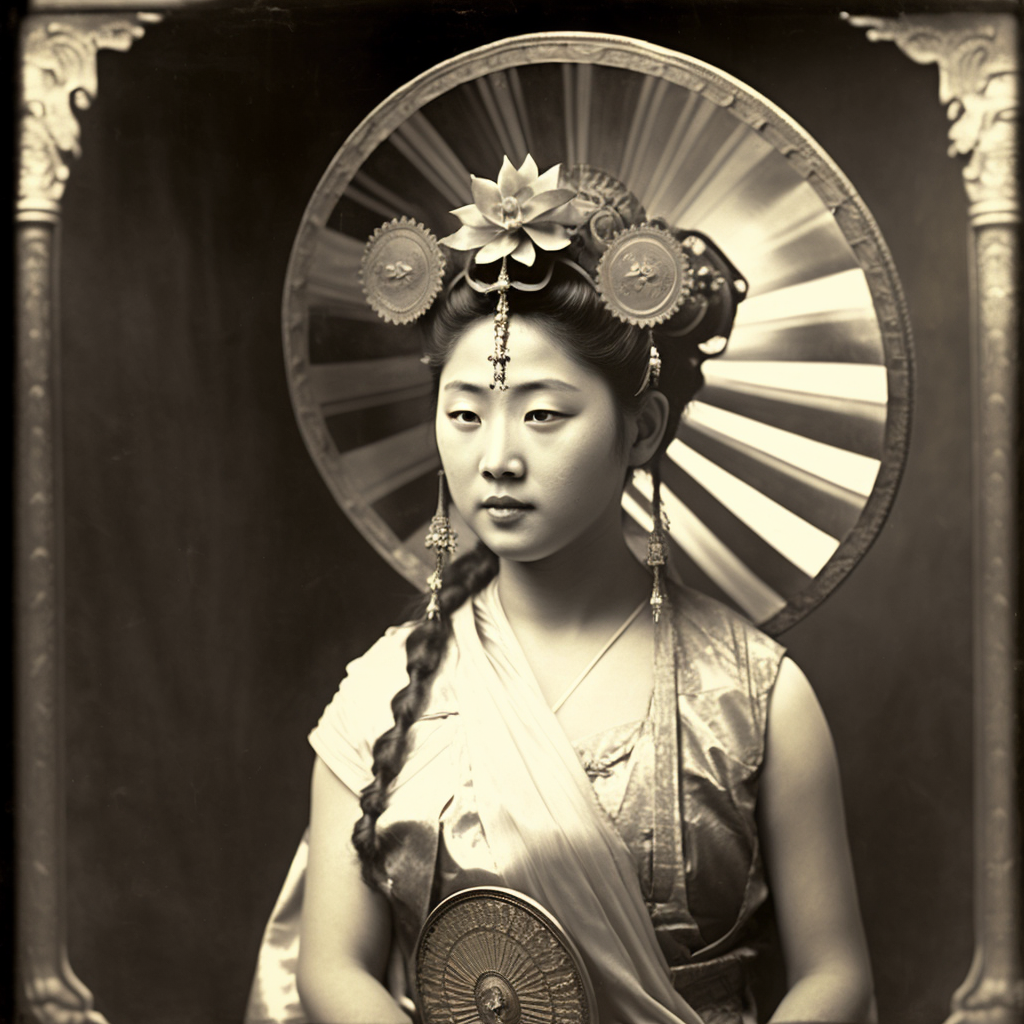
Amaterasu Omikami (or Amaterasu Omikami), or Amaterasu Omikami, is a deity that appears in Japanese mythology as the chief deity. Interpreted as a goddess, she is the presiding deity who rules over Takamanohara and is considered to be the imperial ancestor deity. In the Kiki, she is depicted as having both the personality of a sun god and that of a shrine maiden. Emperor Jinmu is a descendant.
“Amaterasu” is a Japanese god formally written as “Amaterasu Omikami” in the Kojiki and “Amaterasu Omikami” in the Nihonshoki.
It is said to be the most precious god who symbolizes the sun, light, compassion, truth, etc., and is considered to be the ancestor of the imperial family. In addition, it has been recognized as a “goddess” since ancient times because of other god names such as “Hirume” and “Mukatsuhime” that are often seen in Japanese mythology, and because Susanoo no Mikoto calls Amaterasu “older sister”. .
feud with her brother Susanoo
In this way, the three gods were given their lives, but Susanoo, who was given the rule of the sea, lamented this and wept until his long beard drooped down his chest. When Izanagi asked him why, Susanoo replied, “I want to go to Nene-no-Katasu-kuni (underground country) where my mother is.” Izanagi was disgusted by this reply and banished Susanoo.
So Susanoo heads to Takamanohara to tell his sister Amaterasu about the situation, but Amaterasu is wary that Susanoo has come to invade Takamanohara. Susanoo suggested that he take a vow and give birth to a child in order to prove his innocence.
Amaterasu agreed to this and performed a ritual of breaking Susanoo’s sword into three pieces, biting it, and blowing out her breath. Then, Amaterasu’s breath formed three goddesses, and Susanoo, who saw this, claimed, “I didn’t feel guilty that kind-hearted goddesses were born.” This triggered Susanoo to show his true nature and ravage Takamagahara.