
大日如来(、サンスクリット語: Mahāvairocana
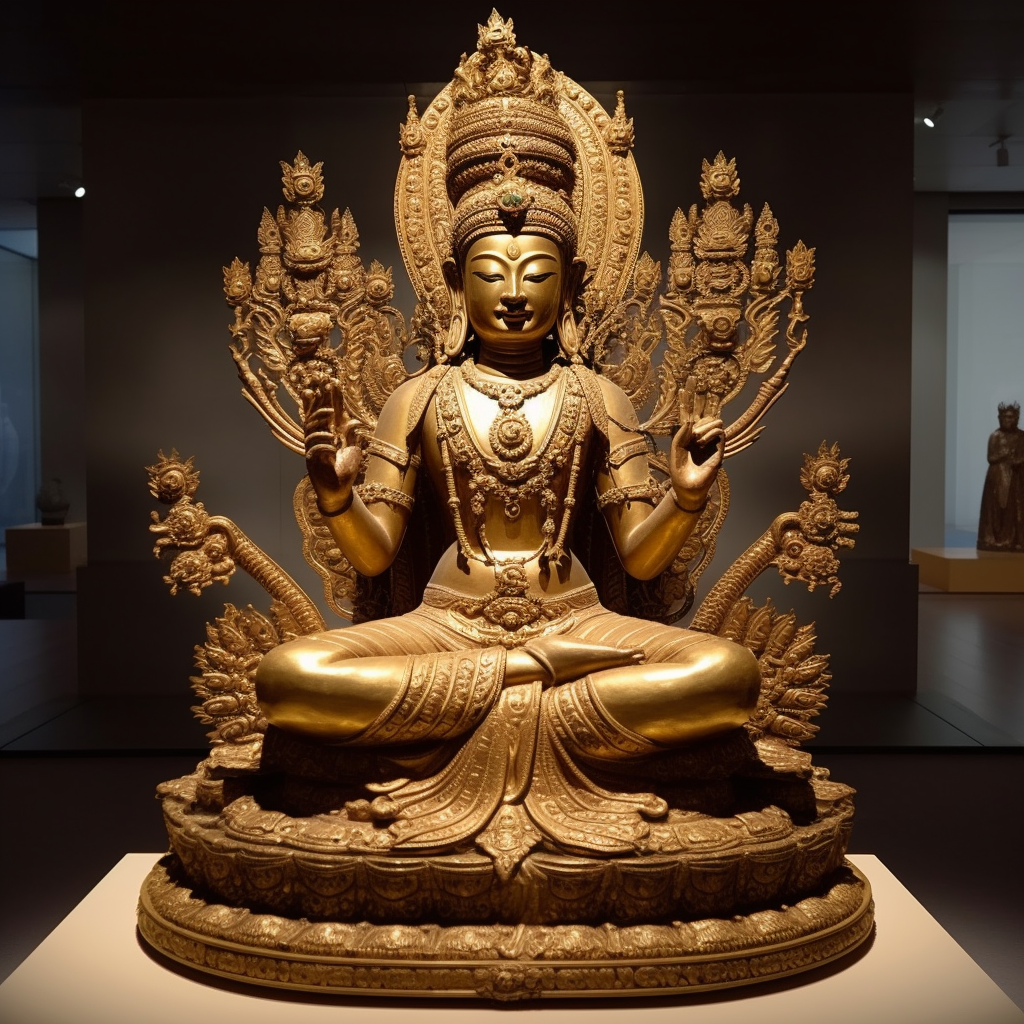
「無相の法身と無二無別なり(姿・形の無い永遠不滅の真理そのものと不可分である)」[5]という如来の一尊。通常、仏の悟りの境地そのものである法身は、色も形もなく、説法もしないとされるが、大日如来は法身でありながら説法を行うという[6]。また、それは過去・現在・未来の三世にわたっているとされる[7]。 大日如来の「智」の面を表したのが金剛界の大日如来であり、「理」の面を表したのが胎蔵界の大日如来であるとされ[2]、この金剛界の智法身と、胎蔵界の理法身は一体不可分であるとされる
仏であり、全ての法を包括し、全ての存在を含む究極の真理を体現するとされています。
「Mahāvairocana」とは、「大日如来」の別名であり、梵語で「大いなる光明」を意味します。この仏は、一般的に「如来」として表現され、インドや中国の仏教美術においては、多くの菩薩像や仏像が彼を表現するために作成されました。
「宝冠」と「装身具」とは、菩薩像に見られる装飾品であり、菩薩が神聖であることを表すために使用されます。宝冠は、王冠のように頭の上に乗せられる宝石で飾られた冠で、装身具は、首や腕、足首などに装着される宝石で飾られた装飾品です。これらの装飾品は、仏教の信仰と芸術の両方において重要な役割を果たしています。
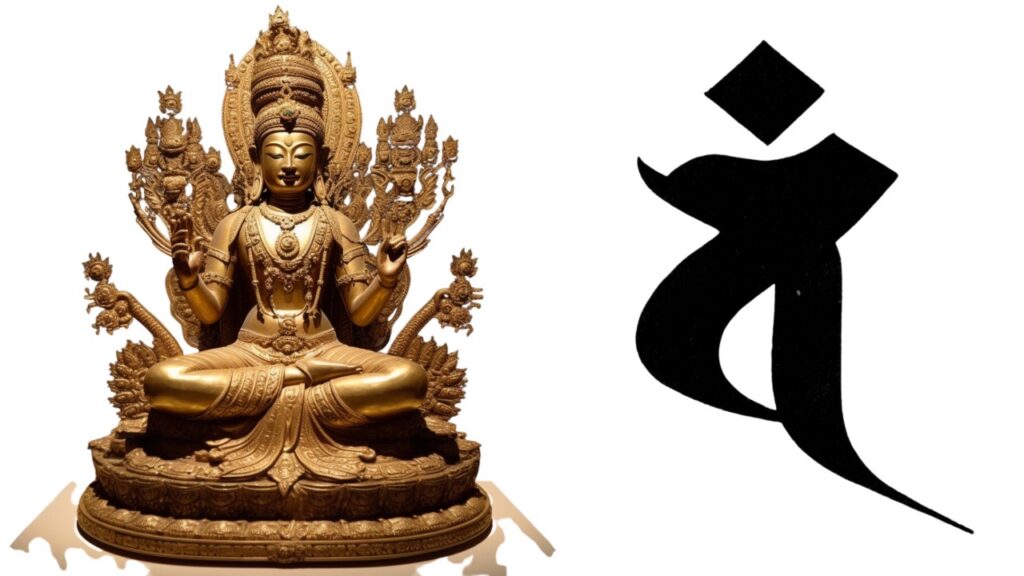
“Mahāvairocana” is the alternate name for “Dainichi Nyorai” in esoteric Buddhism, which represents the highest level of Buddha that encompasses all the teachings and embodies the ultimate truth that includes all existence.
As a general representation of “Dainichi Nyorai,” Mahāvairocana is depicted in various bodhisattva statues and Buddha statues in Indian and Chinese Buddhist art.
“宝冠” (hōkan) and “装身具” (sōshingu) are decorative items commonly found in bodhisattva statues. They represent the sacredness of bodhisattvas. “Hōkan” refers to a crown adorned with jewels that is placed on top of the head like a king’s crown, while “sōshingu” refers to jewelry adorned with jewels that is worn on the neck, wrists, ankles, and other parts of the body. These decorative items play an important role in both Buddhist faith and art.


