UA-135459055-1

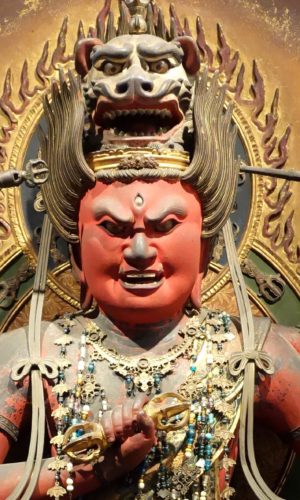
Buddha    愛染明王  Rāga-rāja

愛染明王  Rāga-rāja

あいぜんみようおう
愛染明王

梵名を、ラーガラーゾヤといいます。

ラーガとは「色に染まる」という意味から、貪欲、かさばり、性欲などをあらわし、「愛染」と漢訳されました。
人を愛するということはすばらしいことです。ところが、これがゆきすぎますと、溺愛、盲愛といわれる愛のむさばりとなり、人を傷つけてしいます。これが煩悩です。

しかし、愛というものを、単に恋人や家族だけに向けるのではなく、より多くの人に、人間以外の生きものに、地球全体へと向けたらどうでしょうか。小さな愛は、人類愛、宇宙愛といった犬きな愛情、すなわち菩提心へと発展してゆくことなるでしょう。

のように「煩悩」を「浄菩提心」に昇華させる力を与えてくれるのが愛染明王です.

愛染明王十二大願

更に、愛染明王は一切衆生を諸々の苦悩から救うために十二の広大な誓願を発しているとされ、その内容は以下のようになる。[18]

  1. 智慧の弓と方便の矢を以って、衆生に愛と尊敬の心を与えて、幸運を授ける。
  2. 悪しき心を加持して善因へと転換し、衆生に善果を得せしめる。
  3. 貪り・怒り・愚かさの三毒の煩悩を打ち砕いて、心を浄化し、浄信(菩提心)を起こさしめる。
  4. 衆生の諸々の邪まな心や、驕慢の心を離れさせて、「正見」へと向かわせる。
  5. 他人との争いごとの悪縁を断じて、安穏に暮らせるようにする。
  6. 諸々の病苦や、天災の苦難を取り除いて、信心する人の天寿を全うさせる。
  7. 貧困や飢餓の苦悩を取り除いて、無量の福徳を与える。
  8. 悪魔や鬼神・邪神による苦しみや、厄(やく)を払って、安楽に暮らせるようにする。
  9. 子孫の繁栄と、家運の上昇、信心する人の一家を守って、幸福の縁をもたらす。
  10. 前世の悪業(カルマ)の報いを浄化するだけでなく、信心する人を死後に極楽へ往生させる。
  11. 女性に善き愛を与えて良い縁を結び、結婚後は善根となる子供を授ける。
  12. 女性の出産の苦しみを和らげ、その子のために信心すれば、子供には福徳と愛嬌を授ける。

四種の呼吸法  Four types of breathing


四種の呼吸法


 瞑想の呼吸法は、四種の呼吸法から成り立つ。

 一、長出入息呼吸法

 二、長山息呼吸法

 三、反式呼吸法

 四、強短息呼吸法(火の呼吸法)

 である。

 簡単に説明すると、

長出大息呼吸法は、出る息、入る息、どちらも、で きるだけ細く長く深く呼吸する。一呼吸に二十秒から三十秒、一分くらい、時 間をかける。


の長出息呼吸法は、出る息のみをできるかぎり細く長く吐いて、吸う息は  つうに吸うつうに吸う。

3の反式呼吸法は、ふつうの呼吸とちかって、息を吸うとき、腹部をひっこ め、息を吐くとき、腹部をふくらませる。ちょうど逆になるわけである。

4強短息呼吸法は、「火の呼吸法」とよび、片方の鼻孔を指で押さえて閉 じ、片方の鼻孔で強く短く呼吸する。

Four types of breathing


The meditation breathing method consists of four types of breathing methods.
1. Long breathing breathing method
2. Nagayama breathing method
Third, anti-breathing method
4. Strong and short breathing method (fire breathing method)

It is.

To briefly explain,

1
The long-breathing breathing method is to breathe as thin, long and deep as possible for both out and in. Take 20 to 30 seconds, 1 minute, or so for each breath.


In the long-breathing breathing method of 2, exhale only the exhaled breath as thin and long as possible, and inhale as much as possible.
The counter-breathing method of 3 is different from normal breathing, in which the abdomen is retracted when inhaling and the abdomen is inflated when exhaling. It’s just the opposite.
The 4 strong short breath breathing method is called “fire breathing method”, and one nostril is pressed with a finger to close it, and one nostril is used for strong and short breathing.


 それでは、四種の呼吸法の訓練を説明しよう。


長出入息呼吸法の訓練

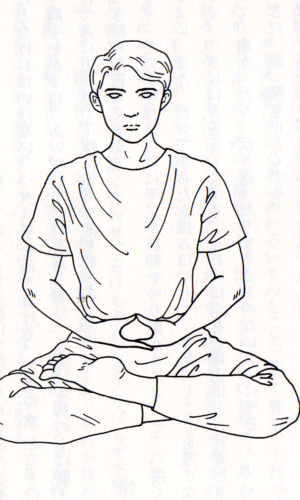
 鉄坐、あるいは椅子坐、いずれにしても、頭部、頚部をごく自然に、まっすぐ、きちんとした姿勢をとる。ただし、あまり緊張しすぎて力んだり、硬直したりしてはいけない。ゆったりと、リラックスすることが大切である。

 そのためには、頭部、頚部の緊張を解くために、前頭部を心もち前に出し、の顎を少し中へ引くようにして、頭部をやや下げるようにするとよい。同時に、前胸部も少しひっこめるようにし、腹部は少し前に出し、両肩は力を入れず、自然な姿勢をとる。背中は心もち前に曲げ、腹部の容積を大きくするようにする。

Now let’s explain the training of four types of breathing.


Long breath breathing training

Whether it is an iron seat or a chair seat, the head and neck should be in a very natural, straight and neat posture. However, don’t be too nervous and stiff or stiff. It is important to relax and relax.

For that purpose, in order to relieve tension in the head and neck, it is advisable to bring the frontal region forward and pull the chin slightly inward to lower the head slightly. At the same time, the precordium should be slightly retracted, the abdomen should be slightly forward, and both shoulders should be relaxed and take a natural posture. Bend your back forward to increase the volume of your abdomen.

仏教  人は死んだら「霊魂」にならないし、「死者の世界」も存在しない…仏教がそう“断言”する意外なワケ

橋爪 大三郎仏教にある「思想の自由」

仏教はインドで始まり、中国に伝わり、日本にも広まりました。仏教では、人間は死んだらどうなると考えるのでしょう。仏教は、一神教と違って、思想の自由があります。どう考えてもいいのです。そこで、死んだらどうなるかについても、いろいろの考え方がある。順にみていきましょう。


photo by iStock

ゴータマが修行して、真理を覚った。ここから仏教が始まります。何を覚ったのでしょう。生老病死、四苦八苦など、人間のあり方がこの世界の因果法則に従っていること。つまり、インドの人びとの考え方と同じです。

仏教がユニークな点は、ゴータマがバラモン(瞑想する資格のある人びと)ではないことです。

ゴータマは、王家に生まれたクシャトリヤ。ヒンドゥー教によれば、王となって務めを果たし、来世でバラモンに生まれて修行すべきです。

でもゴータマは、現世で真理を覚りたいと思った。そして、出家して修行し、覚ってしまった。「カーストと関係なく、誰でも修行して覚ってよい」が、仏教の大事な主張なのです。

ヒンドゥー教への挑戦

これは、ヒンドゥー教への挑戦です。ヒンドゥー教は言います。現世では善行を積み、修行は来世で、バラモンになってからやってください。あなたがたに瞑想する資格はないはずです。

photo by iStock

これに対して、仏教は言います。人間なら誰でも、修行して覚ることができる。カーストに関係なく。現に、ゴータマが覚ったではないか

ゴータマが覚ったと信じ、ゴータマに従う人びとが集まって、仏教のグループを形成しました。

仏教のグループが、修行し瞑想して、覚る資格があるのかどうか、疑問がくすぶりました。そこで仏教は、「出家して、異性と交わらない清らかな生活を送っているので、資格がある」、と主張しました。家族を営むバラモンよりも清らかだ、という理屈です。

覚ったゴータマは、仏(覚った人)となって、輪廻を脱け出ているので、バラモンよりも上である、とも主張しました。

死んだらどうなるか

こうして成立した仏教は、死んだらどうなるかについて、つぎのように考えるようになりました。

・ 仏(覚った人)は、輪廻を脱け出ているので、死んだあと、もうほかの生き物に生まれることがない。けれども、因果のネットワークのなかにはあるので、 宇宙と一体化している。
・ ふつうの人間(覚っていない人)は、因果のネットワークのなかで、輪廻する。

いずれにせよ、人間は死んだら、霊魂になるわけでもなく、死者の世界もありません。これが仏教です。

このあと仏教は、さまざまな考え方を発展させて行きます。

主流の仏教は、ゴータマが大昔から輪廻を繰り返し、修行を続けて仏になった、と信じるようになりました(ゴータマは、こんなことは言っていないはずです)。ならば、仏教の修行者や一般の信徒は、仏になるまで、輪廻を繰り返すことになります。

仏を拝み、輪廻を繰り返す。

これでは、神を拝み、輪廻を繰り返すヒンドゥー教とほとんど同じです。そのうち、仏は神の化身だとヒンドゥー教が言い出し、 仏教はヒンドゥー教に吸収されてしまいます。

独自に発展した日本の仏教

中国や日本に伝わった仏教は、独自に発展しました。浄土宗、禅宗、真言宗、に注目しましょう。

浄土経典は、釈迦仏(ゴータマ)のほかに、西方に阿弥陀仏というブッダがいると説きます。そして、阿弥陀仏のいる極楽浄土に往生すれば、容易に仏になれると教えます。よって、死んだら輪廻にして、またこの世界にまた生まれるのではなく、「死んだら、往生して極楽に生まれる」と考えます。

修行しなくても、往生して仏になれるのは、魅力的です。平安時代には大流行りになって、貴族は往生を願いました。やがて庶民にも広まって、念仏宗になります。

「死んだらどうなるか、気にしない」

禅宗は、中国で盛んになって、日本に伝わりました。経典を読むよりも、坐禅と瞑想を重視します。

ゴータマは、経典など読まず、坐禅をすることで仏になった。禅宗は、その坐禅のやり方をインドから伝えている。坐禅をしている人間は、仏である。仏なら、生死を超越している。ーーという具合に、禅宗では考えます。

誰でも坐禅ができ、誰でも仏になれる。仏なら、生き死にを超越しているのだから、死んだらどうなるか気にしなくてよい。「死んだらどうなるか、気にしない」、が禅宗の考え方です。

死者の世界がある、とは考えない

あと、変わった考え方をするのは、真言宗です。

真言宗は、密教です。密教は、ブッダの秘密の教えを重視します。それは、人間が実はもう仏であること。仏になることを目指して輪廻を繰り返し、長い修行を続けることができるのは、人間がもう仏だからというのです。

修行して仏になるのが仏教のはずなのに、密教は、もう仏であると教える。それなら、仏教と言えるのか、きわどい考え方です。ほとんどヒンドゥー教と言ってもよい。

真言宗も、人間はもう仏なのですから、「死んだらどうなるか、気にしなくてよい」、という考え方になります。

このように、仏教は、死んだらそのあとどうなるか、さまざまに考えます。ただし、死者の世界がある、とは考えません。この点は、インド文明の考え方に従っています。

死の講義

新品価格
¥1,870から
(2021/1/3 12:52時点)

今日の運勢 1月3日 Today’s fortune January 3


四緑木星の日

縁談、商談の来訪者あり。言動をつつしみ話を進めると良い。いつも良い日、皆良い人。こんな心境を養いたい


過去の自分の行動が原因で失敗やトラブルにつながりやすい日。
この日を正念場だと捉えて、諦めずにやりぬくことが大切です。
さらに大きな怪我や病気にも注意が必要です。
持病を持っている人は突然の発作などに備えて薬の携帯を忘れずに。
甘露日
あらゆることで良い結果が得られる日。
特に物事のスタートや大きな決断に向いています。

Four green Jupiter day

There are visitors for marriage and business negotiations. It is good to proceed with the story while saying and acting. Always good days, good people. I want to cultivate such a feeling


A day when your past actions can easily lead to failure or trouble.
It is important to regard this day as a crucial moment and do not give up.
Beware of even bigger injuries and illnesses.
If you have a chronic illness, don’t forget to carry your medicine in case of a sudden attack.
Sweet dew day
A day when you can get good results in everything.
Especially suitable for starting things and making big decisions.

今日の運勢  1月2日  Today’s fortune January 2nd


五黄土星の日

小さな自我は破れやすい。絶望的な思いの人の来訪を受けたりする。名利を離れ天を相手にの心境を養え。

人間関係が悪化する日。
特に身近な人からあらぬ疑いをかけられたり、誤解や勘違いをされやすい日です。
意地になって反発しても逆効果なので、落ち着いて冷静に対応することを心がけてください。


Five Yellow Saturn Day

The small ego is easy to break. We receive visits from people who are desperate. Leave your name and cultivate your feelings toward heaven.

The day when relationships deteriorate.
In particular, it is a day when people close to you can easily make you suspicious, misunderstand or misunderstand.
Even if you are stubborn and repulsive, it will have the opposite effect, so please be calm and calm.

今日の運勢 1月1日 Today’s fortune January 1st


Today’s fortune January 1st
六白金星の日
新しい企画を持った人との接触あり。気が高ぶり争いが起りやすい。負けるは勝ち。怒ったら損、自己を誇るなかれ。心豊かにほのぼのと。
人間関係の悪化する日。
普段は楽しいはずの交流でもストレスを感じる事が多い日です。
人から恨みや反感を買うことがないよう、控え目に過ごすことが大切です。
金剛峯日
甘露日に次ぐ吉日で、勝負事や交渉事で大きな成果が得られる日です。
神社仏閣への参拝にも最適です。

Today’s fortune January 1st
Six Platinum Star Day
There was contact with a person who had a new project. It’s easy to get upset and fight. Losing is winning. If you get angry, lose yourself, don’t be proud of yourself. Heartwarming and heartwarming.
A day when relationships deteriorate.
It’s a day when you often feel stressed even in exchanges that should normally be fun.
It’s important to be conservative so that you don’t get a grudge or annoyance from others.
Kongobuji
It’s a good day after Kanro Day, and it’s a day when you can get great results in games and negotiations.
It is also ideal for visiting shrines and temples.

チャクラを「動かす」「刺激する」 ”Move” and “stimulate” the chakra


意念を行逆させるためには、ひとつの物理的な「力」が必要であることも明白である。

意念はかたちなきものであり、物理的な力は、ないことはないけれども、非常に微弱なものである。強化する必要がある。それも、ただ単に行らすだけではなく、最終的には、チャクラを「動かす」「刺激する」ところまで強力なものにし
なければならぬのである。

つまり、心理作用を、物理作用にまで高めるための、一種の変換作業がなされなければならない。

変換といってオーバーだというのならば、強化といってもよい。ここに、「行息」の秘密があるのである。

意念と呼吸によって生じた力を、どこへ、どのようにめぐらし、どのようにとどめるかこれが、釈尊のクンダリニー・ヨーガの極意である。
それは行道づくりからはじまる

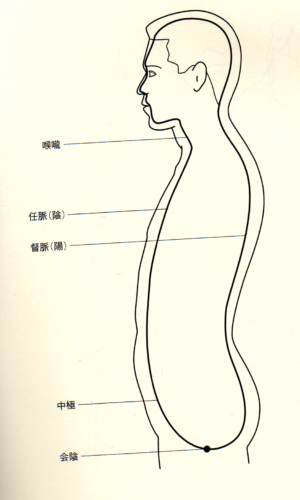
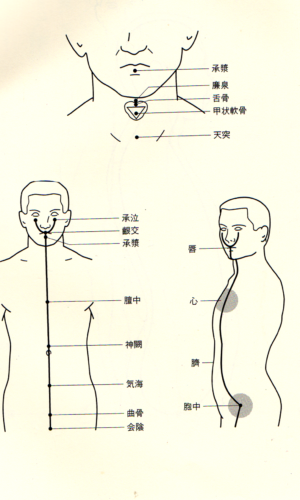
まず、チャクラエネルギーのルートを示す。

この基本ルートは、中国医学の「経絡」のルートを使う。


By the way, one physical “force” is needed to reverse the intention.
It is also clear that there is.

The intention is intangible, and the physical force is not without it, but it is very weak. Needs to be strengthened. It’s not just about doing it, it’s about making it powerful enough to “move” and “stimulate” the chakras in the end.
You have to.

In other words, a kind of conversion work must be done to enhance the psychological action to the physical action.

If conversion is over, it can be said to be strengthening. Here is the secret of “breathing”.

Where, how, and how to retain the power generated by will and breathing is the secret of Shakuson’s Kundalini Yoga.
It starts with making a path

First, the route of chakra energy is shown.

This basic route uses the “meridian” route of Chinese medicine.


今日の運勢  12月31日  Today’s fortune December 31st


七赤金星の日

人より協力の依頼を受けたりする日。金運、喜び事あるも調子に乗って酒色に乱れぬよう心すべき日。小利に迷わず自他喜びを共にする心掛けも大切

自信を持って物事に取り組む日。
少々の失敗は気にせず、色々なことに積極的にチャレンジしましょう。
多少強引でも、自分の思ったように進めることで結果が表れます。
前後の凌犯期間の不運を振り払うためにも、ポジティブに、アクティブに行動したい日です


Seven Red Venus Day

The day when a request for cooperation is received from a person. It’s a day when you should be careful not to get disturbed by the color of sake, even if you have good luck and joy. It is also important to keep in mind to share the joy of self and others without hesitation

A day to work on things with confidence.
Don’t worry about a few mistakes, let’s actively challenge various things.
Even if it is a little forcible, the result will appear if you proceed as you wish.
It is a day when I want to act positively and actively in order to shake off the bad luck of the violence period before and after.

ソンディ・テストについて  About Szondi test

Szondi Test ソンディ・テスト

無意識の欲求や衝動を見出します

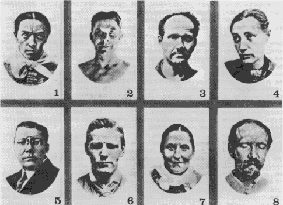
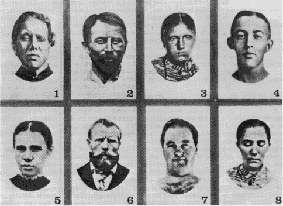
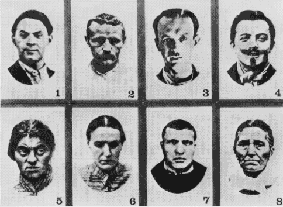
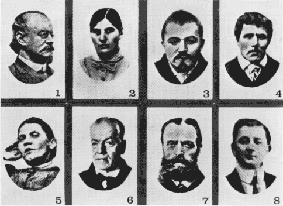
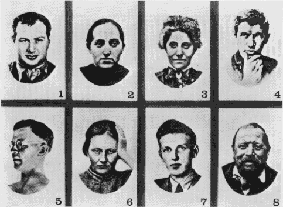
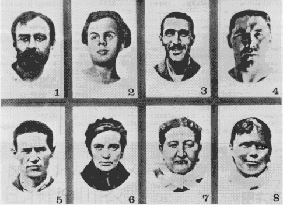
 ハンガリーの精神科医レオポルド・ソンディが考案した投影法検査。マニュアルと48枚の顔写真、テストシートで構成された人格診断検査です。精神疾患や心身症の病型診断、犯罪者の鑑別診断に大変有効です。また、一般的なカウンセリングなどあらゆる臨床場面での活用も可能です。


それぞれ下の一組8枚の写真の中から最も好きな顔の写真と嫌いな顔の写真をそれぞれ2枚選びます。対応する番号のボタンを一度ずつ押してください。6組繰り返しましたら最後に診断ボタンを押してください。あなたのタイプが出ます。


Find unconscious desires and urges

Projection test devised by Hungarian psychiatrist Leopold Szondi. It is a personality diagnostic test consisting of a manual, 48 facial photographs, and a test sheet. It is very effective for type diagnosis of mental illness and psychosomatic disorder, and differential diagnosis of criminals. It can also be used in all clinical situations such as general counseling.


From each of the 8 photos in the set below, select 2 photos of your favorite face and 2 photos of your disliked face. Press the button with the corresponding number once. After repeating 6 sets, please press the diagnostic button at the end. Your type will come out.


好きな顔
   
   嫌いな顔


好きな顔
   
   嫌いな顔


好きな顔
   
   嫌いな顔


好きな顔
   
   嫌いな顔


好きな顔
   
   嫌いな顔


好きな顔
   
   嫌いな顔


選びおわったらしたの診断ボタンを押してください


Szondi Test ソンディ・テスト

ソンディ・テストの全貌
 

富樫 橋

およそあらゆる心理テストは、「人間の心の状態を測定する道具」であると定義することができる。それならば、測定しようとする「心の状態」は、テスト製作者の意図によって種々異なってくるのは当然である。つまり、テスト製作者が関心を抱き、測定しようと欲する心の状態というものは、彼の考えの基礎にある「心の構造」の内容によって全く異なってくるのである。

それゆえ、現在、いろいろな心理テストが存在し、使用されているが、それらのテストが測定しようとするものの内容の違いは、製作者が個人的に依って立つ「心の構造の概念」、すなわち「心理学」ないし「思想」の違いから生まれてくるのである。しかし、いかなる理由からか、この「依拠心理学」ないし「依拠している思想」を明確に表明したテストは極めて少なく、あっても極めて曖昧である。1)筆者がなぜこの点を強調するかと言うと、思想のないところに構造は生まれず、構造のないところには測定すべき確固とした物差しも生まれないと思うからである。したがって、思想なき心理テスト、心理学に基づかない心理テストは文学に過ぎない。したがって、思想なき心理テスト、心理学に基づかない心理テストは、文学に過ぎない。

また、ほとんど全ての心理テストは、それぞれ独自に考案された「刺激材料」を設定している。そして、その刺激材料を被検者に示して得られた反応「一次情報(言語,数値,記号など)」を、製作者が考えた「心の構造」に合わせて「二次情報(言語など)」に翻訳する。その後でそれを解釈し、製作者が推定しようとする「心の状態」を、説明・診断するための「判定情報」に変換するという構造をもっている。

このような心理テストにおける、テスト結果の解釈・判定体系について、利用者が注意すべき重要な点は、「刺激→反応の因果的直接性」と、得られた結果の「解釈の単純性」である。なぜなら、前者は、間接性の要素が混じる程、後者は、複雑さが増える程、客観性が希薄になるからである。客観的でないものは科学的ではなく、普遍性がない。普遍的でないものは、多くの心理学徒の共通概念・共通言語の一部として利用することができない。

したがって、我々はどんな心理テストでも、この因果的直接性と解釈単純性の水準を、「テストの妥当性」とともに考慮しておく必要があると考える。

さらに、測定の対象である「心」は、瞑想のような特別な状態にある場合を除き、常に絶え間なく流動し、決して固定することはない。それゆえ、全ての1回法テストは、原理的に、「風邪をひいた受験生の失敗」と同じく、普段の精神状態とは異なるテスト結果を示す可能性が強いのである。とくに何らかの緊張状態があるとき、被検者の常ならぬ心の状態を一般化し固定化して理解してしまう危険性がある、ということに留意すべきである。要するに全ての1回法テストは、人間の精神や魂を測定しようとするにはふさわしくないのである。

次は、「意識テスト」と「無意識テスト」の違いの問題である。あるテストが、刺激にたいする被検者の意識領域の反応を予想したものであれば、それは単なる意識テストである。それに対して、特別な無意識の領域の反応を得るために、材料や方法が吟味されたものは、無意識テストと呼ばれる。

ここで、無意識の内容を把握するテストとして知られている、代表的な二つのテストを比較しておこう。

                       代表的な無意識テストの比較
========================================================================
Test       刺激材料   依拠心理学  1次情報  2次情報  3次情報  4次情報
                        方  法
========================================================================
Rorschach  インクの   知覚心理学?  言語     言語の    記号     心理的
 Test      染み        (  ?  )               意味を              解釈?
(1回法)              印象の表現             解釈
------------------------------------------------------------------------
Szondi     衝動病     衝動心理学    記号    衝動病理   --      --
Test       患者の顔    ソンディ             学的解釈
(10回法)             好き嫌い選択
------------------------------------------------------------------------

ソンディ・テストは、個人的無意識、集合的無意識、遺伝する家族的無意識の、全ての無意識の領域の反応を、「衝動心理学」という特別な心理学理論に基づいて明確に意識し、意図して作られた。それは、極めて「因果的直接性・解釈単純性」に優れた10回法のテストであることが上表から読みとれるであろう。ソンディ・テストは、言葉による陳述を求めないので、いきなりロールシャッハの4次情報に相当するものが、2段階で得られるのである。

Szondi Test Szondi Test

The whole picture of the Szondi test


Togashi Bridge

Almost any psychological test can be defined as a “tool for measuring the state of the human mind.” In that case, it is natural that the “state of mind” to be measured varies depending on the intention of the test maker. In other words, the state of mind that the tester is interested in and wants to measure depends entirely on the content of the “structure of the mind” that underlies his ideas.

Therefore, various psychological tests currently exist and are used, but the difference in the content of what they try to measure is the “concept of the structure of the mind” on which the creator personally stands. In other words, it is born from the difference between “psychology” and “idea.” However, for whatever reason, there are very few tests that clearly state this “reliant psychology” or “reliant thought”, and even if they are, they are extremely vague. 1) The reason why the author emphasizes this point is that no structure is created where there is no idea, and no solid measuring rod to be measured is created where there is no structure. Therefore, psychological tests without thought and psychological tests that are not based on psychology are nothing more than literature. Therefore, psychological tests without thought and psychological tests that are not based on psychology are nothing more than literature.

In addition, almost all psychological tests set their own “stimulating materials”. Then, the reaction “primary information (language, numerical value, symbol, etc.)” obtained by showing the stimulating material to the subject is matched with the “mental structure” considered by the creator, and “secondary information (language, etc.)” ) ”. After that, it has a structure that interprets it and converts the “state of mind” that the producer tries to estimate into “judgment information” for explanation and diagnosis.

Regarding the interpretation / judgment system of test results in such psychological tests, the important points that users should pay attention to are “causal directness of stimulus-> reaction” and “simplicity of interpretation” of the obtained results. Is. This is because the former becomes less objective as the elements of indirectness are mixed, and the latter becomes more complex. What is not objective is not scientific and has no universality. Those that are not universal cannot be used as part of the common concept / language of many psychologists.

Therefore, we believe that in any psychological test, this level of causal directness and interpretation simplicity needs to be considered along with “test validity”.

Moreover, the “mind” to be measured is constantly flowing and never fixed, except in special conditions such as meditation. Therefore, in principle, all one-time tests are likely to show test results that are different from the usual mental state, similar to “failure of a student who has a cold”. It should be noted that there is a risk of generalizing, immobilizing and understanding the subject’s unusual state of mind, especially when there is some tension. In short, all one-time tests are not suitable for trying to measure the human mind or soul.

Next is the question of the difference between the “consciousness test” and the “unconsciousness test”. If a test predicts the subject’s area of ​​consciousness response to stimuli, it is just a consciousness test. On the other hand, a test in which materials and methods are examined in order to obtain a reaction in a special unconscious area is called an unconscious test.

Here, let’s compare two typical tests known as tests for grasping the unconscious content.

Comparison of typical unconscious tests
================================================== ======================
Test Stimulation material Reliance psychology Primary information Secondary information Tertiary information Fourth information
Method
================================================== ======================
Rorschach Ink Perceptual Psychology? Language language symbol psychological
Test Stain (?) Interpret the meaning?
(One-time method) Expression and interpretation of impression
————————————————– ———————-
Szondi Impulsivity Impulsivity Psychology Symbol Impulsivity Pathology ----
Test Patient’s face Sondy interpretation
(10 times method) Like / dislike selection
————————————————– ———————-

The Sondy Test clearly recognizes and intends the reactions of all unconscious areas, personal unconscious, collective unconscious, and inherited family unconscious, based on a special psychological theory called “impulsive psychology.” Was made. It can be seen from the above table that it is a 10-step test with extremely excellent “causal directness / interpretation simplicity”. Since the Szondi test does not require a verbal statement, the equivalent of Rorschach’s quaternary information is suddenly obtained in two steps.
光明真言 こうみょうしんごん  Mantra of Light Koumyo Shingon


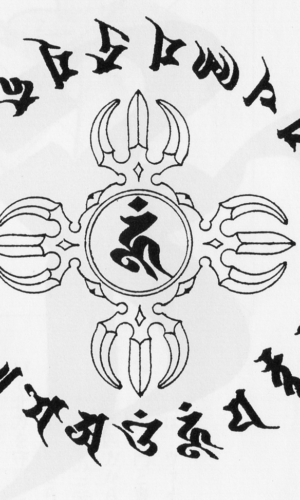
不空大灌頂光真言(ふくうだいかんぢょうこうしんごん)という密教真言である。

It is a esoteric Buddhist mantra called Amoghavajra Abhisheka Shingon.


23の梵字から成り、最後の休止符「ウン」を加えて、合計24の梵字を連ねる。

Mantra of Light-Siddham(CBETA font).png
発音と意味

oṃ amogha vairocana
オーン 不空なる御方よ 毘盧遮那仏(大日如来)よ
オン アボキャ ベイロシャノウ
唵 阿謨伽 尾盧左曩

mahāmudrā maṇi padma
偉大なる印を有する御方よ 宝珠よ 蓮華よ
マカボダラ マニ ハンドマ
摩訶母捺囉 麼抳 鉢納麼

jvāla pravarttaya hūṃ
光明を 放ち給え フーン (聖音)
ジンバラ ハラバリタヤ ウン
入嚩攞 鉢囉韈哆野 吽

Pronunciation and meaning

oṃ amogha vairocana
Orn, Amoghavajra, Vairocana Buddha (Vairocana)
On Avoca Beiro Shannow
Harabaritaya  Om Roza

mahāmudrā maṇi padma
Those who have great marks, jewels, lotus flowers
Makabodara Mani Handma
Mother Mother

jvāla pravarttaya hūṃ
Give off the light Hoon (sacred sound)
Zimbara Harabaritaya Eun

なお、amogha(アボキャ)は不空成就如来を、vairocana(ベイロシャノウ)は大日如来を、mahā-mudra(マカボダラ)は阿閦如来を、maṇi(マニ)は宝生如来を、padma(ハンドマ)は阿弥陀如来を指すと解釈され、金剛界五仏(五智如来)に対して光明を放つように祈願している真言である

密教ではその神秘性を保つために梵字や陀羅尼を翻訳せずに、そのまま梵音を読誦するのが通例である。日本では、平安時代から光明真言法による加持が修されてきた。

なお、上記は真言宗(智山派以外)の唱え方であり、真言宗智山派および天台宗では異なっている。

おん あぼきゃ べいろしゃのう まかぼだら まに はんどま じんばら はらはりたや うん(真言宗智山派の場合)


In addition, amagha is Amoghasiddhi, vairocana is Dainichi Nyorai, mahā-mudra is Aksho Nyorai, maṇi is Hosho Nyorai, and padma is Amida. It is interpreted as referring to Nyorai, and is a true word that prays for the five Buddhas of the Kongokai (Gochi Nyorai) to shine light.

In esoteric Buddhism, in order to maintain its mystery, it is customary to read the Sanskrit as it is without translating the Sanskrit or Dharani. In Japan, since the Heian period, adhi by the Mantra of Light has been practiced.

The above is how to sing the Shingon sect (other than the Chiyama sect), and it differs between the Shingon sect Chiyama sect and the Tendai sect.

On Abokya Beirosha no Umakabodara Mani Handoma Jinbara Hararitaya Yeah (in the case of the Shingon Buddhist Chiyama school)