UA-135459055-1

仏様の辞典  大黒天  Buddha’s dictionary  マハーカーラMahākāla

大黒天


元来ヒンドゥー教の主神の一つで、青黒い身体をもつ破壊神としてのシバ神(大自在天)の別名であり、教に入ったもの。サンスクリット語のマハーカーラMahākālaの訳で、摩訶迦羅(まかから)と音写。マハーカーラは偉大な黒い神、偉大な時間(=破壊者)を意味する。密教では大自在天の眷属(けんぞく)で三宝(さんぼう)を愛し、飲食を豊かにする神で黒色忿怒(ふんぬ)相を示し、胎蔵界曼荼羅(たいぞうかいまんだら)の外金剛部に入れられている。七福神の一つ。

中国南部では床几(しょうぎ)に腰を掛け金袋を持つ姿になり、諸寺の厨房(ちゅうぼう)に祀(まつ)られた。わが国の大黒天はこの系統で、最澄(さいちょう)によってもたらされ、天台宗の寺院を中心に祀られたのがその始まりといわれる。その後、台所の守護神から福の神としての色彩を強め、七福神の一つとなり、頭巾(ずきん)をかぶり左肩に大袋を背負い、右手に小槌(こづち)を持って米俵を踏まえるといった現在よくみられる姿になる。商売繁盛を願う商家はもとより、農家においても田の神として信仰を集めている。民間に流布するには天台宗などの働きかけもあったが、音韻や容姿の類似から大国主命(おおくにぬしのみこと)と重ねて受け入れられたことが大きな要因といえよう。また、近世に隆盛をみた大黒舞いの芸人も大きな役割を果たしたようである。大黒柱などの名とともに親しまれており、東北地方では大黒の年取りと称して、12月に二股(ふたまた)大根を供える行事が営まれている。


日本には密教の伝来とともに伝わり、天部と言われる仏教の守護神達の一人で、軍神・戦闘神、富貴爵禄の神とされたが、特に中国においてマハーカーラの3つの性格のうち、財福を強調して祀られたものが、日本に伝えられた。密教を通じて伝来したことから初期には主に真言宗天台宗で信仰された。インドでも厨房・食堂の神ともされていたが、日本においては最澄が毘沙門天弁才天と合体した三面大黒を比叡山延暦寺の台所の守護神として祀ったのが始まりという。後に大国主神と習合した。室町時代になると日蓮宗においても盛んに信仰された。「大黒さん」として親しまれている。

大黒天

大黒天(摩利支天と同一種子)梵名をマハーカーラといい、「大いなる暗黒」との意味があります。
わが国では七福神の一つに数えられ、頭巾をかぶり、大きな袋を背負い、右手に打出の小槌を待
った姿で親しまれています。

しかし、本来は、シヴア神の化身とされ、戦闘をつかさどるほか、冥府の神ともされています。仏教では施福の神として寺院の台所にまつられ、僧侶たちが食べ物の心配をしないで修行に励かことができように、必要なものが手にはいるように寺院を守護します。

大黒天を食厨の柱にまつったところから、家をささえる最も太い柱や一家のあるじを「大黒柱」というようになりました。一般には福徳の神として、商売繁昌などを祈念します。
おん ま ら か きや や そわ か

Daikokuten


Originally one of the main gods of Hinduism, it is another name for Shiva (Daijuten) as a destructive god with a dark blue body, and it entered Buddhism. Translated from the Sanskrit word Mahākāla, it is a transcription of Mahakala. Mahakala means great black god, great time (= destroyer). In esoteric Buddhism, he loves Sanbo in the genus of the heavens, and is a god who enriches food and drink. It is put in the department. One of the Seven Lucky Gods.

In southern China, he sat on a shogi and had a gold bag, and was enshrined in the kitchens of various temples. Daikokuten in Japan is of this lineage, and it is said that it was brought about by Saicho and was enshrined around the temple of the Tendai sect. After that, he became one of the Seven Lucky Gods from the guardian deity of the kitchen, wearing a hood, carrying a large bag on his left shoulder, and holding a gavel in his right hand. Become a figure. Not only merchants who wish for prosperous business, but also farmers are worshiped as the god of rice fields. The Tendai sect and others worked to disseminate it to the private sector, but it can be said that the major factor was that it was accepted together with Okuninushi no Mikoto because of its similar phonology and appearance. In addition, it seems that the entertainer of Daikoku Mai, who saw prosperity in the early modern period, also played a major role. It is popular with names such as Daikoku Pillar, and in the Tohoku region, an event is held in December to offer bifurcated radishes, which is called the old age of Daikoku.


It was introduced to Japan with the introduction of esoteric Buddhism, and was one of the guardian gods of Buddhism called Tenbe. What was emphasized and enshrined was passed on to Japan. Since it was introduced through esoteric Buddhism, it was worshiped mainly in the Shingon sect and Tendai sect in the early days. In India, it was also regarded as the god of the kitchen and dining room, but in Japan, Saicho enshrined the three-sided Daikoku, which was combined with Bishamonten and Benzaiten, as the guardian deity of the kitchen of Enryakuji Temple on Mt. Hiei. Later, he learned from Okuninushi. In the Muromachi period, it was actively worshiped in the Nichiren sect. It is popular as “Mr. Daikoku”.

Daikokuten

Daikokuten (the same seed as Marici) is called Mahakala, which means “great darkness”.
Counted as one of the Seven Lucky Gods in Japan, he wears a hood, carries a large bag on his back, and waits for a gavel to launch in his right hand.
It is familiar with its appearance.

However, originally, it is considered to be an incarnation of the god Shivaa, and in addition to being in charge of battle, it is also regarded as the god of the Netherworld. In Buddhism, the god of blessing is enshrined in the temple kitchen and protects the temple so that the monks can practice without worrying about food and have what they need.

From the place where Daikokuten was enshrined in the pillars of the food kitchen, the thickest pillars that support the house and the pillars of the family came to be called “Daikokuten”. Generally, as a god of good fortune, we pray for business prosperity.
Onmaraka Kiya or Sowaka

難陀

難陀(なんだ、: नन्द Nanda[1]: आनंद Ānanda[要出典])龍王は、八大竜王の一つで、その第一番に数えられる龍王である。また、千手観世音菩薩の眷属である二十八部衆の一尊にも挙げられている。

概要編集

像形は、基本的に人身で頭の上に9頭の蛇を乗せ、右手に剣を持つ形をとるものや、両手で宝珠を持つものなどがある。

弟の跋難陀(ばつなんだ:梵 उपनन्द Upananda)龍王とともに密教の雨乞いの法会(請雨経法しょううきょうほう)の時に拝まれる善き龍神である。特に、この兄弟の龍王は、真言宗で重視される準胝観音の眷属の二大龍王として有名である。

別名は歓喜龍王(かんきりゅうおう。梵名:Nandanaga(ナンダナーガ)、真言:オン ナンダ バナンダ エイ ソワカ(二大龍王真言))である。ヒンドゥー教では、シェーシャ(: Śeṣa,舎沙)と同一視されることもある。

仏様の辞典  愛染明王【あいぜんみょうおう】 Buddha’s dictionary ラーガラージャRāga-rāja

仏と人との間にあり,愛によって両者を結ぶと考えられる明王。大日如来または金剛愛菩薩を本地とし,その仮現(けげん)と考えられる。その愛はすべての悪を降伏(ごうぶく)するもので,三面六臂(ろっぴ)の忿怒(ふんぬ)の形をし武具を持つ。人に息災・敬愛・福徳を与えると信ぜられ,愛染法が行われた。日本には平安初期に伝えられ,また大坂の藍商仲間による愛染講が知られる。

サンスクリットRāga‐rājaの訳。真言密教で信仰する明王の一つ。愛欲と貪染(とんぜん)をそのまま浄菩提心とする三昧(さんまい)に住する尊で,金剛薩埵または金剛王,金剛愛菩薩の化身とされる。平安初期に日本に伝えられ,平安後期以降の作例が現存する。通形は三目六臂,赤色の忿怒(ふんぬ)の像で,蓮華座上に結跏趺坐(けつかふざ)する。六臂の中の中央左右に弓と矢を持ち,蓮華座の下方に宝瓶がある。白描図像には種々の形式の像が見られるが,現存作品を見ると図像の上の形式的展開は顕著ではなく,一般的な形のほかには円珍請来と伝える像が知られる程度である。


本誓と功徳

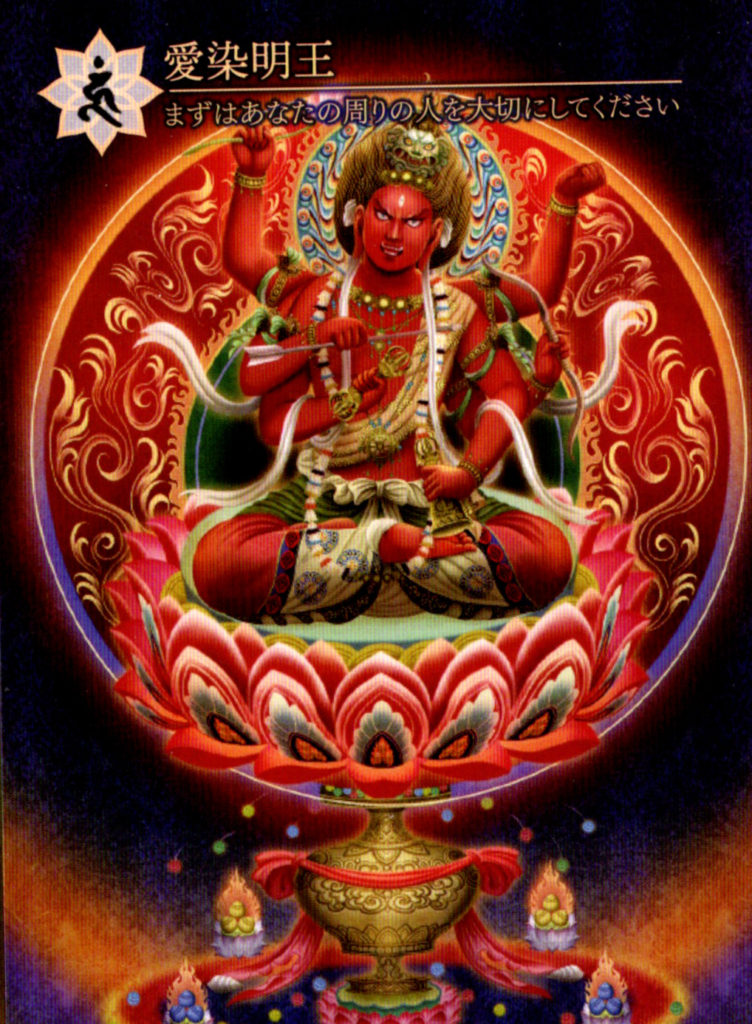
いわゆる愛染明王の姿の特徴は、一面三目・六臂で、頭上には獅子の冠を頂き、冠の上には五鈷鉤が突き出ていて、その身は赤色で宝瓶の上にある紅蓮の蓮華座に、日輪を背にして座っている。これらの相が示すその象徴的な意味は以下のようになる。

  • 燃え盛る日輪を「織盛日輪」と言い、日輪は仏のもつ無上の浄菩提心を表し、燃え盛る炎は智火煩悩に基づく執着や愛欲をことごとく焼き尽くし、その「愛染三昧」の禅定が不退転となる仏の勇猛心であることを表している。
  • 頭上に獅子の冠を頂き、髪の毛を逆立てて怒髪天を突くさまを表すのは、百獣の王である獅子が吼えるとあらゆる猛獣もすぐに静かになる譬えのように、憤怒の怒りの相と獅子吼によって諸々の怨敵を降伏して、一切衆生を救済することを表している。
  • 冠の上に五鈷鉤が突き出ているのは、衆生の本有(ほんぬ)の五智を呼び覚まして、邪欲を捨てさせて正しい方向へと導くことを意味し、愛染明王の大愛[注 4]が衆生の心に染み入り、仏法の真実を体得せしめることを表している。
  • 一面三目で身体が赤色であり、その身を五色の華鬘で荘厳する点は、三つの眼は法身と般若と解脱を意味し、世俗面においては仁愛と知恵と勇気の三つの徳を表す。身体が赤く輝いているのは、愛染明王の大愛と大慈悲とがその身体からあふれ出ていることを意味し、五色の華鬘でその身を荘厳するのは、五智如来の持つ大悲の徳を愛染明王もまたその身に兼ね備えていることを意味し、両耳の横から伸びる天帯[注 5]は、「王三昧」に安住して如来の大法である真理の教えを聞くことを表している。
  • 六臂として手が六本あるのは、六道輪廻の衆生を救う意味をもつ。また、左右の第一手は二つで「息災」を表していて、左手の五鈷鈴は、般若の智恵の音と響きにより衆生を驚愕させて、夢の如きこの世の迷いから覚醒させることを表し、右手の五鈷杵は、衆生に本有の五智を理解し体得させて、愛染明王の覚りへと到達せしめることを表している。[11]
  • 左右の第二手は二つで「敬愛」と「融和」とを表していて、左手の弓と右手の矢(箭)は、二つで一つの働きをするので、この世の人々が互いに協力して敬愛と和合の精神を重んじ、仏の教えを実践する菩薩としての円満な境地に至ることを意味している。また、愛染明王の弓矢は、大悲の矢によって衆生の心にある差別や憎しみの種を射落とし、菩提心に安住せしめることを意味し、そして矢は放たれるとすぐに目標に到達することから、愛染明王への降魔や除災、男女の縁結び[12]における祈念の効果が早く現れることをも表している。
  • 左右の第三手は二つで人生の迷いや煩悩による苦しみの世界を打ち払う「増益」と「降伏」とを表していて、左手に拳を握るのは、その手の中に摩尼宝珠を隠し持っていて、これは衆生が求めるあらゆる宝と財産や、生命を育むことを意味していて、右手の赤い未敷蓮華(みふれんげ)は、それらの衆生の財産や生命を奪おうとする「四魔[注 6]}[14]に対して、大悲の鞭を打ち振るい、魔を調伏することを表している。
  • 愛染明王が座っている紅蓮の蓮華座は、「愛染三昧」の瞑想から生じる大愛の境地を実現させた密教的な極楽浄土を意味していて、その下にある宝瓶は、仏法の無限の宝である三宝を醸し、経と律と論の三蔵を蔵することを表している。また、その周囲に宝珠や花弁が乱舞するのは、愛染明王が三宝の無尽蔵の福徳を有することを意味している。

愛染明王

あいぜんみようおう
愛染明王
梵名を、ラーガラーゾヤ()といいます。ラーガとは「色に染まる」という意味から、貪欲、
かさばり、性欲などをあらわし、「愛染」と漢訳されました。
人を愛するということはすばらしいことです。
ところが、これがゆきすぎますと、溺愛、盲愛といわれる愛のむさばりとなり、人を傷つけてし圭
います。これが煩悩です。
しかし、愛というものを、単に恋人や家族だけに向けるのではなく、より多くの人に、人間以外
の生きものに、地球全体へと向けたらどうでしょ
うか。小さな愛は、人類愛、宇宙愛といった犬きな愛情、すなわち菩提心へと発展してゆくことになるでしょう。
のように「煩悩」を「浄菩提心」に昇華させる力を与えてくれるのが愛染明王です.


Myo, who is between the Buddha and humans and is thought to connect them with love. It is thought to be a temporary manifestation of Dainichi Nyorai or Kongo Ai Bodhisattva. That love surrenders all evil, and has the shape of a three-sided six-sided wrath and armor. He was believed to give people breath, respect, and good fortune, and the Aizen method was carried out. It was introduced to Japan in the early Heian period, and the Aizen class by Osaka’s indigo merchants is known.

Translation of Sanskrit Rāga-rāja. One of the Myo Kings who worship in Mantra Esoteric Buddhism. It is a samadhi who lives in Samadhi, whose lust and greed are the same as the bodhisattva. It was introduced to Japan in the early Heian period, and examples from the latter half of the Heian period still exist. The common form is a three-eyed six-armed, red angry statue, which sits on the lotus position. It has bows and arrows on the left and right sides of the center of the six elbows, and a treasure bottle below the lotus position. Various types of images can be seen in the white iconography, but when looking at the existing works, the formal development on the iconography is not remarkable, and in addition to the general shape, the image that is said to be Enchin is known. Is.


This oath and merit

The characteristic of the so-called Aizen Myo is that it has three eyes and six elbows on one side. He sits in the lotus position of Guren with his back to the sun. The symbolic meanings of these phases are as follows.

The burning sunflower is called “Orimori sunflower”, and the sunflower represents the Buddha’s supreme pure bodhicitta spirit. It shows that it is the bravery of the Buddha.
The lion’s crown over his head, his hair turned upside down and his angry hair pierced, is like the angry phase of wrath, as if the lion, the king of beasts, barks and all the beasts become quiet immediately. It represents the surrender of various grudges by the lion 吼 and the rescue of all sentient beings.
The protrusion of the five-headed sword on the crown means that it awakens the Gochi of the sentient beings, Honnu, to abandon their lust and lead them in the right direction. Note 4] shows that it permeates the hearts of sentient beings and allows them to learn the truth of Buddhism.
The fact that the body is red on one side and the body is magnificent with five-colored keman, the three eyes mean the ritual, the prajna, and the liberation, and on the secular side, they represent the three virtues of love, wisdom, and courage. .. The fact that the body is shining red means that the great love and mercy of Aizen Myo is overflowing from the body, and it is the virtue of the great sorrow of Gochi Nyorai to solemnize himself with the five-colored sword. It means that Aizen Myo also has this in his body, and the heavenly belt that extends from the side of both ears [Note 5] is to settle down in “King Sanmai” and listen to the teachings of the truth, which is the Dafa of Tathagata. Represents.
Having six hands as six elbows has the meaning of saving the sentient beings of the Rokudo Rinkai. In addition, the first move on the left and right represents “breathing”, and the bell on the left represents the sound and sound of the wisdom of Prajna, which surprises the sentient beings and awakens them from the wonders of the world like a dream. On the right hand side, the Gotobuchi shows that the sentient beings can understand and acquire the true Gochi and reach the awakening of Aizen Myo. [11]
The two left and right hands represent “respect” and “reconciliation”, and the bow on the left and the arrow on the right (bodhisattva) work as one, so people in this world cooperate with each other. It means that we will reach a peaceful state as a bodhisattva who practices the teachings of Buddha, respecting the spirit of respect and harmony. Also, the bow and arrow of Aizen Myo means that the arrow of great sorrow shoots down the seeds of discrimination and hatred in the hearts of sentient beings and makes them rest in the bodhicitta spirit, and because the arrow reaches the target as soon as it is released. It also shows that the effects of prayers on the demons and disasters on Aizen Myo, and the marriage between men and women [12] appear early.
The third hands on the left and right represent “increased profit” and “surrender” that ward off the world of suffering caused by the hesitation and anxiety of life. I have a secret, which means to nurture all the treasures and property that the people want, and the life, and the red Mifurenge on the right tries to take away the property and life of those people. In response to “Four Devil” [Note 6]} [14], it means to shake the whistle of great sorrow and to subdue the demon.
The lotus seat of Guren, where Aizen Myo sits, means the esoteric paradise of paradise that realized the state of great love that arises from the meditation of “Aizen Zanmai”, and the treasure bottle below it is the infinite of Buddhism. It represents the brewing of the three treasures, which are the treasures of the Buddhist priesthood, and the collection of the three breweries of sutras, rituals, and theories. In addition, the jewels and petals fluttering around it mean that Aizen Myo has the inexhaustible virtues of the three treasures.
Aizen Myo

Let’s see Aizen
Aizen Myo
The name of the Sanskrit is called Lagara Zoya (). Raga is greedy because it means “to be dyed in color”.
It expresses bulkiness and sexual desire, and was translated into Chinese as “Aizen”.
It’s great to love people.
However, if this goes too far, it will become a mess of love called doting and blind love, and it will hurt people.
is. This is a worldly desire.
But love isn’t just about lovers and families, it’s about more people, non-humans.
Why don’t you turn to the whole earth to the creatures of the world?
Is it? Small love will develop into dog-like love such as love for humanity and love for the universe, that is, bodhicitta.
It is Aizen Myo who gives the power to sublimate “Kleshas” into “Johbodhicitta”.

仏様の辞典 不動明王 Buddha’s dictionary acalanātha


不動明王(ふどうみょうおう)とは?

語源は「動かない守護者」を意味し、インド神話のシヴァ神の別名です。シヴァは暴風雨の威力を神格化したもので、破壊的な災害を起こす半面、雨によって植物を育てます。その破壊と恵みの相反する面は不動明王にも受け継がれているのです。不動明王は仏法の障害となるものに対しては怒りを持って屈服させますが、仏道に入った修行者には常に守護をして見守ります。


大日如来の化身として、どんな悪人でも仏道に導くという心の決意をあらわした姿だとされています。特に日本で信仰が広がり、お不動様の名前で親しまれています。そして、五大明王の中心的存在です。五大明王とは、不動明王を中心に降三世明王(ごうざんぜみょうおう)・軍荼利明王(ぐんだりみょうおう)・大威徳明王(だいいとくみょうおう)・金剛夜叉明王(こんごうやしゃみょうおう)の5体のことを指し、不動を中心に東西南北に配されます。不動明王の脇侍として八大童子のうちの矜迦羅(こんがら)・制多迦(せいたか)の2童子が配されることも多いです。ちなみに不動明王の持っている龍が巻きついている炎の剣が単独で祀られている場合があります。不動明王の化身とされ、倶利伽羅竜王(くりからりゅうおう)などと呼ばれています。

ご利益

除災招福、戦勝、悪魔退散、修行者守護、厄除災難、国家安泰、現世利益のご利益があるとされる。また、酉年生まれ守り本尊です。酉年に生まれた人々の開運、厄除け、祈願成就を助けるといわれています。

不動明王(ふどうみょうおう)の像容

背の低い、ちょっと太めの童子型の造形が多く、怒りの表情をしています。目は天地眼(てんちげん)といって右目を天に向けて左目を地に向けていますよ。口は牙上下出といって右の牙を上に出して左の牙を下に出しています。炎の光背を背にし、手には剣と羂索(けんじゃく)を持っています。剣は大日如来の智慧の鋭さを表現しています。羂索とは煩悩を縛り悪の心を改心させる捕縛用の縄のことです。

不動明王

梵名はアールヤアチャラナータビジャヤラージ
ブヤ』どどといい、正式には聖不動威怒明王と呼びます。
諸仏は、つねにさ圭ざまな手段をとって、わたしたち衆生をさとりの道へ歩ませようとします。
しかし、なかには、やさしさだけの慈悲では心を変えない、強情な衆生もいます。
こうした尋常な方法ではとうてい救済できないかたくなな衆生に対して、大日如来は叱りつける
という慈悲のかたちをとって教え導きます。’』、大日如来は不動明王に変化し、忿怒の相を
もってあらわれます。忿怒は実は慈悲のきわみなのです。
酉年生まれの守り本尊とされています。

不動明王(ふどうみょうおう)の真言

ナウマク・サマンダ・バザラ・ダン・カン


What is Fudo Myoo?

The etymology means “immovable guardian” and is another name for Shiva in Indian mythology. Shiva is a deification of the power of storms, causing devastating disasters while growing plants through rain. The conflicting aspects of destruction and grace are inherited by Fudo Myoo. Fudo Myo is angry and succumbs to obstacles to Buddhism, but he always protects and watches over the practitioners who have entered Buddhism.


As an incarnation of Dainichi Nyorai, he is said to show his determination to lead any bad guy to Buddhism. Faith has spread especially in Japan, and it is known by the name of Fudo-sama. And it is the center of the Five Great Myo Kings. The five great Myo Kings are the Fudo Myo King, the Gozanze Myoou, the Gundari Myoou, the Daiitoku Myoou, and the Kongo Yasha Myo. It refers to the five bodies of (Ou), and is arranged in the north, south, east, and west centering on immobility. Of the eight great children, two of the eight great children, Kongara and Seitaka, are often assigned as the side samurai of Fudo Myoo. By the way, the flame sword around which the dragon of Fudo Myoo is wrapped may be enshrined alone. It is said to be the incarnation of Fudo Myo, and is called Kurikara Ryuo.

Benefits

It is said that there are benefits such as blessing for disaster relief, victory, expulsion of demons, protection of practitioners, disaster relief, national security, and profits of this world. In addition, he was born in the year of the rooster and is the guardian deity. He is said to help people born in the year of the rooster to have good luck, ward off evil, and fulfill their prayers.

Image of Fudo Myoo

There are many short, slightly thick, child-shaped sculptures that give an angry look. His eyes are called Tenchigen, with his right eye facing the heavens and his left eye facing the ground. His mouth is called fang up and down, with the right fang up and his left fang down. He has a halo of fire on his back and a sword and a sword in his hand. The sword expresses the sharpness of Vairocana’s wisdom. A rope is a rope for captivity that binds anxiety and converts the evil mind.

Fudo Myoo

The name of the sword is Aruya Acharanata Vijaya Large
It’s called “Buya”, and it’s officially called the Holy Fudo Majesty King.
The Buddhas always try to take us sentient beings to the Satori Road by taking various means.
However, there are some stubborn sentient beings who cannot change their hearts with the mercy of kindness alone.
Dainichi Nyorai scolds the hard-working sentient beings who can hardly be rescued by such ordinary methods.
I will teach and guide you in the form of mercy. ’”, Dainichi Nyorai changed to Fudo Myo, and became angry.
It will appear. Anger is actually a mercy.
It is said to be the guardian deity born in the year of the rooster.

The true word of Fudo Myoo

Naumak Samanda Bazara Dan Khan

仏様の辞典 勝三世明王 Buddha’s dictionary  Trailokyavijaya


シヴァは妻のパールヴァティーと共に「過去・現在・未来の三つの世界を収める神」として ヒンドゥー教 の最高神として崇拝されていたが、 大日如来 はヒンドゥー教世界を救うためにシヴァの改宗を求めるべく、配下の降三世明王を派遣し(或いは大日如来自らが降三世明王に変化して直接出向いたとも伝えられる)、頑強難化のシヴァとパールヴァティーを遂に超力によって降伏し、仏教へと改宗させた。降三世明王の名はすなわち「三つの世界を収めたシヴァを下した明王」という意味なのである。
降三世明王は右の絵の通り三面八臂の姿をしており、二本の手で印象的な「降三世印」を結び、残りの手は弓矢や矛などの武器を構える勇壮な姿であるが、何より両足で地に倒れた大自在天(シヴァ)と妻烏摩妃(パールヴァティー)を踏みつけているのが最大の特徴である。誰かを踏みつけた仏と言えば 四天王 がそれぞれ 邪鬼 を踏みつけているが、降三世明王は「異教とはいえ神を倒して踏みつけている」という点でひと際異彩を放つ仏である。

降三世はサンスクリット語で、トライローキヤ・ヴィジャヤ(三界の勝利者  Trailokyavijaya )といい、正確には「三千世界の支配者 シヴァ を倒した勝利者」の意味。

「オン・ソンバ・ニソンバ・ウン・バザラ・ウン・ハッタ」( Oṃ śumbha niśumbha hūṃ vajra hūṃ phaṭ )

降三世のサンスクリット語名とその起源

降三世はサンスクリット語で、トライローキャ・ヴィジャヤ(三界の勝利者 Trailokyavijaya)といい、正確には「三千世界の支配者シヴァを倒した勝利者」の意味。

経典によっては、そのまま、孫婆明王(そんばみょうおう)とも、後期密教の十忿怒尊ではシュンバ・ラージャ (Śumbharāja)とも呼ばれる。 その成立は、古代インド神話に登場するシュンバ (Śumbha)、ニシュンバ (Niśumbha) というアスラの兄弟に関係し、密教の確立とともに仏教に包括された仏尊である。

同体とされる勝三世明王は、降三世と起源を同じくするものの、「一面二臂タイプのトライローキャヴィジャヤ」として近年インドでも出土しており、ヴァジュラ・フーンカーラ菩薩(Vajrahūṃkāra)とも言われる。


降三世明王

阿閃如来の命を受け、煩悩を退治

降三世明王(ごうざんぜみょうおう)とは?

阿閃如来、大日如来の化身ともいわれ東方を守護しています。降三世の語源は「3つの世界を降伏するもの」という意味で、過去・現在・未来の世界にはびこる欲望、怒り、愚痴という三つ煩悩を退治するといわれています。


大日如来が説法をしていたとき、大自在天(ヒンドゥー教のシヴァ神)とその妃・鳥摩(ウマー)が仏教の教えに従わず欲望に捕らわれていたため降三世明王が降臨して倒したといわれています。そのため、降三世明王像の足下には大自在天と鳥摩が踏みつけられています。五大明王の一尊で単独では祀られません。

ご利益

煩悩除去、怒りを抑える、悪魔退散のご利益があるとされています。

Trailokyavijaya Sanskrit name and its origin [edit]Trailokyavijaya is a Sanskrit word for Trailokyavijaya, which means “the victor who defeated Shiva, the ruler of the three thousand worlds.”Depending on the scriptures, it is also called Somba Myouou as it is, or Śumbharāja in the late esoteric Buddhist esoteric Buddhism. Its formation is related to the Asura brothers Śumbha and Niśumbha, who appear in ancient Indian mythology, and is a Buddhist priest who was included in Buddhism with the establishment of esoteric Buddhism.

Although it has the same origin as Trailokyavijaya, it has been excavated in India in recent years as a “one-sided, two-elbow type trilo cavijaya,” and is also known as the Vajrahūṃkāra.


Trailokyavijaya

Get rid of his anxieties at the behest of Asen Nyorai

What is Trailokyavijaya?

It is said to be the incarnation of Asen Nyorai and Dainichi Nyorai, and protects the east. The etymology of Furu III means “the one that surrenders the three worlds,” and is said to exterminate the three worldly desires, anger, and bitterness that prevail in the past, present, and future worlds.


When Dainichi Nyorai was preaching, Maheshavara (Hindu god Shiva) and his princess, Ucchusma (Ucchusma), were trapped in desire without following Buddhist teachings, so the descending third generation Myo came down. It is said that he defeated him. Therefore, Maheshavara and Torima are trampled at the feet of the statue of King Furu III. It is one of the Five Great Myo Kings and cannot be enshrined alone.

Benefits

It is said to have the benefits of eliminating worldly desires, suppressing anger, and dispelling demons.

Image of Gozanzemyoou

仏様の辞典     准胝観音   Cundī Buddha’s dictionary

准胱観音真言
なう まく さ た なん さん みゃく さん ぼ だ く ち なん
た にや た おん しゃ れい しゅ れい じゅん でい そわ か

准服とは、梵名チユンデイ上の呂号の音写で「清浄無垢」という意味があり、さとりの道を歩ませる観音です。
別名、准服仏母、七倶服仏母とも呼ばれます。七倶服とは「無量」を意味しますから、多くの諸
仏の母となります。そのため観音菩薩ではないとの説もあります。経軌にも観音として説かれてい
ないことから、犬台密教では准肛如来として仏部の尊としますが、真言密教では観音の一つとして六観音の中に加えます。
求児・安産の本尊としてもまつられます。もとは水の神で、その姿は女身といわれています。
なお、胎蔵曼荼羅中台八葉院の観音の種子は、この准服観音のブ(回)字が記されています。

チュンディー(Cundī)を音写したものとする]がある

日本では「准胝仏母」、「准胝観音菩薩」、「准胝観世音菩薩」、「天人丈夫観音」などさまざまな呼称がある。

真言

真言は短呪の「オン・シャレイ・シュレイ・ジュンテイ・ソワカ」(Oṃ cale cule cunde svāhā

]などがよく知られている。長咒は「ナモサッタナン・サンミャクサンモダクチナン・タニヤタ・オン・シャレイ・シュレイ・ジュンテイ・ソワカ」。

三昧形

三昧耶形は「寶瓶」(方便)、「金剛杵」(智慧)、「甲冑」(慈悲)。

種子

種子はबु(ボ、buBonjiBu.png


仏教に取り入れられてからは慈悲深い清浄をもたらす神とされ、七倶胝仏母(しちぐていぶつぼ)ともいわれています。これは遙か過去より多くの仏を誕生させた仏の母という意味です。そのため、真言宗系では人道を救済する六観音(聖観音・千手観音・十一面観音・如意輪観音・馬頭観音・准胝観音)に数えられますが、天台宗系では准胝仏母といわれ如来に分類されています。不空羂索観音と合わせて七観音と呼ばれることもあります。


Associate bladder Kannon Mantra
Nau Makusata Nansan Myakusan Bodakuchi Nan
Taniya Onsha Rei Shu Rei Jun Dei Sowaka

Associate clothes are Kannon that walks the path of Satori, meaning “clean and innocent” in the sound copy of the Lu-go on the Sanskrit dynasty.
Also known as the Associate Clothes Buddha Mother and the Seven Club Clothes Buddha Mothers. Since seven clothes mean “infinite amount”, many things
Become the mother of Buddha. Therefore, there is a theory that it is not a Kannon Bodhisattva. It is also explained as Kannon in the sutra
In Inudai Esoteric Buddhism, it is regarded as the Buddha’s honor as quasi-Ana Nyorai, but in Mantra Esoteric Buddhism, it is added to Rokukannon as one of the Kannon.
It is also enshrined as the principal image of childbirth and childbirth. Originally a god of water, its appearance is said to be a female body.
In addition, the seeds of Kannon of the Fukuzo Mandala Nakadai Hachiyoin are marked with the B character of this quasi-clothing Kannon.

It is assumed that Cundī is a transcription of Cundī]

In Japan, there are various names such as “Cundi Buddha”, “Cundi Kannon Bodhisattva”, “Cundi Kannon Bodhisattva”, and “Tenjin Tsuyoshi Kannon”.

Mantra

The mantra is the short curse “Oṃ cale cule cunde svāhā”

] Etc. are well known. The long story is “Namosattanan, Sanmyakusanmodakuchinan, Taniyata, On Sharei, Shrey, Juntei, Sowaka.”

Zanmaigata

Sanmai Yagata is “Treasure bottle” (upaya), “Kongo 杵” (wisdom), “Armor” (mercy).

seed

The seeds are बु (bo, bu).


Since it was introduced into Buddhism, it has been regarded as a god that brings benevolent cleanliness, and is also known as the Shichigu Tebutsubo. This means the mother of the Buddha who gave birth to more Buddhas than in the past. Therefore, in the Shingon sect, it is counted as six Kannon (Sacred Kannon, Senju Kannon, Eleven-faced Kannon, Nyoirin Kannon, Hayagriva Kannon, Cundi Kannon), but in the Tendai sect, it is called Cundi Buddhist mother. It is classified into. It is also called the Seven Kannon together with the Fukū-in Temple Kannon.

愛染明王   (Rāga-rāja


愛染明王は一面六臂で他の明王と同じく忿怒相であり、頭には獅子の冠をかぶり、宝瓶の上に咲いたの華の上に結跏趺坐で座るという、大変特徴ある姿をしている。その身色は真紅であり、後背に日輪を背負って表現されることが多い。

また、『瑜祇経』第五品に記される偈頌(げしゅ)である「衆星の光を射るが如し」の部分を再現した天に向かってを引く容姿で描かれた姿の高野山金剛峯寺に伝えられる「天弓愛染明王像」や、京都府木津川市山城町の神童寺像、山梨県甲州市塩山の放光寺像などがあり、更には、日蓮筆と伝える「愛染不動感見記」の馬に乘る八臂像や、両頭など異形の容姿で描かれた図像も現存する。

愛染明王信仰は「恋愛・縁結び・家庭円満」などをつかさどる仏として古くから行われており、また「愛染=藍染」と解釈し、染物・織物職人の守護仏としても信仰されている。さらに愛欲を否定しない[8]ことから、古くは遊女、現在では水商売の女性の信仰対象にもなっている。


いわゆる愛染明王の姿の特徴は、一面三目・六臂で、頭上には獅子の冠を頂き、冠の上には五鈷鉤が突き出ていて、その身は赤色で宝瓶の上にある紅蓮の蓮華座に、日輪を背にして座っている。これらの相が示すその象徴的な意味は以下のようになる。[10]

  • 燃え盛る日輪を「織盛日輪」と言い、日輪は仏のもつ無上の浄菩提心を表し、燃え盛る炎は智火煩悩に基づく執着や愛欲をことごとく焼き尽くし、その「愛染三昧」の禅定が不退転となる仏の勇猛心であることを表している。
  • 頭上に獅子の冠を頂き、髪の毛を逆立てて怒髪天を突くさまを表すのは、百獣の王である獅子が吼えるとあらゆる猛獣もすぐに静かになる譬えのように、憤怒の怒りの相と獅子吼によって諸々の怨敵を降伏して、一切衆生を救済することを表している。
  • 冠の上に五鈷鉤が突き出ているのは、衆生の本有(ほんぬ)の五智を呼び覚まして、邪欲を捨てさせて正しい方向へと導くことを意味し、愛染明王の大愛[注 4]が衆生の心に染み入り、仏法の真実を体得せしめることを表している。
  • 一面三目で身体が赤色であり、その身を五色の華鬘で荘厳する点は、三つの眼は法身と般若と解脱を意味し、世俗面においては仁愛と知恵と勇気の三つの徳を表す。身体が赤く輝いているのは、愛染明王の大愛と大慈悲とがその身体からあふれ出ていることを意味し、五色の華鬘でその身を荘厳するのは、五智如来の持つ大悲の徳を愛染明王もまたその身に兼ね備えていることを意味し、両耳の横から伸びる天帯[注 5]は、「王三昧」に安住して如来の大法である真理の教えを聞くことを表している。
  • 六臂として手が六本あるのは、六道輪廻の衆生を救う意味をもつ。また、左右の第一手は二つで「息災」を表していて、左手の五鈷鈴は、般若の智恵の音と響きにより衆生を驚愕させて、夢の如きこの世の迷いから覚醒させることを表し、右手の五鈷杵は、衆生に本有の五智を理解し体得させて、愛染明王の覚りへと到達せしめることを表している。[11]
  • 左右の第二手は二つで「敬愛」と「融和」とを表していて、左手の弓と右手の矢(箭)は、二つで一つの働きをするので、この世の人々が互いに協力して敬愛と和合の精神を重んじ、仏の教えを実践する菩薩としての円満な境地に至ることを意味している。また、愛染明王の弓矢は、大悲の矢によって衆生の心にある差別や憎しみの種を射落とし、菩提心に安住せしめることを意味し、そして矢は放たれるとすぐに目標に到達することから、愛染明王への降魔や除災、男女の縁結び[12]における祈念の効果が早く現れることをも表している。
  • 左右の第三手は二つで人生の迷いや煩悩による苦しみの世界を打ち払う「増益」と「降伏」とを表していて、左手に拳を握るのは、その手の中に摩尼宝珠を隠し持っていて、これは衆生が求めるあらゆる宝と財産や、生命を育むことを意味していて、右手の赤い未敷蓮華(みふれんげ)は、それらの衆生の財産や生命を奪おうとする「四魔[注 6]}[14]に対して、大悲の鞭を打ち振るい、魔を調伏することを表している。
  • 愛染明王が座っている紅蓮の蓮華座は、「愛染三昧」の瞑想から生じる大愛の境地を実現させた密教的な極楽浄土を意味していて、その下にある宝瓶は、仏法の無限の宝である三宝を醸し、経と律と論の三蔵を蔵することを表している。また、その周囲に宝珠や花弁が乱舞するのは、愛染明王が三宝の無尽蔵の福徳を有することを意味している。

愛染明王十二大願[編集]

更に、愛染明王は一切衆生を諸々の苦悩から救うために十二の広大な誓願を発しているとされ、その内容は以下のようになる。[15]

  1. 智慧の弓と方便の矢を以って、衆生に愛と尊敬の心を与えて、幸運を授ける。
  2. 悪しき心を加持して善因へと転換し、衆生に善果を得せしめる。
  3. 貪り・怒り・愚かさの三毒の煩悩を打ち砕いて、心を浄化し、浄信(菩提心)を起こさしめる。
  4. 衆生の諸々の邪まな心や、驕慢の心を離れさせて、「正見」へと向かわせる。
  5. 他人との争いごとの悪縁を断じて、安穏に暮らせるようにする。
  6. 諸々の病苦や、天災の苦難を取り除いて、信心する人の天寿を全うさせる。
  7. 貧困や飢餓の苦悩を取り除いて、無量の福徳を与える。
  8. 悪魔や鬼神・邪神による苦しみや、厄(やく)を払って、安楽に暮らせるようにする。
  9. 子孫の繁栄と、家運の上昇、信心する人の一家を守って、幸福の縁をもたらす。
  10. 前世の悪業(カルマ)の報いを浄化するだけでなく、信心する人を死後に極楽へ往生させる。
  11. 女性に善き愛を与えて良い縁を結び、結婚後は善根となる子供を授ける。
  12. 女性の出産の苦しみを和らげ、その子のために信心すれば、子供には福徳と愛嬌を授ける。


種字・印・真言[編集]

種字[編集]

  • ウーン (hűṃ、हूं)BonjiHuum2.png[16]
  • ウン(hhuṃ) BonjiHhum.png[17]

[編集]

  • 愛染明王根本印[16]

真言[編集]

  • オン・マカラギャ・バゾロウシュニシャ・バザラサトバ・ジャク・ウン・バン・コク[18]
  • ウン・タキ・ウン・ジャク (一字心明)[2]


Aizen Myo is a six-sided, angry man like the other Myo, wearing a lion’s crown on his head and sitting on the lotus flower that bloomed on the treasure bottle. I have a figure. His body color is crimson, and it is often expressed with a sunflower on his back.

In addition, it was drawn in the form of pulling a bow toward the heavens, which reproduced the part of “Shindoji’s light is shining”, which is the geshu described in the fifth item of “Kizugawa”. There are “Tenyu Aizen Myo statue” that is handed down to Koyasan Kongobuji Temple, Shindoji statue in Yamashiro Town, Kizugawa City, Kyoto Prefecture, Hokoji Temple statue in Koshu City, Yamanashi Prefecture, and more, it is said to be Nichiren brush. There are also statues of Hachiren riding on horses in “Aizen Fudokanki” and images drawn with irregular appearances such as both heads.

The Aizen Myo faith has been practiced for a long time as a Buddha who controls “romance, marriage, and family peace”, and it is also interpreted as “Aizen = Aizen” and is also worshiped as a guardian Buddha of dyeing and weaving craftsmen. Furthermore, because it does not deny lust [8], it has been the object of worship of prostitutes in the olden days and women in the water business today.


The characteristic of the so-called Aizen Myo is that it has three eyes and six elbows on one side. He sits in the lotus position of Guren with his back to the sun. The symbolic meanings of these phases are as follows. [Ten]

The burning sunflower is called “Orimori sunflower”, and the sunflower represents the Buddha’s supreme pure bodhicitta spirit. It shows that it is the bravery of the Buddha.
The lion’s crown on his head, his hair turned upside down and his angry hair pierced, is like the angry phase of wrath, as if the lion, the king of beasts, barks and all the beasts become quiet immediately. It represents the surrender of various grudges by the lion 吼 and the salvation of all sentient beings.
The fact that the five-sided sword sticks out on the crown means that it awakens the Gochi of the sentient beings, Honnu, to abandon their lust and lead them in the right direction. Note 4] shows that it permeates the hearts of sentient beings and allows them to learn the truth of Buddhism.
The fact that the body is red on one side and the body is magnificent with a five-colored keman means that the three eyes mean Dharmakaya, Prajna, and liberation, and on the secular side, they represent the three virtues of love, wisdom, and courage. .. The fact that the body is shining red means that the great love and mercy of Aizen Myo is overflowing from the body, and it is the virtue of the great sorrow of Gochi Nyorai to solemnize himself with the five-colored keman. It means that Aizen Myo also has this in his body, and the heavenly belt that extends from the side of both ears [Note 5] is to settle in “Keman Sanmai” and listen to the teachings of the truth, which is the Dafa of Tathagata. Represents.
Having six hands as six elbows has the meaning of saving the sentient beings of the Rokudo Rinkai. In addition, the first moves on the left and right represent “breathing”, and the bell on the left represents the sound and sound of the wisdom of Prajna, which surprises the sentient beings and awakens them from the wonders of the world like a dream. On the right hand side, the Gotobuchi shows that the sentient beings can understand and acquire the true Gochi and reach the awakening of Aizen Myo. [11]
The two left and right hands represent “respect” and “reconciliation”, and the bow on the left and the arrow on the right (bodhisattva) work as one, so people in this world cooperate with each other. It means that we will reach a peaceful state as a bodhisattva who practices the teachings of Buddha, respecting the spirit of respect and harmony. Also, the bow and arrow of Aizen Myo means that the arrow of great sorrow shoots down the seeds of discrimination and hatred in the hearts of sentient beings and makes them rest in the bodhicitta spirit, and because the arrow reaches the target as soon as it is released. It also shows that the effects of prayers on the demons and disasters on Aizen Myo, and the marriage between men and women [12] appear early.
The third hands on the left and right represent “increased profit” and “surrender” that ward off the world of suffering caused by the hesitation and anxiety of life. I have a secret, which means to nurture all the treasures and property that the sentient beings seek, and the life, and the red Mifurenge on the right hand tries to take away the property and life of those sentient beings. In response to “Four Devil” [Note 6]} [14], it means to sway the whistle of great sorrow and to subdue the demon.
The lotus seat of Guren, where Aizen Myo sits, means the esoteric paradise of paradise that realized the state of great love that arises from the meditation of “Aizen Zanmai”, and the treasure bottle below it is the infinite of Buddhism. It represents the brewing of the three treasures, which are the treasures of the Buddhist priesthood, and the collection of the three breweries of sutras, rituals, and theories. In addition, the jewels and petals fluttering around it mean that Aizen Myo has the inexhaustible virtues of the three treasures.
Aizen Myo Twelve Great Wishes [edit]

Furthermore, Aizen Myo is said to have issued twelve vast vows to save all sentient beings from various anguish, and the contents are as follows. [15]

With the bow of wisdom and the arrow of upaya, give love and respect to sentient beings and bestow good luck.
With a bad heart, it turns into a good cause and gives good results to sentient beings.
It crushes the anxieties of the three poisons of greed, anger, and stupidity, purifies the mind, and awakens the bodhicitta.
It separates the disturbing hearts and arrogance of the sentient beings and heads for “Masami”.
Break off the bad ties of conflict with others so that you can live in peace.
Eliminate various illnesses and the hardships of natural disasters, and complete the natural life of those who believe.
Eliminate the suffering of poverty and hunger and give innumerable virtues.
Eliminate the suffering and troubles of demons, demons, and evil gods so that you can live comfortably.
Prosperity of descendants, rising family luck, protecting the family of believers, and bringing happiness.
Not only does it purify the rewards of the bad karma of the previous life, but it also causes believers to go to paradise after death.
Give good love to women, make good ties, and give them good children after marriage.
Relieving the pain of a woman’s childbirth and devoting herself to her child will bestow the child with good fortune and charm.


Kind characters, marks, mantras [edit]
Kind character [edit]
Woon (hűṃ, हूं) [16]
Eun (hhuṃ) [17]
Mark [edit]
Aizen Myo Nemotoin [16]
Mantra [edit]
On Makaraga Bazorow Shunisha Bazarasa Toba Jak Eun Bang Koku [18]
Eun Taki Eun Jak (one character Shinmei) [2]

七党支法 Seven Party Branch Law   仏陀は弟子たちに何を教えたか? What did the Buddha teach his disciples?

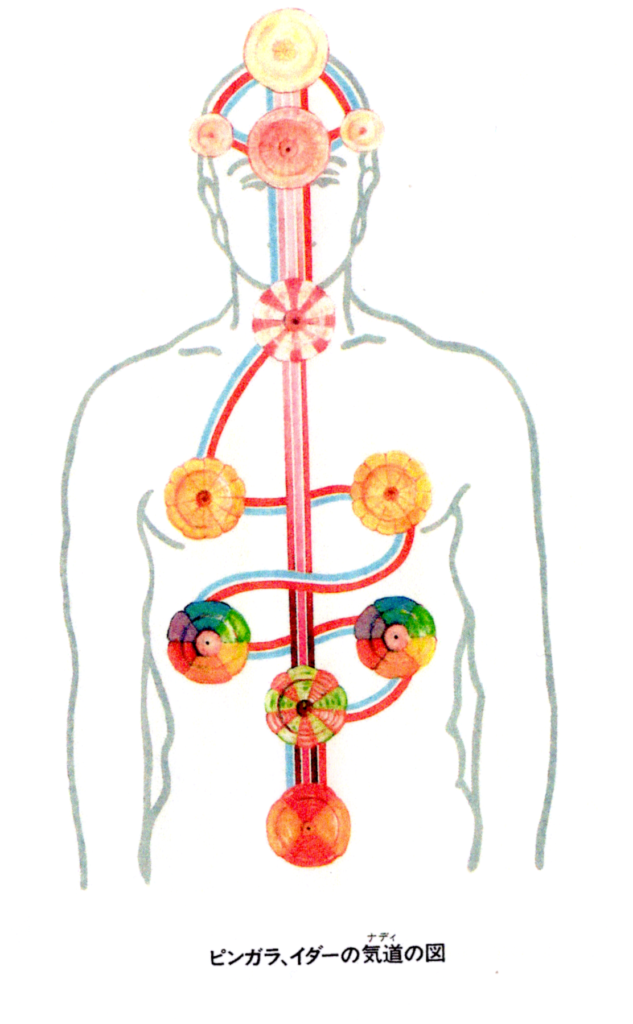
この訓練で、人間ばなれした力が身にそなわりはじめる。 クンダリニー・ヨーガの特殊訓練がはじまる。

慧力法(智力法ともいう) 高度の智慧を身につける訓練である。 私は、求聞持聡明法の修行から始めさせる。

以上の五力法を、基礎訓練とし、この五力法の上に立って、つぎの本格訓練に入ってゆく。

七党支法


七覚支法は、すべて、クンダリニー・ヨーガの訓練と併合しておこなわれる。 これは、私の発見である。 最初、私は、仏陀の成仏法に挑戦して、まったく歯が立たなかった。手も足も出なかった。 なんとか手がかりをつかもうと、四苦八苦しているうちに、阿含の文献の中に、「ゴータマ・ブッダは・*ヨーガの達人”と呼ばれる」という文章を発見した。

この事を考えているうちに、このヨーガ』は、ラージャ・ヨーガと、クンダリニー・ヨ ーガに違いないと、思いあたった。 それを端緒にして、十数年かかって、私は仏陀の成仏法の秘密を解いた。 まさに・仏陀釈尊は、クンダリニー・ヨーガの達人だったのである。 クンダリニー・ヨーガの体得なくして、仏陀の成仏法には一指もふれることができないであろう。


ちゃくほう)

択 法費支


「択」とは「えらぶ」という意味で、あらゆるもの(法)の中から真実のものをえらび出し、 真実ならざるものは捨て去る智慧の獲得である。 さきにのべた「事物の明確な認識と予知」の力は、この択法覚支から得られるのである。

精進覚支 精進力が、倍加する。


喜覚支


精進努力し、能力が増加、あるいはあたらしい能力を身につけることに喜びを感じ、ます ます訓練に精勤するようになる。どんなにきびしい修行でも、喜びをもって受け入れるよう になる。

それは、クンダリニー・ヨーガのチャクラを動かすことにより、訓練が楽しくなるホルモ ンを湧出させるからである。


きょうあん 軽 安覚支


軽 安覚支 常に、身心を軽快明朗にして、心が惜冥(暗く濁る)したり、渋滞したりしない修行。 喜覚支をさらに進めたもので、クンダリニー・ヨーガと併合した、特殊な訓練で得られる 能力である。 聖者特有の、のびやかな姿体と、平安で穏やかな人相となってくる。京信念をはなれて、なにごとにも心がかたよったり、心の平静が乱されなくなる。

対象へのとりれを捨てる修行である。

車安ろ。つづいて、聖者としての心がそなわってくるのである。


定覚支


定覚支定方法について、超人としての能力が飛躍的に強化される。 宿屋なビ力(精神統一)の強化により、感覚器官が増幅される。 この1極限は、不可視光線(赤外線、紫外線)を見ることができ、超音波を聞くこと 力できるようになる。その結果、天災地変も予知することが可能となる。そこまで到達する ことは容易ではない。この修行によって、聖者たちは、大なり小なり、この能力 るのである。

和心者でも、予感や、予知力が身にそなわる。どんな初心者でも、とにかく えてくることはまちがいない。

念覚支

この修行を完成した超人の力は、ふつうの人の「常識」を越え、常識を破壊してしまうだ ろう。たとえば

これは、一つの例えであるが、かれの思念の力は、他人の内臓の中にできた腫瘍(ガンな ど)を、その念の集中力で、破壊、あるいは溶かしてしまうことも可能である。仏陀やその 弟子たちは、そのようにして、病人を癒したものである。(ただ、この場合、ガンを破壊して も、破壊されたガン細胞が他に転移するおそれがあるので、ガン細胞そのものを死滅させる ほどの念の力が伴わなければ危険であり、軽々しくこれを行うことはできない。それほどの 力は、仏陀ご自身でなければ持てないのかもしれない。一つの可能性の例として、あげたわ けである)

そんな力は例外としても、念力法、念覚支法を修行した場合、中等程度の者でも、常人の 信じられないような念の力を持つようになる。

いかがであろうか? これが、仏陀釈尊の、弟子たちに教えた「仏法」なのである。

れが、真実の仏教なのだ。あなたがこれまで常識として考えていた仏教とは、大分ちが うのではなかろうか?

多くの人が仏教だと思っている『法華経』とか『阿弥陀経』は、仏陀釈尊がお説きになっ たものではないのである。これら「大乗経典」とよばれる経典は、仏陀がお亡くなりになっ て二、三百年もたってから、無名の人たちによって創作されたものである。だから、これら の経典は、学問的には「創作経典」とよばれているのである。

創作経典の中には、「成仏法」は全く欠落している。一行も書かれていない。当然であろう。 「成仏法」は、仏陀釈尊しか教えることが不可能だからだ。無名の人たちが勝手に創作した大 乗経典に「仏陀の成仏法」が全くないのは、当然至極というべきだろう。 日本の仏教は「大乗仏教」である。つまり、「創作仏教」であって、「仏陀の仏教」ではな い。従って、「仏陀の成仏法」は全くない、というわけである。 日本の仏教徒が、仏陀の成仏法を全く知らない、というのは、ここに原因があるのである。 私は、このことが心から残念でならないのだ。


With this training, the power of being human begins to be acquired. Special training for Kundalini Yoga begins.

Wisdom method (also called intelligence method) This is a training to acquire a high degree of wisdom. I will start by practicing the method of sagacity.

The above five strengths method is used as the basic training, and based on this five strengths method, the next full-scale training will be started.


Seven Party Branch Law


The Seven Factors of Awakening are all combined with the training of Kundalini Yoga. This is my discovery. At first, I challenged the Buddha’s Buddhahood method and was completely sick. I couldn’t get my hands or legs out. While struggling to get a clue, I found the sentence “Gautama Buddha is called * Yoga Master” in Agama’s literature.

While thinking about this, I realized that this yoga must be Raja Yoga and Kundalini Yoga. With that as a starting point, it took me more than a dozen years to unlock the secret of Buddha’s Buddhahood. Indeed, Buddha Shaka was a master of Kundalini yoga. Without the knowledge of Kundalini Yoga, one would not be able to touch the Buddha’s Buddhahood.


Chakuho)
Choice of legal expenses


“Choice” means “selection”, and is the acquisition of wisdom to select the true one from all things (laws) and to throw away the untrue one. The power of “clear recognition and prediction of things” mentioned earlier can be obtained from this alternative sense.

Devotion support The devotion power doubles.


Awakening


I am delighted to work hard, increase my abilities, or acquire new abilities, and I become more and more devoted to training. No matter how hard the training is, you will be happy to accept it.

This is because moving the Kundalini Yoga chakra creates a form that makes training fun.


Today’s light safety support


Light and secure training Always keep your body and mind light and clear, and practice so that your mind does not become lonely (dark and muddy) or traffic jams. It is a further advancement of the joyous sensation, and is an ability obtained by special training combined with Kundalini Yoga. The laid-back figure peculiar to the saint and the peaceful and calm face. Beyond the Kyo belief, everything will be stiff and the calmness of the mind will not be disturbed.

It is a practice to abandon the obsession with the subject.

Car cheap. Then, the heart as a saint comes to me.


Jokaku support


The ability as a superhuman will be dramatically strengthened with regard to the method of determining the decency. The sensory organs are amplified by strengthening the inn’s power (unification of mind). In this one limit, invisible light (infrared rays, ultraviolet rays) can be seen, and ultrasonic waves can be heard. As a result, it becomes possible to predict natural disasters. It’s not easy for him to get there. By this practice, the saints, more or less, have this ability.

Even a Japanese-minded person has a sense of precognition and precognition. There is no doubt that any beginner will come back.

Seven Factors of Awakening

The power of the superhuman who completed this training will exceed the “common sense” of ordinary people and destroy the common sense. for example

This is an analogy, but the power of his thoughts can destroy or dissolve the tumor (his cancerous throat) that has formed in the internal organs of another person with his concentration. Is. The Buddha and his disciples thus healed the sick. (However, in this case, even if the cancer is destroyed, the destroyed cancer cells may metastasize to other cancer cells, so it is dangerous unless the cancer cells themselves are killed. You can’t do that. You may not have that much power unless you are the Buddha himself. I’ve given it as an example of one possibility.)

With the exception of such powers, if you practice the Psychokinesis Law and the Seven Factors of Awakening Law, even moderate people will have the unbelievable power of psychokinesis of ordinary people.

How about this? This is the “Buddhism” that Buddha Shakuson taught his disciples.

This is true Buddhism. Isn’t he Oita different from the Buddhism you used to think of as common sense?

The “Lotus Sutra” and “Amida Sutra”, which many people consider to be Buddhism, are not hiss, as Buddha Shaka Nyorai preached. These “Mahayana scriptures” were created by unknown people a few hundred years after the death of the Buddha. Therefore, these scriptures are academically called “creative scriptures”.

The “Buddhahood Law” is completely missing in the creative scriptures. No line is written. Naturally. This is because the “Buddhahood Law” can only be taught by Shaka Nyorai. Naturally, it should be said that there is no “Buddha’s Buddhahood Law” in the Daijo scriptures created by anonymous people. Buddhism in Japan is “Mahayana Buddhism”. In other words, it is “creative Buddhism”, not “Buddha Buddhism”. Therefore, there is no “Buddha’s Buddhahood Law”. This is the reason why Japanese Buddhists do not know the Buddha’s Buddhahood method at all. I’m really sorry for this.