UA-135459055-1

未分類

瞑想 瞑想の修行は、二つの領域から成り立つ 「意識的瞑想」と「無意識的瞑想」 Meditation The practice of meditation consists of two areas: “conscious meditation” and “unconscious meditation”.

集中(止)と瞑想(観)


 では瞑想に入ろう。

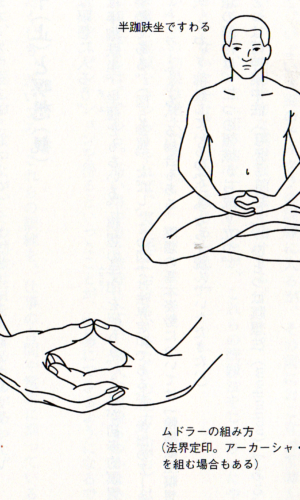
 坐は半珈鉄坐。坐蒲をもちいる。瞑想の手印を組もう。これが初歩的瞑想の

基本姿勢である。(図5参照。ただし、この図では法界定印であるが、後出のアーカー

シャームドラーをもちいる場合もある。瞑想の基本姿勢については『輪廻転生瞑想法

H』に、くわしく解説しているので、かならず読んでいただきたい)

 瞑想の修行は、二つの領域から成り立つ。

 ひとつは精神集中法、ひとつは瞑想法である。

心を集中するとは

 これについて少し解説しよう。まず、シャマタ(止)である。

、禅における公案、また、祈りを捧げるとか、経

文を読む、真言を唱えるなども、精神集中法のひとつである。要はひとつのこと

に心を集中し、そこに〃止”まり、動かないことである。

これは、ひとっのことに心を集中するのである。

数息観がそ‘の代表であるが、、とで’‐ ことてことに意識を集申し、他のものに心

を向けない、これを積極的に意識的におこなうのであるひこれは修行のはじめの

過程として、だれでも通るものである。

この精神集中の状態は二つに分けることができる。

ひとつはこ息識的精神集中」で、ひとつのことにw

 つぎの段階が、「無意識的精神集中しの状態である。これは、高度のもので、

意識的精神集中をつづけているうちに、習練によって条件づけられ、ついに、と

くに意識しないでもひとつのことに心を集中することができるようになる。

 これによって無意識の意識層をコットロ’Iルし、2 つうでは絶対に統御でき

ない無意識の意識を、ある特定の対象に向けることができるようになるのである。

心の流れにまかせるとは

 つぎに、ビパシャナ(観)である。

 これは、ひとつのことに注意をとどめない。心の動きのひとつひとつに心を

向けていくが、ひとつのことにとどまっていない。心の流れにまかせるのであ

る。

 これにも、「意識的瞑想」と「無意識的瞑想」がある。

 「意識的瞑想」は、表面意識が心の流れを観ている。

 「無意識的瞑想」は、深層意識の心の流れそのものになっている。

 では、その深層意識の流れを観ているものはなにか? だれが深層意識の流

れを観ているのか? それは「無意識的精神集中」の心である。

 だから、「止」と「観」は密接な関係があるのである。いまおこなわれている

瞑想のほとんどは、「止」か「観」か、どちらかにかたよっている。禅は「止」

にウェイトがかかり、瞑想(としてやっているもの)は、「観」が主である。しか

し、「止」を完成した「観」でなければほんとうの瞑想ではなく、「止」でとど

まって「観」に入らない定は、これまたほんとうの瞑想ではないのである。

 「止」と「観」はおなじように修せられなければならない。そうして、非常に

高度の瞑想(観)をするためには、おなじように非常に高度の巣中(止)が体得

されていなければ不可能なのである。

 では「意識的瞑想」と「無意識的瞑想」とはどうちがうのか?

 ひと口でいうならば、

 意識的瞑想は「個の世界」を観、

 無意識的瞑想は「全の世界」を観る。 ・

 といったらよいであろう。

 意識的瞑想は「自分だけの世界の流れ」を観るのである。

 無意識的瞑想は「人類そのものの(世界の)流れ」を観るのである。いや、

もっと拡大した世界だ。「宇宙そのものの流れを観る」といったらよいであろう。

無意識の意識層には、原初からの人類の記憶がすべておさめられている。い


や、人類以前からの記憶がすべて秘められている。

 わたくしは、『輪廻転生瞑想法I』で、このことについてのべている。「個体発

生」と「系統発生」の意識と記憶について語った第二章を、もう一度読み返して

みていただきたい。


Concentration (stop) and meditation (view)

Let’s get into meditation.

The seat is a half-iron seat. Use zafu. Let’s set up a meditation sign. This is rudimentary meditation

This is the basic posture. (See Fig. 5. However, although it is a legal seal in this figure, the later-mentioned Aker

In some cases, a shahmdler is used. For the basic posture of meditation, see “Reincarnation Meditation Method”.

Please be sure to read it because it is explained in detail in “H”)

Meditation practice consists of two areas.

One is the mental concentration method (・ o9 ~ Holy memorial, one is the meditation method (Yo’and ~).

To concentrate on

Let’s explain this a little. First is Shamata (stop).

, Koan in Zen, prayer, sutra

Reading sentences and chanting mantras are also one of the methods of concentration. The point is one thing

Focus on, stay there, and don’t move.

This focuses on one thing.

The view of a few breaths is the representative of that, but at the same time, I focused on that and focused on other things.

Do not turn to, do this positively and consciously. This is the beginning of training.

As a process, anyone goes through.

This state of mental concentration can be divided into two.

One is “concentration of breath”, and one thing is w

The next stage is “a state of unconscious mental concentration. This is an advanced one.

As I continued to concentrate my consciousness, I was conditioned by practice, and finally

You will be able to concentrate on one thing without being conscious of it.

By doing this, the unconscious consciousness layer can be controlled by Cottro’I, and 2 can be absolutely controlled.

It becomes possible to direct the unconscious consciousness to a specific object.

To leave it to the flow of the heart

Next is Bipashana (view).

This does not pay attention to one thing. Put your heart into each movement of your heart

I’m going, but it’s not just one thing. Leave it to the flow of your heart

To.

There are also “conscious meditation” and “unconscious meditation”.

In “conscious meditation”, surface consciousness is watching the flow of the mind.

“Unconscious meditation” is the flow of the mind of deep consciousness itself.

Then, what is watching the flow of deep consciousness? Who is the flow of deep consciousness

Are you watching this? It is the mind of “unconscious concentration”.

Therefore, “stop” and “view” are closely related. Now being done

Most meditations depend on either “stop” or “view.” Zen is “stop”

The weight is applied to, and meditation (what you are doing as) is mainly “view”. Shika

However, if it is not a “view” that completes the “stop”, it is not a true meditation, but a “stop”.

The fact that it doesn’t fit into the “view” is not really meditation either.

“Stop” and “view” must be mastered in the same way. And very

In order to perform advanced meditation (viewing), you must acquire a very advanced nest (stop) in the same way.

It is impossible if it is not done.

Then, what is the difference between “conscious meditation” and “unconscious meditation”?

In a nutshell,

Conscious meditation sees the “individual world”,

Unconscious meditation sees the “whole world”.・ ・

It would be nice to say.

Conscious meditation sees “the flow of your own world”.

Unconscious meditation sees the “flow of mankind itself (in the world)”. Disagreeable,

It’s a more expanded world. It would be nice to say, “Watch the flow of the universe itself.”

The unconscious conscious layer contains all the memories of humankind from the beginning. I

And all the memories from before humankind are hidden.

I mentioned this in “Reincarnation Meditation I”. “Individual departure

Reread Chapter 2, which talks about the consciousness and memory of “life” and “phylogenetics”

I want you to see it.
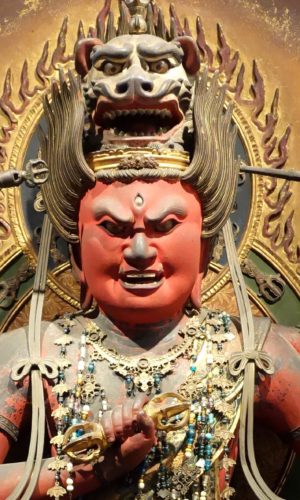
Buddha    愛染明王  Rāga-rāja

愛染明王  Rāga-rāja

あいぜんみようおう
愛染明王

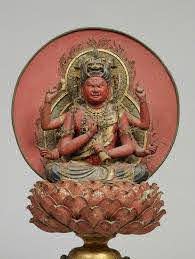
梵名を、ラーガラーゾヤといいます。

ラーガとは「色に染まる」という意味から、貪欲、かさばり、性欲などをあらわし、「愛染」と漢訳されました。
人を愛するということはすばらしいことです。ところが、これがゆきすぎますと、溺愛、盲愛といわれる愛のむさばりとなり、人を傷つけてしいます。これが煩悩です。

しかし、愛というものを、単に恋人や家族だけに向けるのではなく、より多くの人に、人間以外の生きものに、地球全体へと向けたらどうでしょうか。小さな愛は、人類愛、宇宙愛といった犬きな愛情、すなわち菩提心へと発展してゆくことなるでしょう。

のように「煩悩」を「浄菩提心」に昇華させる力を与えてくれるのが愛染明王です.

愛染明王十二大願

更に、愛染明王は一切衆生を諸々の苦悩から救うために十二の広大な誓願を発しているとされ、その内容は以下のようになる。[18]

  1. 智慧の弓と方便の矢を以って、衆生に愛と尊敬の心を与えて、幸運を授ける。
  2. 悪しき心を加持して善因へと転換し、衆生に善果を得せしめる。
  3. 貪り・怒り・愚かさの三毒の煩悩を打ち砕いて、心を浄化し、浄信(菩提心)を起こさしめる。
  4. 衆生の諸々の邪まな心や、驕慢の心を離れさせて、「正見」へと向かわせる。
  5. 他人との争いごとの悪縁を断じて、安穏に暮らせるようにする。
  6. 諸々の病苦や、天災の苦難を取り除いて、信心する人の天寿を全うさせる。
  7. 貧困や飢餓の苦悩を取り除いて、無量の福徳を与える。
  8. 悪魔や鬼神・邪神による苦しみや、厄(やく)を払って、安楽に暮らせるようにする。
  9. 子孫の繁栄と、家運の上昇、信心する人の一家を守って、幸福の縁をもたらす。
  10. 前世の悪業(カルマ)の報いを浄化するだけでなく、信心する人を死後に極楽へ往生させる。
  11. 女性に善き愛を与えて良い縁を結び、結婚後は善根となる子供を授ける。
  12. 女性の出産の苦しみを和らげ、その子のために信心すれば、子供には福徳と愛嬌を授ける。

ローマ字入力かな対応表


ローマ字入力かな対応表

A

I

U

E

O
きゃ
KYA
きぃ
KYI
きゅ
KYU
きぇ
KYE
きょ
KYO

KA

KI

KU

KE

KO
ちゃ
CHA
てぃ
THI
ちゅ
CHU
てぇ
THE
ちょ
CHO

SA

SI

SU

SE

SO
にゃ
NYA
にぃ
NYI
にゅ
NYU
にぇ
NYE
にょ
NYO

TA

TI

TU

TE

TO
ひゃ
HYA
ひぃ
HYI
ひゅ
HYU
ひぇ
HYE
ひょ
HYO

NA

NI

NU

NE

NO
みゃ
MYA
みぃ
MYI
みゅ
MYU
みぇ
MYE
みょ
MYO

HA

HI

FU

HE

HO
りゃ
RYA
りぃ
RYI
りゅ
RYU
りぇ
RYE
りょ
RYO

MA

MI

MU

ME

MO
ぎゃ
GYA
ぎぃ
GYI
ぎゅ
GYU
ぎぇ
GYE
ぎょ
GYO

YA

YU

YO
ぢゃ
DYA
ぢぃ
DYI
ぢゅ
DYU
ぢぇ
DYE
ぢょ
DYO

RA

RI

RU

RE

RO
びゃ
BYA
びぃ
BYI
びゅ
BYU
びぇ
BYE
びょ
BYO

WA

WO

NN
でゃ
DHA
でぃ
DHI
でゅ
DHU
でぇ
DHE
でょ
DHO

GA

GI

GU

GE

GO
ぴゃ
PYA
ぴぃ
PYI
ぴゅ
PYU
ぴぇ
PYE
ぴょ
PYO

ZA

ZI

ZU

ZE

ZO
うぃ
WI
うぇ
WE

DA

DI

DU

DE

DO

LA

LI

LU

LE

LO

BA

BI

BU

BE

BO

LTU

PA

PI

PU

PE

PO

今日の運勢 1月5日  Today’s fortune January 5th


二黒土星の日

仕事の事、旅行の事、病人の事、などが出やすい日。こみいった事が多い。いそがしい割に成果は少ない。 短慮は禁物。いやな仕事も進んで引き受ける位の気持ちが大切


ネガティブになりやすく、健康面でも不安定な日。
病気や怪我に十分な注意が必要です。
この日は心身を整える日だと理解して、一人でリラックスして過ごす時間を確保することが災難回避のカギです

Nikuro Saturn Day

A day when work, travel, sick people, etc. are easy to come out. There are many things that are complicated. Although it is busy, there are few results. Don’t be short-sighted. It is important to feel like taking on unpleasant work


A day that tends to be negative and unstable in terms of health.
You need to be careful about illness and injury.
The key to avoiding disasters is to understand that this day is a day to prepare your mind and body, and to secure time to relax alone.


今日の運勢 1月3日 Today’s fortune January 3


四緑木星の日

縁談、商談の来訪者あり。言動をつつしみ話を進めると良い。いつも良い日、皆良い人。こんな心境を養いたい


過去の自分の行動が原因で失敗やトラブルにつながりやすい日。
この日を正念場だと捉えて、諦めずにやりぬくことが大切です。
さらに大きな怪我や病気にも注意が必要です。
持病を持っている人は突然の発作などに備えて薬の携帯を忘れずに。
甘露日
あらゆることで良い結果が得られる日。
特に物事のスタートや大きな決断に向いています。

Four green Jupiter day

There are visitors for marriage and business negotiations. It is good to proceed with the story while saying and acting. Always good days, good people. I want to cultivate such a feeling


A day when your past actions can easily lead to failure or trouble.
It is important to regard this day as a crucial moment and do not give up.
Beware of even bigger injuries and illnesses.
If you have a chronic illness, don’t forget to carry your medicine in case of a sudden attack.
Sweet dew day
A day when you can get good results in everything.
Especially suitable for starting things and making big decisions.

ソンディ・テストについて  About Szondi test

Szondi Test ソンディ・テスト

無意識の欲求や衝動を見出します

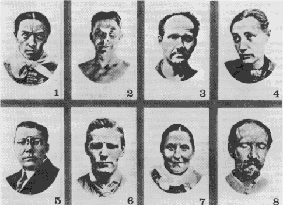
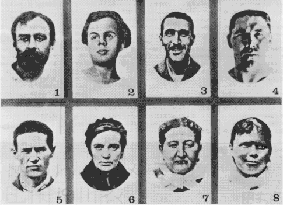
 ハンガリーの精神科医レオポルド・ソンディが考案した投影法検査。マニュアルと48枚の顔写真、テストシートで構成された人格診断検査です。精神疾患や心身症の病型診断、犯罪者の鑑別診断に大変有効です。また、一般的なカウンセリングなどあらゆる臨床場面での活用も可能です。


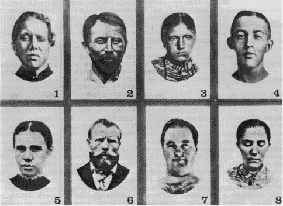
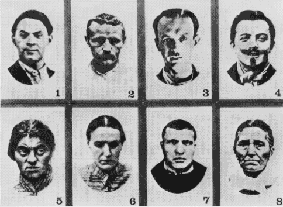
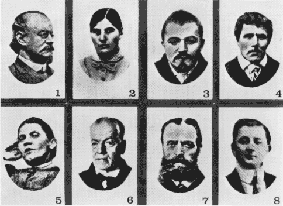
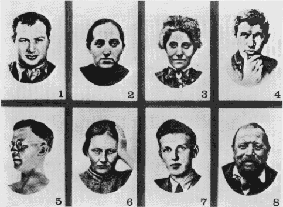
それぞれ下の一組8枚の写真の中から最も好きな顔の写真と嫌いな顔の写真をそれぞれ2枚選びます。対応する番号のボタンを一度ずつ押してください。6組繰り返しましたら最後に診断ボタンを押してください。あなたのタイプが出ます。


Find unconscious desires and urges

Projection test devised by Hungarian psychiatrist Leopold Szondi. It is a personality diagnostic test consisting of a manual, 48 facial photographs, and a test sheet. It is very effective for type diagnosis of mental illness and psychosomatic disorder, and differential diagnosis of criminals. It can also be used in all clinical situations such as general counseling.


From each of the 8 photos in the set below, select 2 photos of your favorite face and 2 photos of your disliked face. Press the button with the corresponding number once. After repeating 6 sets, please press the diagnostic button at the end. Your type will come out.


好きな顔
   
   嫌いな顔


好きな顔
   
   嫌いな顔


好きな顔
   
   嫌いな顔


好きな顔
   
   嫌いな顔


好きな顔
   
   嫌いな顔


好きな顔
   
   嫌いな顔


選びおわったらしたの診断ボタンを押してください


Szondi Test ソンディ・テスト

ソンディ・テストの全貌
 

富樫 橋

およそあらゆる心理テストは、「人間の心の状態を測定する道具」であると定義することができる。それならば、測定しようとする「心の状態」は、テスト製作者の意図によって種々異なってくるのは当然である。つまり、テスト製作者が関心を抱き、測定しようと欲する心の状態というものは、彼の考えの基礎にある「心の構造」の内容によって全く異なってくるのである。

それゆえ、現在、いろいろな心理テストが存在し、使用されているが、それらのテストが測定しようとするものの内容の違いは、製作者が個人的に依って立つ「心の構造の概念」、すなわち「心理学」ないし「思想」の違いから生まれてくるのである。しかし、いかなる理由からか、この「依拠心理学」ないし「依拠している思想」を明確に表明したテストは極めて少なく、あっても極めて曖昧である。1)筆者がなぜこの点を強調するかと言うと、思想のないところに構造は生まれず、構造のないところには測定すべき確固とした物差しも生まれないと思うからである。したがって、思想なき心理テスト、心理学に基づかない心理テストは文学に過ぎない。したがって、思想なき心理テスト、心理学に基づかない心理テストは、文学に過ぎない。

また、ほとんど全ての心理テストは、それぞれ独自に考案された「刺激材料」を設定している。そして、その刺激材料を被検者に示して得られた反応「一次情報(言語,数値,記号など)」を、製作者が考えた「心の構造」に合わせて「二次情報(言語など)」に翻訳する。その後でそれを解釈し、製作者が推定しようとする「心の状態」を、説明・診断するための「判定情報」に変換するという構造をもっている。

このような心理テストにおける、テスト結果の解釈・判定体系について、利用者が注意すべき重要な点は、「刺激→反応の因果的直接性」と、得られた結果の「解釈の単純性」である。なぜなら、前者は、間接性の要素が混じる程、後者は、複雑さが増える程、客観性が希薄になるからである。客観的でないものは科学的ではなく、普遍性がない。普遍的でないものは、多くの心理学徒の共通概念・共通言語の一部として利用することができない。

したがって、我々はどんな心理テストでも、この因果的直接性と解釈単純性の水準を、「テストの妥当性」とともに考慮しておく必要があると考える。

さらに、測定の対象である「心」は、瞑想のような特別な状態にある場合を除き、常に絶え間なく流動し、決して固定することはない。それゆえ、全ての1回法テストは、原理的に、「風邪をひいた受験生の失敗」と同じく、普段の精神状態とは異なるテスト結果を示す可能性が強いのである。とくに何らかの緊張状態があるとき、被検者の常ならぬ心の状態を一般化し固定化して理解してしまう危険性がある、ということに留意すべきである。要するに全ての1回法テストは、人間の精神や魂を測定しようとするにはふさわしくないのである。

次は、「意識テスト」と「無意識テスト」の違いの問題である。あるテストが、刺激にたいする被検者の意識領域の反応を予想したものであれば、それは単なる意識テストである。それに対して、特別な無意識の領域の反応を得るために、材料や方法が吟味されたものは、無意識テストと呼ばれる。

ここで、無意識の内容を把握するテストとして知られている、代表的な二つのテストを比較しておこう。

                       代表的な無意識テストの比較
========================================================================
Test       刺激材料   依拠心理学  1次情報  2次情報  3次情報  4次情報
                        方  法
========================================================================
Rorschach  インクの   知覚心理学?  言語     言語の    記号     心理的
 Test      染み        (  ?  )               意味を              解釈?
(1回法)              印象の表現             解釈
------------------------------------------------------------------------
Szondi     衝動病     衝動心理学    記号    衝動病理   --      --
Test       患者の顔    ソンディ             学的解釈
(10回法)             好き嫌い選択
------------------------------------------------------------------------

ソンディ・テストは、個人的無意識、集合的無意識、遺伝する家族的無意識の、全ての無意識の領域の反応を、「衝動心理学」という特別な心理学理論に基づいて明確に意識し、意図して作られた。それは、極めて「因果的直接性・解釈単純性」に優れた10回法のテストであることが上表から読みとれるであろう。ソンディ・テストは、言葉による陳述を求めないので、いきなりロールシャッハの4次情報に相当するものが、2段階で得られるのである。

Szondi Test Szondi Test

The whole picture of the Szondi test


Togashi Bridge

Almost any psychological test can be defined as a “tool for measuring the state of the human mind.” In that case, it is natural that the “state of mind” to be measured varies depending on the intention of the test maker. In other words, the state of mind that the tester is interested in and wants to measure depends entirely on the content of the “structure of the mind” that underlies his ideas.

Therefore, various psychological tests currently exist and are used, but the difference in the content of what they try to measure is the “concept of the structure of the mind” on which the creator personally stands. In other words, it is born from the difference between “psychology” and “idea.” However, for whatever reason, there are very few tests that clearly state this “reliant psychology” or “reliant thought”, and even if they are, they are extremely vague. 1) The reason why the author emphasizes this point is that no structure is created where there is no idea, and no solid measuring rod to be measured is created where there is no structure. Therefore, psychological tests without thought and psychological tests that are not based on psychology are nothing more than literature. Therefore, psychological tests without thought and psychological tests that are not based on psychology are nothing more than literature.

In addition, almost all psychological tests set their own “stimulating materials”. Then, the reaction “primary information (language, numerical value, symbol, etc.)” obtained by showing the stimulating material to the subject is matched with the “mental structure” considered by the creator, and “secondary information (language, etc.)” ) ”. After that, it has a structure that interprets it and converts the “state of mind” that the producer tries to estimate into “judgment information” for explanation and diagnosis.

Regarding the interpretation / judgment system of test results in such psychological tests, the important points that users should pay attention to are “causal directness of stimulus-> reaction” and “simplicity of interpretation” of the obtained results. Is. This is because the former becomes less objective as the elements of indirectness are mixed, and the latter becomes more complex. What is not objective is not scientific and has no universality. Those that are not universal cannot be used as part of the common concept / language of many psychologists.

Therefore, we believe that in any psychological test, this level of causal directness and interpretation simplicity needs to be considered along with “test validity”.

Moreover, the “mind” to be measured is constantly flowing and never fixed, except in special conditions such as meditation. Therefore, in principle, all one-time tests are likely to show test results that are different from the usual mental state, similar to “failure of a student who has a cold”. It should be noted that there is a risk of generalizing, immobilizing and understanding the subject’s unusual state of mind, especially when there is some tension. In short, all one-time tests are not suitable for trying to measure the human mind or soul.

Next is the question of the difference between the “consciousness test” and the “unconsciousness test”. If a test predicts the subject’s area of ​​consciousness response to stimuli, it is just a consciousness test. On the other hand, a test in which materials and methods are examined in order to obtain a reaction in a special unconscious area is called an unconscious test.

Here, let’s compare two typical tests known as tests for grasping the unconscious content.

Comparison of typical unconscious tests
================================================== ======================
Test Stimulation material Reliance psychology Primary information Secondary information Tertiary information Fourth information
Method
================================================== ======================
Rorschach Ink Perceptual Psychology? Language language symbol psychological
Test Stain (?) Interpret the meaning?
(One-time method) Expression and interpretation of impression
————————————————– ———————-
Szondi Impulsivity Impulsivity Psychology Symbol Impulsivity Pathology ----
Test Patient’s face Sondy interpretation
(10 times method) Like / dislike selection
————————————————– ———————-

The Sondy Test clearly recognizes and intends the reactions of all unconscious areas, personal unconscious, collective unconscious, and inherited family unconscious, based on a special psychological theory called “impulsive psychology.” Was made. It can be seen from the above table that it is a 10-step test with extremely excellent “causal directness / interpretation simplicity”. Since the Szondi test does not require a verbal statement, the equivalent of Rorschach’s quaternary information is suddenly obtained in two steps.

人はどんな因縁を持つか

胃ガン、子宮ガンなど、この因縁を持つ人は必ず癌になる。
言唄11011賑彫船齢囃泰之陰影

心臓、腎臓、肝臓等の循環器系に故障を起こす因縁である。

男女が、異性(同性の場合もある)によって苦しんだり傷ついたりする因縁である。これ
は、家運衰退の因縁のもととなる因縁である。
また、夫、妻が、その配偶者の色情のトラブルで苦しめられる場合も、色情の因縁がある
といゝフことになる。

愛染明王 Aizen Meio Aizen Meio

愛染明王

あいぜんみようおう
愛染明王
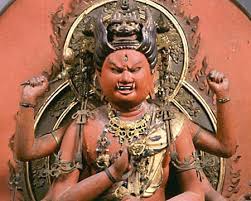
梵名を、ラーガラーゾヤといいます。

ラーガとは「色に染まる」という意味から、貪欲、かさばり、性欲などをあらわし、「愛染」と漢訳
されました。
人を愛するということはすばらしいことです。ところが、これがゆきすぎますと、溺愛、盲愛と
いわれる愛のむさばりとなり、人を傷つけてし圭います。これが煩悩です。
しかし、愛というものを、単に恋人や家族だけに向けるのではなく、より多くの人に、人間以外の生きものに、地球全体へと向けたらどうでしょ
うか。小さな愛は、人類愛、宇宙愛といった犬きな愛情、すなわち菩提心へと発展してゆくことになるでしょう。
のように「煩悩」を「浄菩提心」に昇華させる力を与えてくれるのが愛染明王です.

Aizen Myo
The name of Sanskrit is called Lagara Zoya.

Raga means greed, bulkiness, sexual desire, etc. from the meaning of “dying in color”, and is translated into Chinese as “Aizen”.
it was done.
It’s great to love people. However, if this goes too far, it will be doting and blind love.
It becomes a sword of love and hurt people. This is annoying.
But why not direct love to more people, to non-human creatures, to the entire planet, rather than just to lovers and families?
Is it? Small love will develop into dog-like love such as love for humanity and love for the universe, that is, bodhicitta.
It is Aizen Myo who gives the power to sublimate “Kleshas” into “Johbodhicitta”.

六神通(ろくじんずう、ろくじんつう


六神通(ろくじんずう、ろくじんつう、chaḷabhiññā[注釈 1])とは、仏教において菩薩などが持っているとされる6種の超人的な能力。6種の神通力六通ともよばれ、止観瞑想修行において、止行禅定)による三昧の次に、観行(ヴィパッサナー)に移行した際に得られる、自在な境地を表現したものである。


  • 神足じんそく通(iddhi-vidha-ñāṇa) – 自由自在に自分の思う場所に思う姿で行き来でき、思いどおりに外界のものを変えることのできる力。飛行や水面歩行、壁歩き、すり抜け等をし得る力。
  • 天耳てんに通(dibba-sota-ñāṇa) – 世界すべての声や音を聞き取り、聞き分けることができる力。
  • 他心たしん通(ceto-pariya-ñāṇa) – 他人の心の中をすべて読み取る力。
  • 宿命しゅくみょう通(pubbe-nivāsānussati-ñāṇa) – 自他の過去の出来事や生活、前世をすべて知る力。
  • 天眼てんげん通( dibba-cakkhu-ñāṇa) – 一切の衆生の業による生死を遍知する智慧。一切の衆生の輪廻転生を見る力。[1]
  • 漏尽ろじん通(āsavakkhaya-ñāṇa) – 煩悩が尽きて、今生を最後に二度と迷いの世界に生まれないことを知る智慧。生まれ変わることはなくなったと知る力。

宝生如来 Ratnasambhava


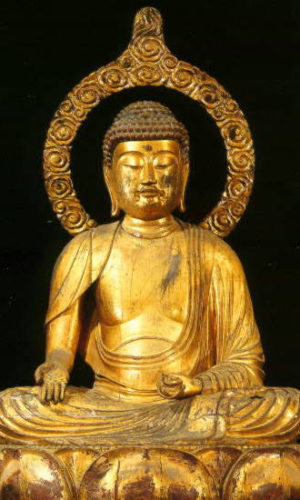
宝生如来(ほうしょうにょらい、梵: रत्नसम्भव [ratnasambhava]、ラトナサンバヴァ


三昧耶形三弁宝珠種子(種子字)はत्राः(タラーク、trāḥ)。

密教における金剛界五仏の一で、金剛界曼荼羅では大日如来の南方(画面では大日如来の向かって左方)に位置する。唯識思想における仏の悟りの境地のひとつ「平等性智」(びょうどうしょうち)を具現化したものである。これは、全ての存在には絶対の価値があるということを示す。 印相は、左手は腹前で衣を掴み、右手は手の平を前に向けて下げる「与願印」(よがんいん)を結ぶ。


オン・ガラタン・ナウサンバンバ・タラク


Ratnasambhava, Ratnasambhava: रत्नसम्भव [ratnasambhava], Ratnasambhava

Cintamani is a three-valve jewel. The seed (seed character) is त्राः (Talark, trāḥ).

It is one of the five Buddhas of the Kongokai in esoteric Buddhism, and is located to the south of Dainichi Nyorai (on the screen, to the left of Dainichi Nyorai) in the Kongokai Mandala. It embodies one of the boundaries of Buddha’s enlightenment in consciousness-only thought, “equality wisdom.” This shows that all beings are of absolute value. Mudra ties a “Yoganin” with his left hand holding his clothes in front of his abdomen and his right hand lowering his palm toward the front.