In “Principles of Metamorphosis,” I described some of the mechanisms behind W. Penfield’s discovery of the remarkable intellectual development of esoteric Buddhism. At that time, I explained, “Once you practice, your eyes become cameras, your ears become tape recorders, and once you see them, and once you hear them, you never forget them.” This is certainly true, but for this reason, some people seem to have accepted this method as a kind of memory enhancement method, a so-called memory technique. Due to the number of pages and other factors, it was not possible to fully explain it, and it was understandable, but if this technique is just a memorization technique, it must be said that it is worthless and trivial. For one cannot do a good job simply by having a good memory and a good memory. Mere knowledge alone does not enable him to leave behind outstanding achievements. The problem lies in how to utilize the vast amount of knowledge (information) we possess to create something new.
The difference between a good child and a good child
Gallup is
Sanna
It is a technology that should be improved. What is intelligence? Roughly speaking, there are two
Will. memory and creation. In addition to the mechanisms that perform these two functions, the Tokusōmei method adds a mechanism that is unique to her, and exerts new powers and effects.
If this technique were introduced into education, as George Gallup and Aldous Huxley say, the benefits to mankind would be unimaginable. Like Gallup’s man, humans could just leap hundreds of years into the future. With that said, you may wonder why such a wonderful technology has not appeared in the world until now.
There are several reasons why such a technology has been buried in a corner of Esoteric Buddhism temples, but the biggest reason is this.
It is strange that the good old method has been so overlooked. Moreover, there are many individuals, or cultures, who have developed very important skills that have since been completely forgotten. But they still have great value.”
However, the reason why this superior method of continuing great value has been forgotten can be found in the same Gallup passage that follows.
between as a system
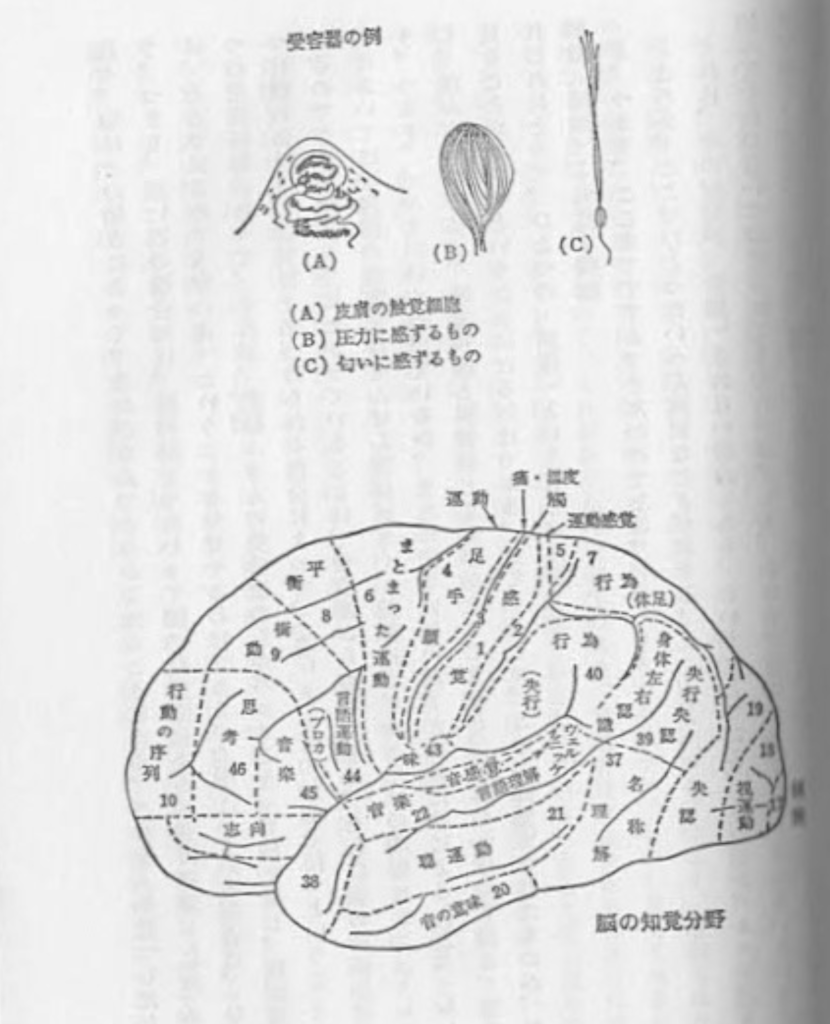
I explained in “The Principle of Metamorphosis” that there are two types of memories: memories that can be recalled and memories that cannot be recalled. The mechanism of memory in the brain is extremely complex, and it has not yet been fully elucidated even in brain physiology, but let’s take a look at its mechanism.
Experience is a stimulus. Before the stimulus becomes a memory, it goes through the following stages.
It is commonly known as the “five senses” to feel stimuli. The five senses are visual, auditory, gustatory, olfactory, and tactile, but there are still many more “senses” if you count them in detail, and you can also know what is happening inside your body, such as when you are hungry, or when you feel sluggish and unwell. In other words, what is happening inside and outside our bodies has an effect on us. This is the “stimulus”.
When there is such a stimulus, the “sensory organs” or “receptors” in the body react to it.
Sends out electrical pulses. For example, if there is a red flower, the light reflected from it stimulates the optic nerve as a receptor through the lens of the eye, and the optic nerve sends out pulses. These are pulses, and the greater the intensity of the stimulus, the greater the number, not the greater the voltage. Similarly, when something touches the skin, the receptors in the skin feel pressure and send out a number of pulses to the nerve corresponding to that pressure.
All Tathagatas in Buddhism Vajra Life Dharani Sutra
Thus I heard.
One time the Buddha was on the banks of the Ganges River with many monks, great bodhisattvas, countless celestial beings, people and masses.
At that time, the World Honored One addressed Bishamonten and the four heavenly kings (Bishamonten, Zochoten, Jikokuten, Komokuten) and said as follows.
“There are four laws, which should be greatly feared and revered.
All living things, including men, women, and children of both sexes, are not exempt from this law.
This is the so-called birth, old age, sickness and death.
Of these, one law in particular causes the most trouble and is difficult to dismiss. It is the so-called fear of death.
I pity this thing, and I will preach a doctrine against it.”
At that time, the Four Heavenly Kings said to the Buddha:
“World Honored One, we are blessed with great fortune today.
I just wish, my dear one. May you preach his doctrine for the sake of the people.”
At that time, the World Honored One turned his face to the east and snapped his fingers, summoning all the Tathagatas, and said the following vows:
“All supremely enlightened Tathagatas in all directions.
Now, with the mighty power of all Tathagatas, I will change the karma that takes away the lives of all people and extend their lifespans.
I have not yet preached this doctrine for people. Let us now preach the doctrine to increase the strength of the life of the human body so that people will not be afraid of dying unexpectedly.”
Thus, not only the eastern direction, but all the Tathagatas in the south, west, north, northwest, southwest, southeast, northeast, upper and lower directions were summoned and vowed in the same way.
At this time, all the Tathagatas from all the worlds visible to the Buddha’s eyes came and gathered together to fill the air. The numbers were like dust.
At that time, all the Buddhas unanimously preached the Issai Nyorai Kongo Jumyo Dharani in order to give people spiritual power.
“Tanyasha Reisha Sachikei Minatei Soba Sachikei Shakyarageraji Hara Shamand I’m sorry to say that I’m sorry, I’m sorry, I’m sorry, I’m sorry.
Buddha statue example
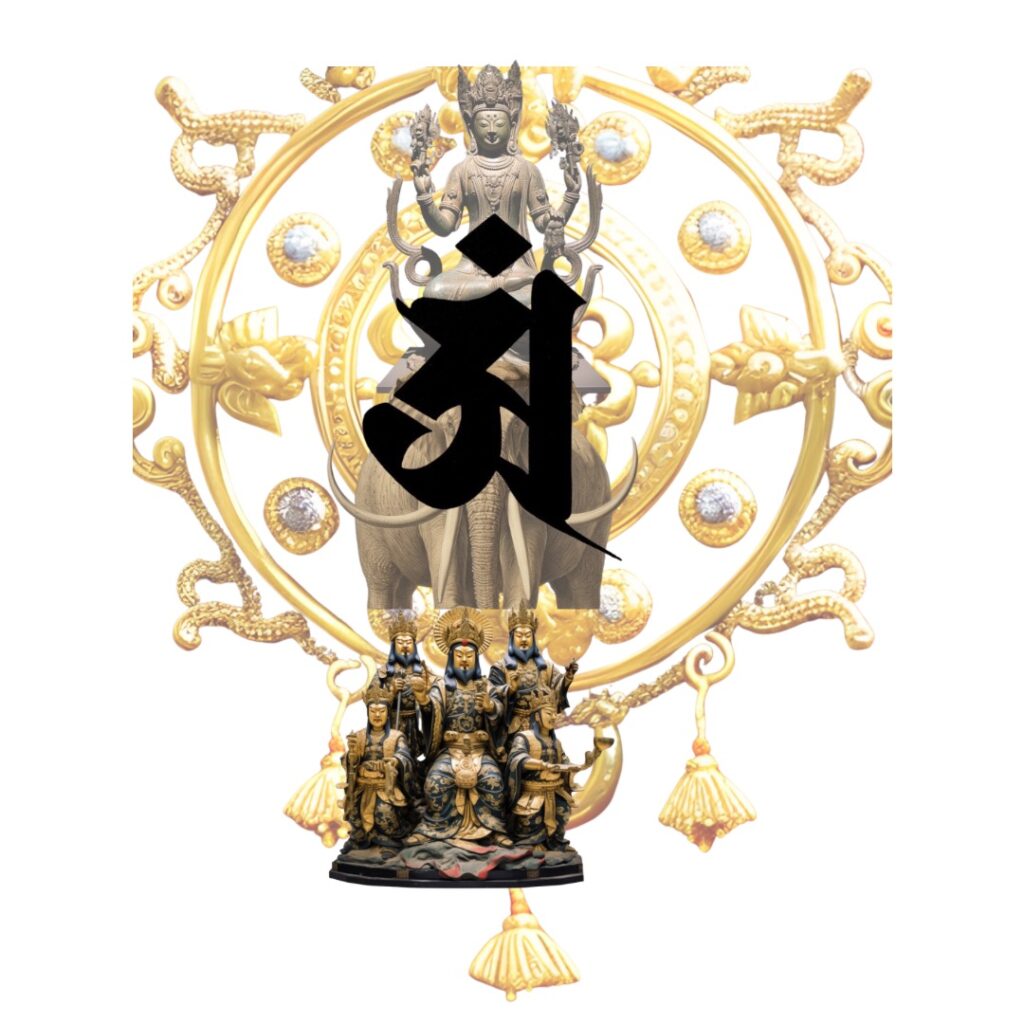
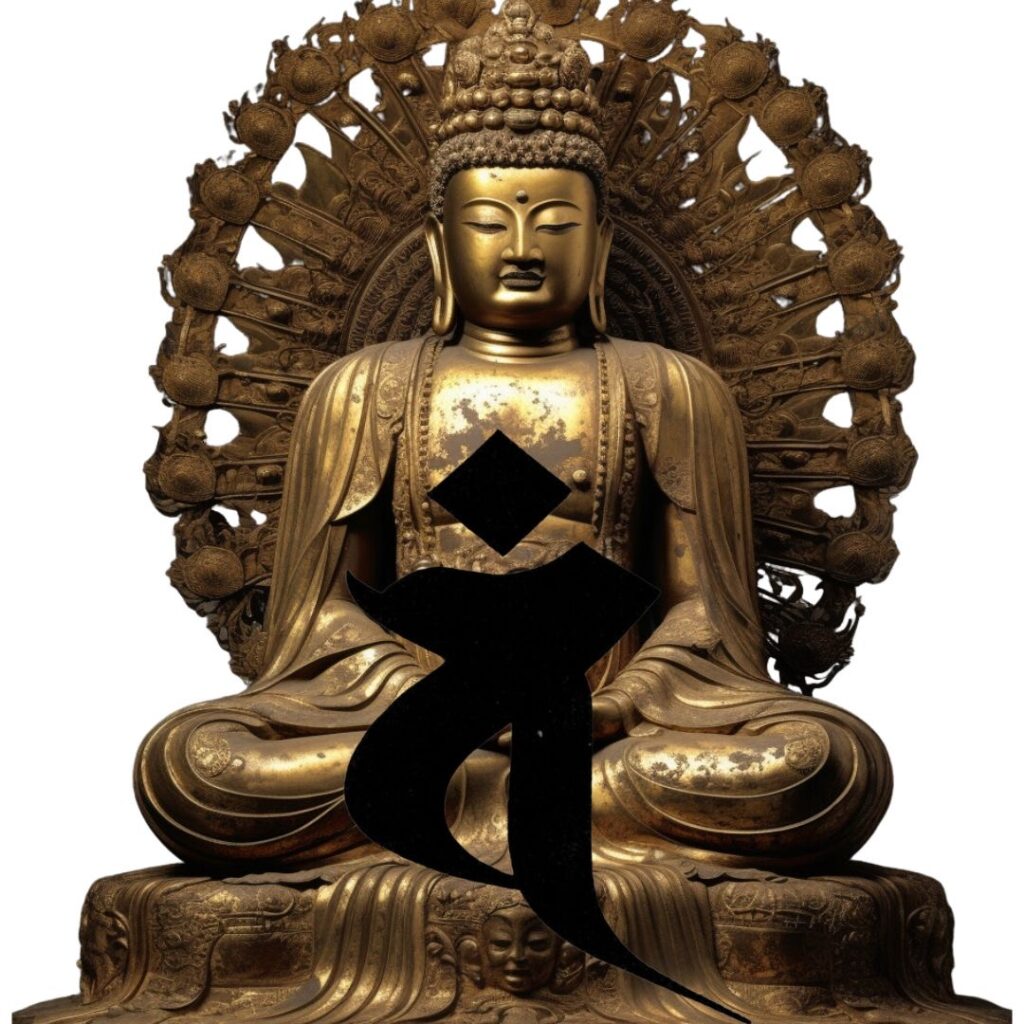
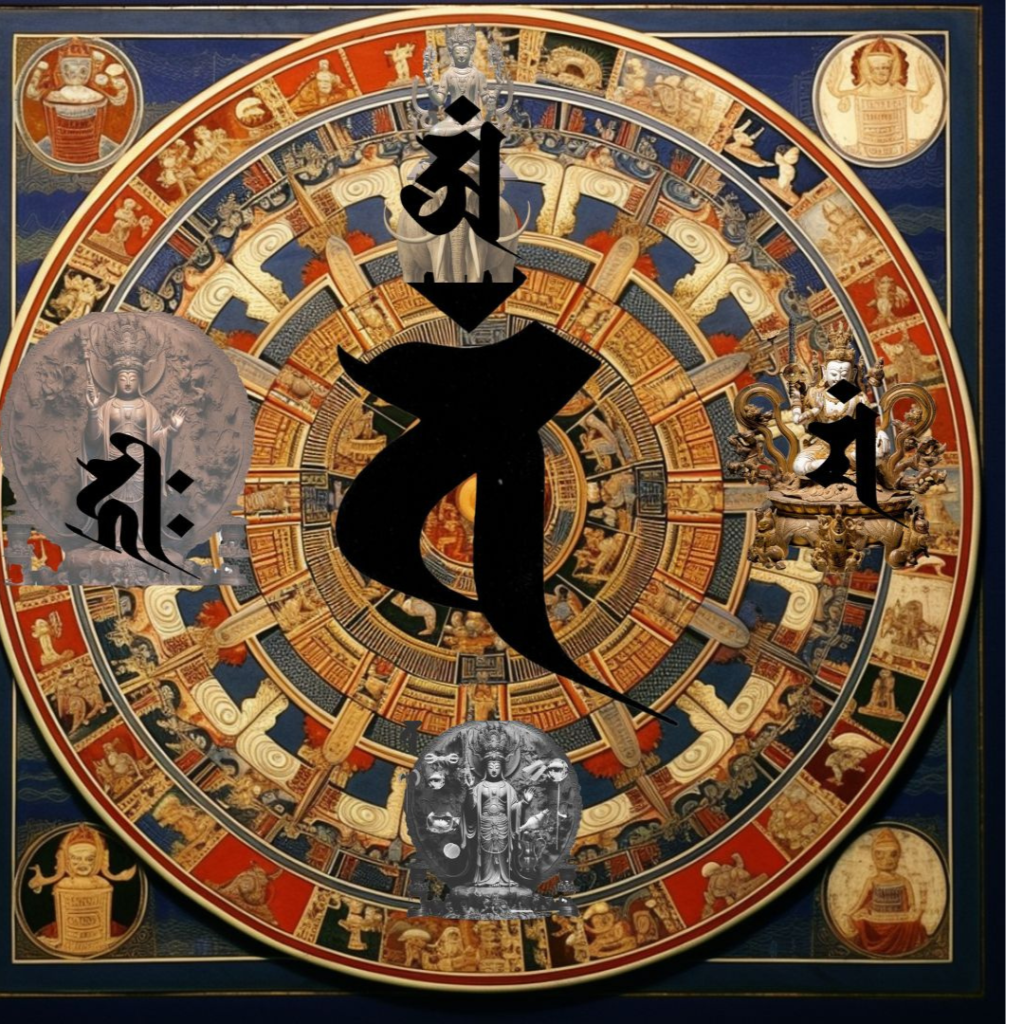
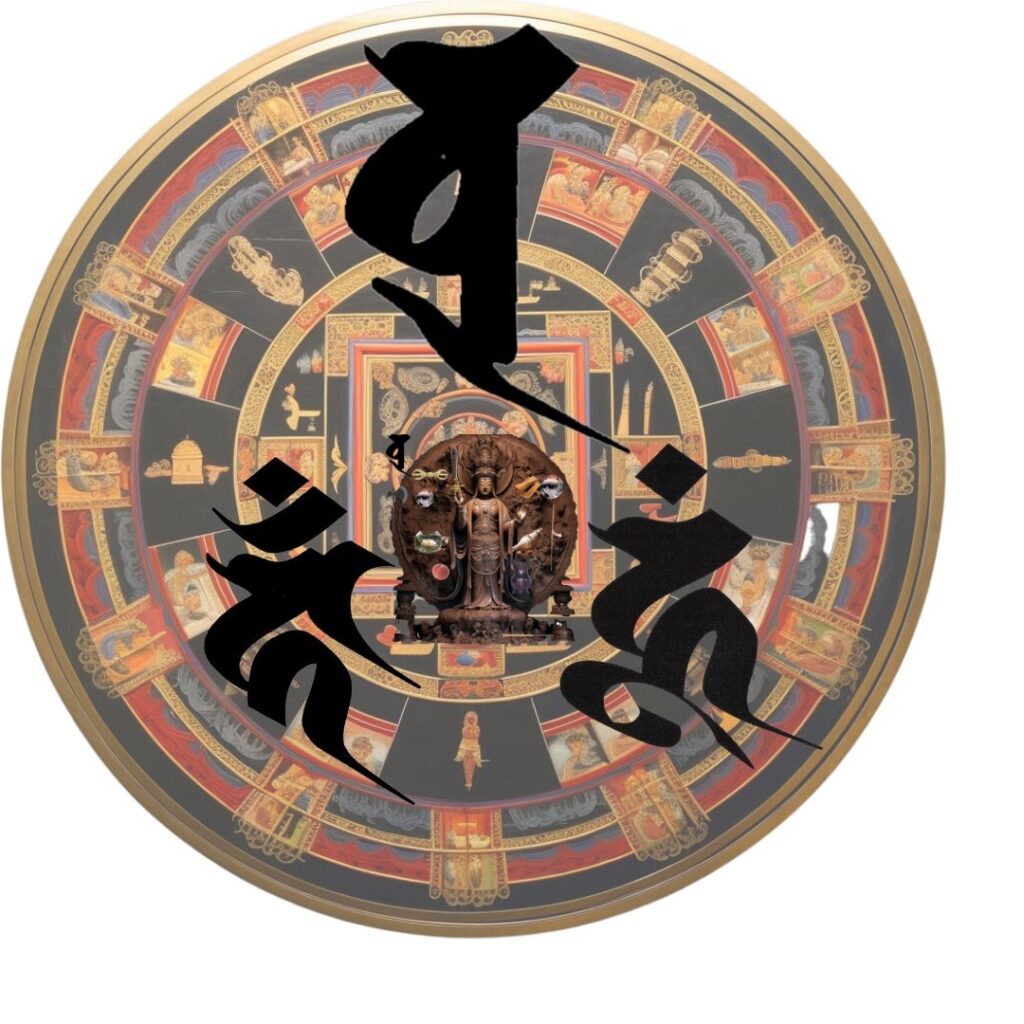
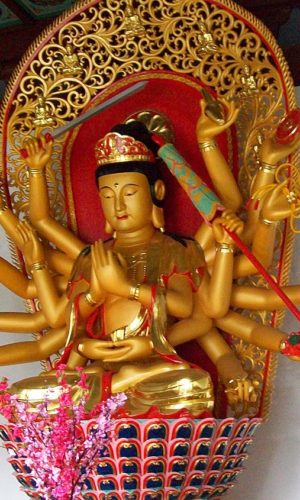
Sutras and ceremonies prescribe two, four, six, eighteen, fifty-four, and eighty-four arms. In “Bussetsu Jimyozo Yuga Daikyona Bodhisattva Daimyo Jutsu Gikyo” (translated by Song and Faxen), it is stated that the four arms are red (lotus part), the six arms are yellow (hosho part), and the eighteen arms are white (buddha part). Also, due to the large number of hands, the statue is sometimes confused with Senju Kannon, but the one with two hands on the left and right in front of it is the Juntei Kannon, and the one with the palms joined together is the Senju Kannon. In addition, like the seated statue of Juntei Kannon of Daigo-ji Temple, there are many examples where the two major dragon kings, Nando and Hakunda, are under the lotus seat.
Zen and Juntei Kannon
“Mumonkan” 3rd Law [Guteijushi]
Gutei Osho is the descendant of Daibai Zen Hojo III, the successor to Matsu in Zen. The exact name of this person is not known, but because he devoted himself to Juntei Kannon and always sang the mantra of Juntei Kannon before and after the training, he was called Kutetsu Osho, taking his name from the other name of Juntei Kannon, ‘Shichikutsubutsumo’. When this person set up a temple and was the chief priest there, a nun came in wearing her travel clothes and challenged him to a question and answer, saying, “If you speak words that are enlightened, I will take off your hat.” The chief priest of Ichizan was so pitiful that this was not the case, and when he fell asleep with tears of frustration, he was told that a divine person had appeared in his dream, and that a living Bodhisattva would soon appear in this temple. Ten days later, a man named Tenryu Roshi appeared, and when I explained the reason to him and asked him to teach me, Tenryu Roshi remained silent and raised his finger. As soon as he saw his finger, Kutshou felt as if he had been struck by lightning.
Since then, Kutshou is said to have chanted Juntei Kannon’s mantra for the rest of his life while he edified his disciples and followers simply by raising his finger. Ekai Mumon, the editor, criticized this story of the third law, saying, “Awakening is not about fingertips, but if you understand that, everyone can become Shakyamuni Buddha.” This is one of the reasons why the so-called Juntei Kannon Buddha statue, which has a preaching seal tied in front and a finger pointing up, is so popular in China.
In the Ming dynasty, Yuan Huang (1533-1606), who was born in Jiashan County, Zhejiang Province, learned the study of destiny called “three formulas” from Mr. Kong, who was considered a master of fortune-telling at the time. After that, every word and phrase of the fortune-telling was exactly as Mr. Kong said, and he became a fatalist. When he had his life foretold, it was predicted that he would succeed in life, but due to the karma of his previous life, his life expectancy would be 53 years old, he would marry but have no children, and that he would end his life in disappointment as a poor man. Before long, he met Unkoku Zenji, a Zen monk who practiced Zenmitsu and practiced zenmitsu, and told him about his own fate. At the age of fifty-three, when his life was about to expire, he changed his name to Enryobon, and furthermore, he became a high-ranking official, suppressed the Japanese invasion that caused damage to trade and fishermen, and repelled the troops dispatched to Korea by Hideyoshi TOYOTOMI. Due to his faith in Juntei Kannon, he was blessed with a child without wishing for it, and his life expectancy was extended to 74 years old due to the merit of prolonging the life of Juntei Kannon and the effect of ‘Kokakaku’.
Juntei Kannon
Known as the mother of Buddha, the Kannon Bodhisattva of easy delivery and child-giving symbolizes motherhood
What is Juntei Kannon?
It is also called Junteibutsumo or Shichikuteibutsumo. She is originally the Hindu goddess Durga, the consort of Lord Shiva. She has a very beautiful appearance, but she is a goddess of battle who has defeated demons with the weapons of the gods. Therefore, it is pointed out that she was originally a female deity and not Kannon. However, I will introduce it as Kannon here.
Since it was introduced into Buddhism, it has been regarded as a god of mercy and purity, and is also known as Shichiguteibutsubo. It means the mother of Buddha who gave birth to more Buddhas than in the distant past. Therefore, in the Shingon sect, it is counted as one of the six Kannons that save humanity (Sho Kannon, Senju Kannon, Eleven-Faced Kannon, Nyoirin Kannon, Bato Kannon, and Juntei Kannon), but in the Tendai sect, it is called Juntei Butsumo and is classified as a Nyorai. She is sometimes called the Seven Kannons together with Fukyu Kannon.
benefit
There are benefits such as protection for monks, good health, life extension, and merits such as easy delivery and children.
Rigen Daishi, a disciple of Kukai, was known as a monk of Shugen, and enshrined Juntei Kannon and Nyoirin Kannon by carving sacred trees himself. In the sutra, it is said that if a monk chants Juntei Dharani, his body will become pure and he will be able to attain Buddhahood. In addition, Shobo prayed to Juntei Kannon for the birth of Emperor Daigo’s son, and it is said that later Emperor Suzaku and Murakami were born. Therefore, it is generally known for its merits as child-bearing and safe delivery.
Appearance of Juntei Kannon
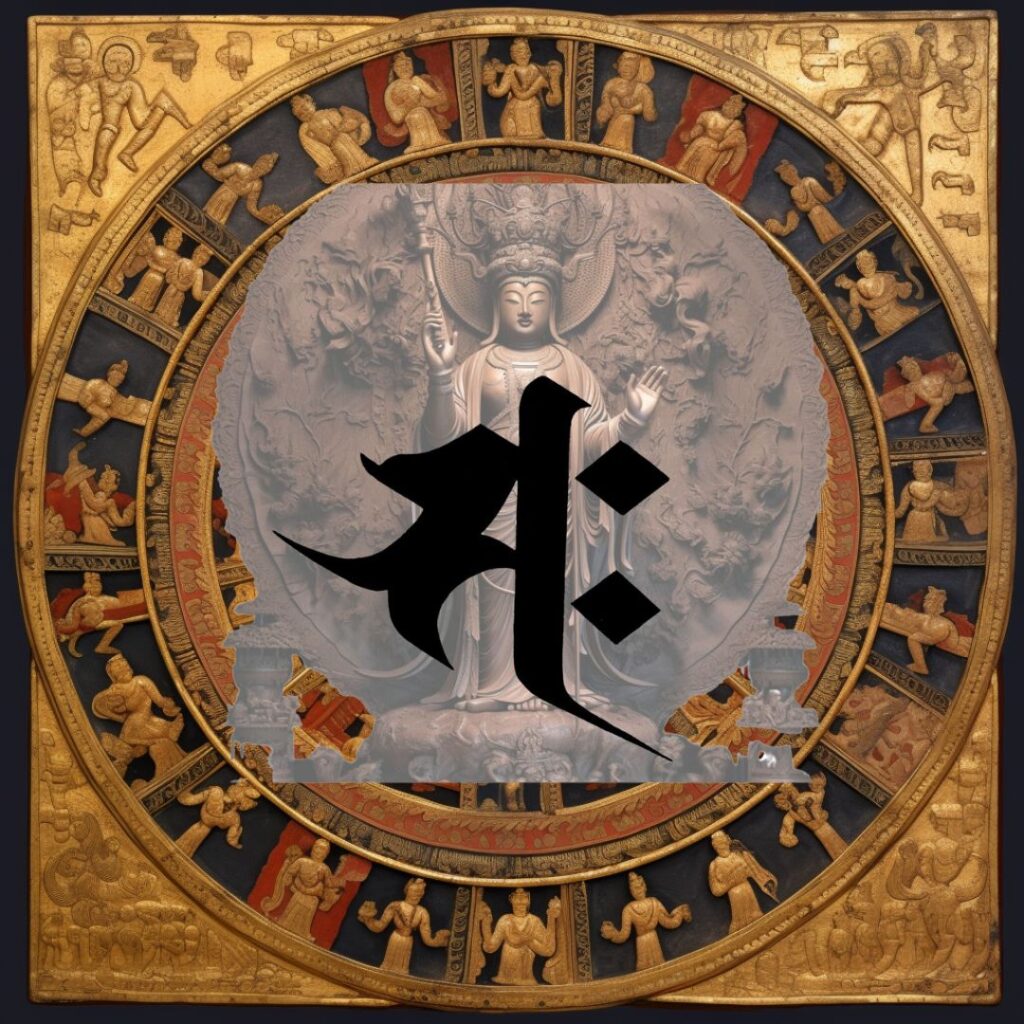
She has 18 hands and is often in the third form. The central hand takes the sermon seal and the shimui seal. Her belongings include weapons, prayer beads, and lotus flowers.
I don’t. Even when I got married, you told me that I would become a writer, and that I should be prepared to live in poverty. I will definitely win the Akutagawa Prize, that was your Loguse. The whole time you were in business, he was on edge when you were successful as well as when you failed. I felt sorry and annoyed that you were doing your best to do what you didn’t have, but I was watching you thinking that someday you’d notice, because you’re the kind of person who can’t help but do as much as you can. I’ll take care of your father, her mother, and the children, so do whatever you want as long as it’s not bad. But please don’t count on my income.”
So I sold the books and suits I had, and made over 48,000 yen. That’s right, I rented a tenement house in the back of Namamugi in Yokohama. It was a layout of 6 tatami mats and 3 tatami mats. He believes that the house no longer exists, but if it still exists, he wishes to preserve it as the birthplace of the Agon sect.
To enter this tenement house from the main street, one had to pass through a narrow alley about the width of one’s shoulders, so even when it rained, umbrellas were not allowed.
At any rate, I decided to start working on the study of fate, which had been a hobby until then, in earnest, and to make it useful for people.
What is the basis of liberation from karma?
In other words, I thought that I was accumulating virtue. When I think about what I can do for others now, there is nothing. But if there is one thing, it is the knowledge of destiny. I was confident that I would never lose to anyone. One, let’s use this power to teach people what their ties are, and open the way to the faith that will cut off bad ties. I thought this was the only way to serve people.
At that time, my faith was the Kannon faith with Juntei Kannon as the principal image. The reason why I came to have this faith is that when I made a big mistake at work, I decided to commit suicide.
It wasn’t that I was having fun or being lazy, but the troubles piled up and I was burdened with a huge debt. I was forced to be blamed by my creditors day after day.
So, for a few days, I wanted to think about my future, so I went out with a bag to the ruins of a factory in Tanaka, where his father had been during the war.
After thinking about it for a few days, he came to the point that he was tired of living and that he should rather die. In other words, it means that the god of death has arrived.
At this time, I think I understood for the first time what it means to have a Shinigami.
genealogy of faith
I don’t. Even when I got married, you told me that I would become a writer, and that I should be prepared to live in poverty. I will definitely win the Akutagawa Prize, that was your Loguse. The whole time you were in business, he was on edge when you were successful as well as when you failed. I felt sorry and annoyed that you were doing your best to do what you didn’t have, but I was watching you thinking that someday you’d notice, because you’re the kind of person who can’t help but do as much as you can. I’ll take care of your father, her mother, and the children, so do whatever you want as long as it’s not bad. But please don’t count on my income.”
So I sold the books and suits I had, and made over 48,000 yen. That’s right, I rented a tenement house in the back of Namamugi in Yokohama. It was a layout of 6 tatami mats and 3 tatami mats. He believes that the house no longer exists, but if it still exists, he wishes to preserve it as the birthplace of the Agon sect.
To enter this tenement house from the main street, one had to pass through a narrow alley about the width of one’s shoulders, so even when it rained, umbrellas were not allowed.
At any rate, I decided to start working on the study of fate, which had been a hobby until then, in earnest, and to make it useful for people.
What is the basis of liberation from karma?
In other words, I thought that I was accumulating virtue. When I think about what I can do for others now, there is nothing. But if there is one thing, it is the knowledge of destiny. I was confident that I would never lose to anyone. One, let’s use this power to teach people what their ties are, and open the way to the faith that will cut off bad ties. I thought this was the only way to serve people.
At that time, my faith was the Kannon faith with Juntei Kannon as the principal image. The reason why I came to have this faith is that when I made a big mistake at work, I decided to commit suicide.
It wasn’t that I was having fun or being lazy, but the troubles piled up and I was burdened with a huge debt. I was forced to be blamed by my creditors day after day.
So, for a few days, I wanted to think about my future, so I went out with a bag to the ruins of a factory in Tanaka, where his father had been during the war.
After thinking about it for a few days, he came to the point that he was tired of living and that he should rather die. In other words, it means that the god of death has arrived.
At this time, I think I understood for the first time what it means to have a Shinigami.
‘, and gave me a little money and a sutra. So he himself stopped dying, and as a result of his faith and his hard work, he became a good merchant.”
He told Mr. Nakamura about his own past.
Since then, this man, intending to repay the person who saved him, had made many copies of the sutras that had been handed to him at that time, and distributed them to many people.
Upon hearing this story, Mr. Nakamura was greatly encouraged, and left the man’s house after receiving the sutra scroll and enough money to endure his hunger for the time being. After that, he worked hard and eventually established Japan’s No. 1 paper raw material wholesaler.
And Mr. Nakamura also wanted to walk the same path as the person who helped him, and he wished to disseminate hundreds of thousands of scrolls of the Kannon Sutra in his lifetime.
One day, Mr. Nakamura turned to his father and said,
“You’re working with hundreds of people working on a large machine for the army, but it’s a very dangerous job, so please give me one of these as a talisman.”
Therefore, he donated 1,000 scrolls of this Kannon Sutra to his father. As he said earlier, his father directed the temporary laborers he had hired to work with machines around the clock.
My father didn’t have a particular faith, but he was a person of character whom I respected, Mr. Nakamura. I think it was a little left over. Strangely enough, the first volume had fallen by chance. No matter how you look at it, there’s no way he could have been there, but it was a fact. I still wonder.
If you think about this sutra, there is a lineage. The offering of this sutra dissuades Mr. Nakamura, the person who helped Mr. Nakamura, and the person who saved him, and so on, from committing suicide. Now again, I got this on the verge of suicide. This is just a matter of fact and he is not. At that time, he wondered if this was some kind of great, invisible will to save himself, or that he should obey this will.
At that moment, my thoughts suddenly changed. Just at the moment when the sun rose, his mind became lively and sunny, as if a ray of light were to shine between them, or as if the night had turned into morning. “Let’s stop dying”, “Let’s live”, I vowed to myself. And if I was really saved by this Kannon Sutra, I decided to make this donation, just like Mr. Nakamura Iro.
Just then, the sun was about to rise over the mountains. I put my hands together facing the sun. Then he swore aloud. “Please give me the strength to recover. If I am saved as it is written in this sutra, I will disseminate this sutra one million times in my lifetime.”
After that, I worked frantically for three years and paid off all the debts I had at that time.
Then, knowing that the merits of this sutra were great, I thought about how to bestow it on many people. In short, what he had in mind at the time was to make some kind of profit and donate it to a temple, or to form a group based on this Kannon Sutra, to become a sponsor, have talented and virtuous people play a central role, and spread the merit of the group.
never dreamed of.
Establishment of Jikeikai
At that time, I never thought that I would become a religious person myself.
The gongyo ceremony that is now given to followers of the Agon sect is an exact copy of the sutra scroll.
After all these circumstances, he came out to life, but before and after that, his body, which he thought was completely healed, became ill again, and he was in a state of needing attention.
On the other hand, although I was an amateur in fate studies, I studied a lot and gained experience in actually seeing the fate of many people. Therefore, if he hit it very well, it was quite popular in some areas, so if he advertised it a little, I think he would gather as many as his old friends and people related to his work. However, with such a way of life and way of doing things, it is not possible to cut off the ties of the past.
I didn’t tell anyone about it. I thought that cutting ties with the past was the first step. He thought that he would not be able to erase his past karma by earning income or making a living from his past entanglements.
Therefore, as if I had been reborn, I started the Kannon Jikeikai, based on the Kannon Sutra, which saved me, and with Juntei Avalokiteshvara Bodhisattva as the principal image of worship.
Until then, I had never studied Buddhism seriously. Therefore, he himself did not intend to become a monk, nor did he intend to become a religious person. I had a firm belief that if as many people as possible could be saved through this life of enlightenment, it would lead to the elimination of my own sins and liberation from karma.
I have never once had such a great feeling that I could save people with my own power. I was saved, Mr. Nakamura was saved, and the person before me was saved.Isn’t it possible to save people by putting them in the flow of salvation?Isn’t it possible to save people? With that in mind, I started Kannon Jikeikai in the early fall of 1944.
In this way, I thought I was reborn, and I was saved myself.
Based on this, the Kannon Charity Society was started with the quasi-sleeping Kanzeon Bodhisattva as the principal image.
By then, I had never studied Buddhism in earnest. So even myself
I didn’t mean to be a shaven or a religionist, I walked as an investigator
I started. I hope that this life of quest will save as many people as possible.
There was a firm belief that it would eliminate his own sins and lead to the elimination of the cause.
I have never had the great feeling of saving the entrance by myself.
I was saved, Mr. Tokuro Nakamura was saved, and the person in front of me was saved.
Save the entrance by putting people in one genealogy, or in the flow of salvation.
I think I can do it, or I will create an opportunity to enter the flow of salvation.
But maybe I can play my part, and that will save people
Then, the merit will come to me, and the ties will be cut off one by one. With that in mind, I started the Kannon Charity Society in the fall of 1945.
Welcome
Brahma is a profound art unique to the Orient. It is the essence of the painful efforts of the ancestors of East Asia, especially Japanese ancestors.