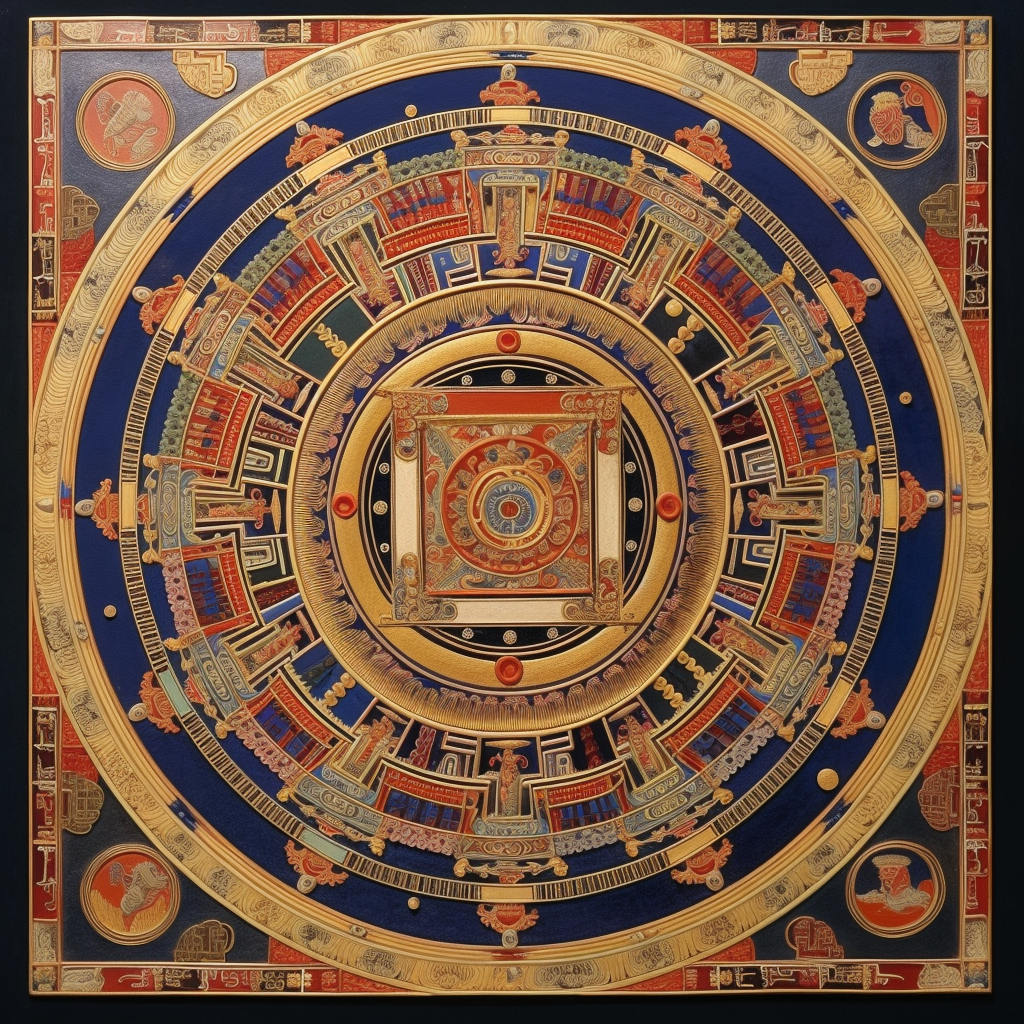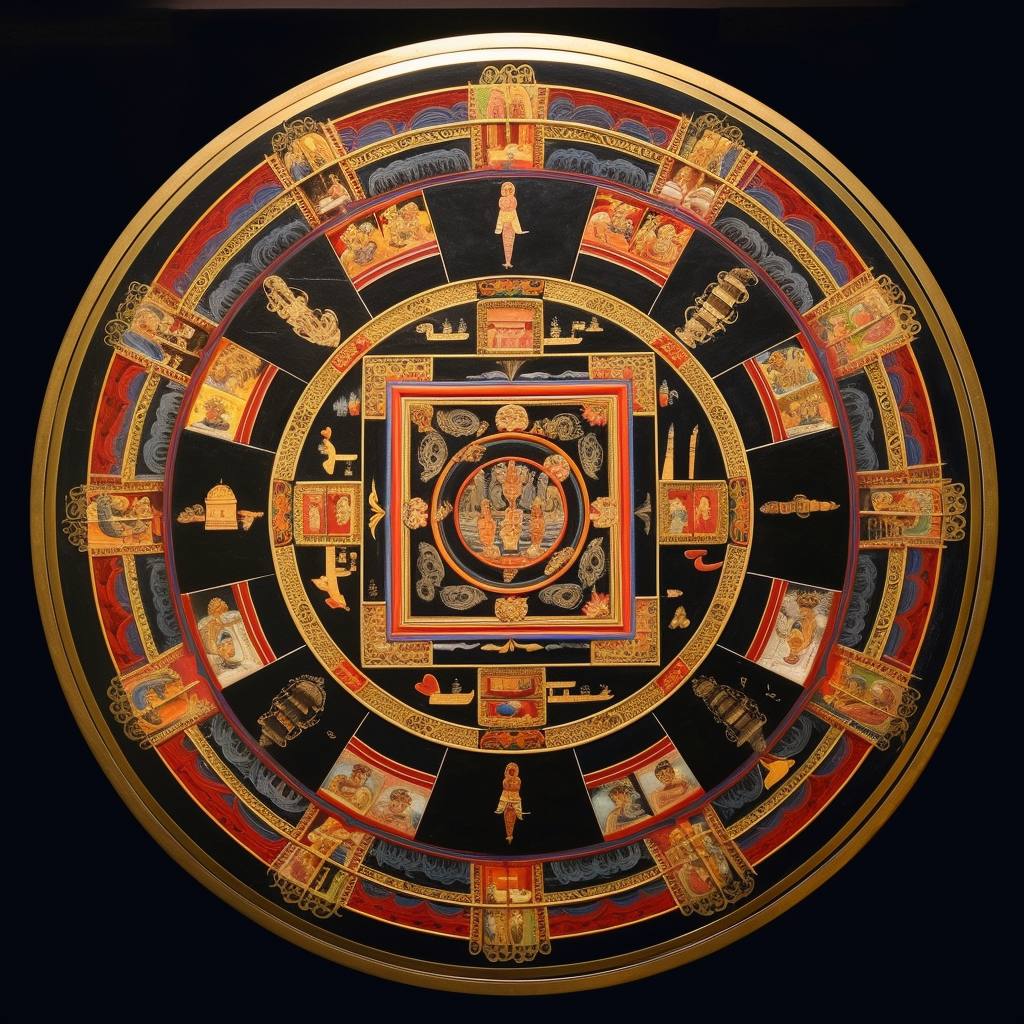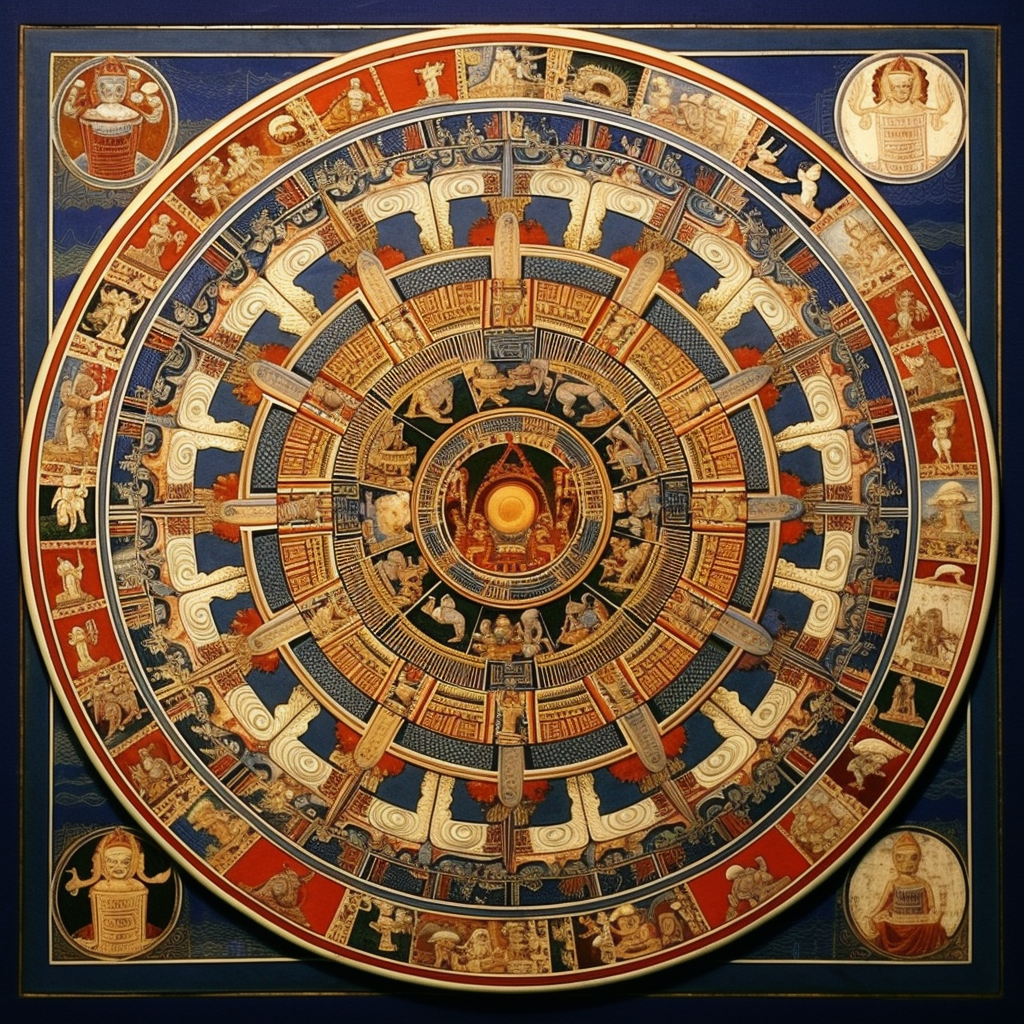

「胎蔵界曼荼羅」とは、大日如来の悟りの世界を表す仏教の曼荼羅(幾何学的な図像)の一つです。この曼荼羅は、四大護院と呼ばれる12の区画からなり、13の院に合わせて414尊の仏像が描かれています。
胎蔵界曼荼羅は、大日如来を中央に描かれる蓮の花を中心に、同心円状に院が配置されています。この配置は、大日如来の慈悲が放射状に広がり、教えが実践されていく様子を表しています。
「胎蔵界曼荼羅」は、「胎蔵曼荼羅」とも呼ばれます。これは、大日如来の慈悲が子どもを育てる母胎のようなイメージからきています。
胎蔵界曼荼羅は密教の一部であり、大日如来の悟りの境地や教えを視覚的に表現するためのツールとして用いられます。この曼荼羅を見ることや瞑想することによって、信仰者は大日如来の慈悲や智慧に触れ、自己の成長や悟りに向けた修行を行います。
The Taizokai Mandala,” also known as the “Womb World Mandala,” is a Buddhist mandala (a geometric diagram) that represents the enlightened realm of Dainichi Nyorai (Mahavairocana). This mandala consists of twelve compartments called the “Four Great Guardians” and depicts a total of 414 Buddhist statues corresponding to thirteen halls.
The Taizokai Mandala features a central lotus flower with Dainichi Nyorai at its core, surrounded by concentric circles of halls. This arrangement symbolizes the compassionate radiance of Dainichi Nyorai spreading outwards, with the teachings being put into practice.
The Taizokai Mandala is also referred to as the “Womb Mandala” due to its imagery of Dainichi Nyorai’s compassion nurturing children, akin to a mother’s womb.
As part of esoteric Buddhism, the Taizokai Mandala serves as a visual tool to represent the enlightened state and teachings of Dainichi Nyorai. By observing or meditating on this mandala, believers can connect with the compassion and wisdom of Dainichi Nyorai, engaging in spiritual practices for their own growth and enlightenment.